FV-1 Sandbox pedal

XNFrank

Authorized Vendor
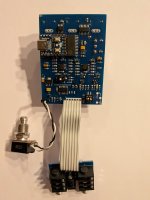
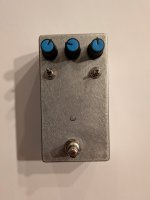
Sandbox FV-1, USB-C interface to reprogram EEPROM, switches for stereo or mono modes, allows 6 programs plus through program (program 0) for bypass, browser based assembler so works with Windows, Mac, Linux, etc., open source design and firmware https://sandboxpedal.com/ Initial design by Matthew Farrow of Alexander Pedals, this one I modified to use components I already had, this is what makes open source design real nice as you just modify it to your needs. pcb.jpg
PXL_20251109_195442480.jpg
 
Hi!

Thanks for sharing the Sandbox FV-1 design. I’m planning on using it as the basis for an internal FX section in a synth.

I’m trying to understand the input side a bit better. If I change the circuit to run from +15 V instead of +9 V (and shift the mid-point bias from 4.5 V to 7.5 V), is that enough to allow higher signal levels at the input? When testing, I noticed that also reducing the two equal-value resistors around the op-amp (to 10k) reduced clipping with hotter signals, and those changes combined seemed to give the same output as your design, but im not sure if this maybe is altering the noise filtering?

Also, what kind of signal level was the input of the pedal designed for originally (roughly)?
And, what about crystal speed? The manual states that a 48KHz crystal may be used to gain additional bandwidth, but is this straightforward or does this have other implications to circuit/noise/patch running speed etc?

Thanks again for making the design available.

 
You can do what ever changes you need to so you can handle hotter signals but keep in mind:
1. The pedal was designed for guitar level signals with plenty of head room in the op-amps to avoid clipping/signal inversion error in the TL072.
2. The filtering around the op-amps is for pre/post emphasis to increase SNR across the band, you may need to tweak values if you change anything.
3. No matter what, the FV-1 MUST only get signals with a max Vp-p of 3V so hotter inputs must be attenuated.
4. You can increase the clock to 48K but you will probably need to adjust the capacitors around it so it starts up properly. Crystals are picky about capacitors.
5. You may need to change the 3.3V regulator to handle a larger input voltage, the 78l33 has a rather low max power dissipation so 18V may case issues and over heat the regulator.
6. Increasing the clock will make the programs run faster so delays will be shorter, reverbs will be shorter, filter corner frequencies will increase, etc.
 
Back
Top