

PedalBuilder
Well-known member
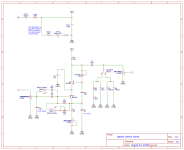
It's a really cool take on the Harmonic Percolator. I traced it from some photos, which isn't generally the best practice, but what I have on the breadboard sounds right on to my ears. Anyway, it's a simple but fun dirt circuit. Here's the schematic:

Some notes:
Some notes:
- For Q1, any low leakage germanium with an hFE between 30 and 70 works well, with best results between 40 and 60. Below 30 is too dark/sputtery, above 70 is too bright/smooth, but that's my personal preferences—go on and experiment yourself!
- For Q2, shoot for something in the 225-275 range. Tayda's 2N3904 work great here, no need to spring for something fancy, the 2¢ transistor works just fine.
- For the germanium diodes, it looks like the earliest models used 1N695 before switching to a large black Soviet diode (probably D310, but maybe D311 or D312), and now D18. There is a huge difference in the I/V curves of the D31x and D18 (see for yourself!), so you can probably use anything here.
- The Deep switch adds a 100nF capacitor in parallel with the 47nF input capacitor, and simultaneously adds a 1M trim pot parallel to R2. Without the parallel trim pot, you will get low frequency oscillation at certain settings of the guitar/pedal controls. Start with the trim pot turned all the way to 1M, and turn it down until the oscillation stops.