
Stickman393
Well-known member
Aite. So, the speaker I chose was too deep for the enclosure I bought.
Not by much, mind you. I only needed about a quarter inch.
Well...the back panel doesn't *need* to be 9mm. Problem is, I didn't feel great about spanning the entire back of the cabinet with 3mm plywood. I wanted something a bit stronger.
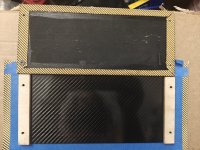
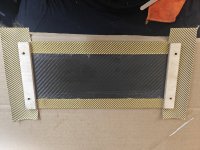
So, I cut a piece of 3mm carbon fiber, created a couple of 1/4" stand-offs, and viola.
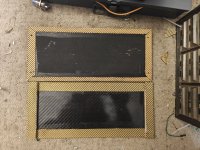
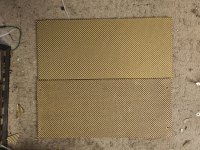
Then comes the needing to make it match the rest of the cabinet. So, my first try with applying tweed.
Once the glue is cured, I'm gonna lacquer it.

Not by much, mind you. I only needed about a quarter inch.
Well...the back panel doesn't *need* to be 9mm. Problem is, I didn't feel great about spanning the entire back of the cabinet with 3mm plywood. I wanted something a bit stronger.
So, I cut a piece of 3mm carbon fiber, created a couple of 1/4" stand-offs, and viola.
Then comes the needing to make it match the rest of the cabinet. So, my first try with applying tweed.
Once the glue is cured, I'm gonna lacquer it.