
Two tube guitar head in one output cabinet

Take a look at this picture of the guts of a radial headbone VT:

LOTS going on in there. Big traces for the power amp signal routing. 250vac/10amp rated relay handles the switching of the power amp signals.

It simultaneously switches the guitar inputs as well. Likely how they get away with such a small resistor as a dummy load.

It's possible to build one, but similar considerations would be necessary. This is more like switching line voltage than typical guitar signals: if you're not used to dealing with potentially deadly electrical circuits...well, you might want to see about just picking one of these things up used.
View attachment 82503

As I used to say looking at any trail no matter its difficulty or steepness: "That looks totally rideable...", no matter how far from the truth.

That HEADBONE gutshot... lotsa space, through-hole components — "That looks totally traceable, buildable — stick it in the wish-list!"


Alvaro, build yourself a two-in-one cab, ie two completely independent speaker circuits in one big tall box (makes loading in/out easier when you have to move one thing, so long as it isn't too heavy).

I'd go vertical for better side-to-side stage coverage:
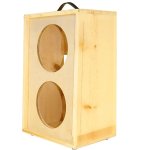
2X10 VERTICAL SLANT SPEAKER CAB.jpeg

The slant takes care of small stages where you have to stand too close to your speaker, so your sound isn't totally blowing past your knees.


Advantages :
- totally DIYable
- both your amp-heads have their own speaker and are happy;
- you don't die trying to cobble together something that even experienced builders leave to the professionals.
- if you still need muting: far easier to wire up STANDBY-type footswitches than to deal with figuring out ohms, loads, switching, electrocution...
 
As I used to say looking at any trail no matter its difficulty or steepness: "That looks totally rideable...", no matter how far from the truth.

That HEADBONE gutshot... lotsa space, through-hole components — "That looks totally traceable, buildable — stick it in the wish-list!"


Alvaro, build yourself a two-in-one cab, ie two completely independent speaker circuits in one big tall box (makes loading in/out easier when you have to move one thing, so long as it isn't too heavy).

I'd go vertical for better side-to-side stage coverage:

View attachment 82512

The slant takes care of small stages where you have to stand too close to your speaker, so your sound isn't totally blowing past your knees.


Advantages :
- totally DIYable
- both your amp-heads have their own speaker and are happy;
- you don't die trying to cobble together something that even experienced builders leave to the professionals.
- if you still need muting: far easier to wire up STANDBY-type footswitches than to deal with figuring out ohms, loads, switching, electrocution...
thanks, is clear for me, and i preffer a cabinet, tks for the idea to made independent speaker
 
As I used to say looking at any trail no matter its difficulty or steepness: "That looks totally rideable...", no matter how far from the truth.

That HEADBONE gutshot... lotsa space, through-hole components — "That looks totally traceable, buildable — stick it in the wish-list!"


Alvaro, build yourself a two-in-one cab, ie two completely independent speaker circuits in one big tall box (makes loading in/out easier when you have to move one thing, so long as it isn't too heavy).

I'd go vertical for better side-to-side stage coverage:

View attachment 82512

The slant takes care of small stages where you have to stand too close to your speaker, so your sound isn't totally blowing past your knees.


Advantages :
- totally DIYable
- both your amp-heads have their own speaker and are happy;
- you don't die trying to cobble together something that even experienced builders leave to the professionals.
- if you still need muting: far easier to wire up STANDBY-type footswitches than to deal with figuring out ohms, loads, switching, electrocution...
But make sure your signals are in phase between the two amps if using a sealed cabinet.
 
Good point jwin615.
I failed to mention that the speakers are of course sealed off from each other, but nonetheless the signals must still be in phase.
 
Back
Top