

Ginsly
Well-known member
About 15 years ago I got a Hiray Fuzz by Freakshow Effects, and used it on wayyyy more recordings than was appropriate. It seems to be a CMOS kinda thing, sort of like a Parasit Studios fuzz. Super gated, but can really sustain with certain pickups. The Filters are really where it's at, and they can make things nice and brassy. Plus, expression control for one of em.
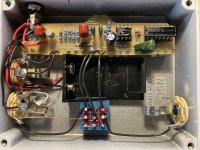
I opened it up recently to see what was going on, and lo and behold, the ICs are, uh... hidden. It kinda looks like goop, but... it also kinda looks like a hot soldering iron was pressed against em. That seems unlikely, but... either way I don't think I'm identifying these chips. Touché.
One is 8 pins and the other is 14. They're socketed so I can test some contenders... I just don't know much about CMOS fuzz yet... It only draws about 4 mA which is pretty surprising - I used to use a battery in it and it would last quite a while. Whaddya think??

I opened it up recently to see what was going on, and lo and behold, the ICs are, uh... hidden. It kinda looks like goop, but... it also kinda looks like a hot soldering iron was pressed against em. That seems unlikely, but... either way I don't think I'm identifying these chips. Touché.
One is 8 pins and the other is 14. They're socketed so I can test some contenders... I just don't know much about CMOS fuzz yet... It only draws about 4 mA which is pretty surprising - I used to use a battery in it and it would last quite a while. Whaddya think??
Last edited:
