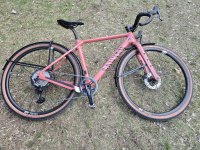
RetiredUnit1
Well-known member
At the age of 69 my ideal bike involves the words "1500w" and "mountain bike", lol...

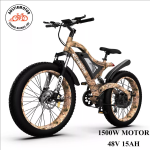


I’d consider hopping on that thing as a death wish. It’s full of structurally weak spots. :/At the age of 69 my ideal bike involves the words "1500w" and "mountain bike", lol...
View attachment 95905

Ah yeah, so this is the v1 Fog Cutter, now I understand. They made some upgrades/modernizations to the new version but the original is still a nice ride, so if the shoe fits, wear itYea it's for the whole bike, I'll post a picture of it below. It looks super clean, although I think it might be set up as more of a "commuter" type ride than a recreational/exercise-y type bike (tbh it probably won't make that much of a difference though), and I'm not sure how I feel about the shifters being those lever style ones at the end of the handlebar. Either way though I'm going to give it a test ride soon and see how I like it.
(...)
 The newer version goes to modern thru-axles front (12x100mm) and rear (12x142mm) rather than the bog-standard legacy 9x100 front and 10x135mm rear QR. Having the thru-axles was important to me, but you can still find lots of choices in this older standard these days and there's nothing inherently wrong with it. The other nice thing about this frame and frames like it (including the Midnight Special) is the ability to run either 700c or 650b wheels and tires - if I wanted I could set mine up with some fat 650b as a pseudo-gravel rig and be no less happy. Second wheelset for different purposes, yada yada. The bar-end shifters are an acquired taste - I don't care for them but that doesn't mean they don't work. They tend to have better drivetrain compatibility and are a bit more robust than the integrated "brifters", and are more versatile for alternative handlebar shapes, which is why people use them. I can't quite tell what the rest of the drivetrain comprises but it looks like Shimano and I see it's a 2x9 and it looks like it's sporting one of those... I don't know what to call them, "narrow range" cranksets that's like a 52/42t - this is an old-school setup (again, people are still making modern parts like this and there's nothing inherently wrong with it as long as it fits your riding style. In fact it might be good for you re: points made below about gearing choice in a 3x9 as it gives you a lot of fine control over cadence - you sacrifice range to gain small incrementation).
Thank youFirst off, this is a BEAUTIFUL bike and I'm very jealous. That all blue frame is doing something to me.
 I think so too, it took me ages to settle on this spec but I think it was time well spent (I am notorious for spending completely absurd amounts of time doing market research). The colour was a big factor in my decision, it's so much prettier in person than in any pictures. It came out better than I could have even imagined! I'm rolling the latest-gen Shimano 105 12-speed with a 48/32t subcompact crank and an 11-36t cassette (so a 0.89:1 low gear and a 4.36:1 high gear with a 491% range). I expect I will own this frame for the rest of my life.
As above the small-gap (??) crankset might actually be a great idea for you in this case. This isn't something that tends to come on "mainstream" prebuilts though. But you get other benefits with those and even a more "typical" drivetrain will definitely have enough range for you. Modern 1x can also cover this just fine - can't plug Microshift Sword strongly enough for a modern, good quality and affordable drivetrain. the new Shimano Cues, Sora and especially Tiagra also punch well above their weight.I have a 3x9 set up currently and find myself sitting on the biggest gear on the chainring and making smaller adjustments to the rear gears. 90% of the time that works for me, and then the other 10% I'll plop it down to the smallest gear set if I'm going up a steep hill. Will probably be looking for some kind of 2x setup since I like having that versatility and while most of my riding is on flat roads, there are some hills that I encounter on a regular basis.
Currently I am using 700x35c Panaracer Gravel King SS, I have built this bike up as "mostly road but capable of taking on shitty city lanes and country paths", balanced between comfort and performance for moderately long distance, but not necessarily fast, riding (50-100km at a time). Some of my routes involve a LOT of continuous climbing.What size tire do you use? And what kind of riding do you do primarily? I think the all-road setup appeals to me but worry that it'll feel way more sluggish than my road bike. Although to be honest, the 650b setup of that Midnight Special seemed like it would be a lot of fun to tool around on.
Sage advice. I shelled out for a full professional fitting and it's $$$$$ but WORTH IT. I learned this way that I have short arms for my height which explains why I fit badly on a lot of racy road bikes (which are low and long). Most people need more stack height (distance from the center of the bottom bracket to the rearward projection of the top of the head tube) than a lot of those kinds of bikes offer. The neo-retro and non-race gravel segment is very conscious of this issue.Get a basic fitting (should be included in the purchase price of a bike) or if you have any back problems or other concerns (longer arms or long legs, for example), consider getting a more in-depth fitting (which you may be charged extra dosh for).
P R E A C HI doubt I need to say it in this thread, but just in case there is somebody new-to-cycling that reads the thread... GET PROPER LEG EXTENSION!
I see wayyyyyyyyyyyyyyyyyyyyyyyyyyyyyyyy too many people riding with saddles too low, bent knees, building up copious lactic-acid and not taking advantage of the mechanical advantage (less lactic-acid build-up) of having their saddles at the correct h eight for them. Should be part of your bike fitting. Newb — if you're rocking side to side on your saddle it's too high; if you're bouncing up and down on your saddle as you pedal high RPM then it's too low. Yeah, FIT as in BIKE-FIT. It's f*cking important, more so than driving your 2-ton cage.
True - what's that adage about "don't cheap out on things that come between you and the ground"?Portland you say? Wet coast. Fenders still optional, but appropriate tires for the tarmac and terrain and rain — don't cheap out on crappy tires.
Tyres are what keep your shiny-disposition side up and dirty side down. Fatter tires on your gravel-city-cyclocross-roadwarrior steely steed won't slow you down as much as you think. A PHAT-TYRE bike, on the other hand... are great for the snow and beach where even a 38c can struggle.
And this is a BIG benefit of higher-volume tires - you can run them at lower pressures without the bead rolling off, which makes for a more compliant ride. 700x23c typically runs e.g. 100-120 psi which could not be less forgiving on your body. Some of the more gnarly-terrain oriented gravel bikes are coming specced with this new generation of short-travel suspension fork that is an interesting idea but not really necessary in most cases (that being said, the brand-new-just-released-like-today Kona Ouroboros is H O T with a GREAT SPEC at an EXCELLENT PRICE.)Suspension: based on your riding regimen — lower the PSI a couple notches if needed. No need for heavy forks or even a heavier seat-boingy-post.
Yep, discs are pretty much universally better in wet conditions. I have hydraulics on both my bikes (Shimano 105 on the roadie and older Deore M615 on my XC hardtail) and swear by them, but @Feral Feline is correct that there are loads of benefits to mechanical discs, chief among them being less maintenance. I would say you MUST get calipers where the fixed pad is adjustable - to clarify, a hydraulic brake has two [edit: two sets of] pistons on either side of the caliper that are both moved into the rotor by the action of pulling the lever, while mechanical calipers typically have one fixed pad and one pad moved into the caliper by the action of the lever. Hydraulic calipers have the benefit of "self-resetting" to compensate for pad wear, while mechanical calipers do not, so you will notice a change in "free stroke" (how far you have to pull the lever before the pads grab the rotor) as the pads wear - this is where the adjustable fixed pad comes in.Discs: Definitely preferred over rim-brakes for the Wet Coast — stick with discs.
I've had just about everything including Magura hyrdaulic rim-brakes.
My preferred stopper-operator are MECHANICAL disc-brakes. Hydraulics are more fiddly and expensive without enough gain in performance for my riding and lazy maintenance regimen. I do recommend getting mechanical-discs that the "fixed" pad can be adjusted, if you can find them. Last I checked, my particular brand changed the spec-level on my particular model's "fixed" pad to be NON-ADJUSTABLE. PITA to dial in.
YMMV; better shade-tree bike-mechanics may have no problemmo getting their discs set up — I prefer adjustable pads.
Yes! If your older bike has frame standards that are still in the modern lexicon of parts, fixing it up is a great idea, as the age of a bike has no bearing on the joy it brings to ride it. The biggest pains in the ass in terms of changing standards are bottom bracket and headset - if you happen to have a frame with a BSA English-threaded bottom bracket and a straight 1 1/8" steerer tube, you'll probably be able to find parts for it forever. Hub standards are another huge pain but front hubs are easily accommodated with fork swaps and the secret of steel frames in particular is that the rear triangle can just be bent ("cold-set") to accommodate whatever hub spacing you want (within reason).Old Bikes are fun. I'd keep the old bike and slowly fix it up over time, if not spend the dosh to revamp it outright and not bother with a new bike.
It's sad to see so many cool bikes get sidelined because it's cheaper to buy a new bike than shell out for parts individually...
Honestly, the biggest selling points of the electronic systems are 1) shifting precision, above all, which is very important as cassettes gain more and narrower cogs and accordingly narrower chains, and 2) ease of setup (no fucking around with cables that need to be stretched and settled in and can fray and corrode). That said, I think that if you are going electronic, SRAM has handily won the battle on product design with the fact that every component communicates wirelessly AND MOST IMPORTANTLY, every component has its OWN, REMOVABLE battery. I cannot reconcile the design that Shimano (and LTWOO, sorry lol) have taken where the battery is in the seat tube and connects to the derailleurs with wires. To me this is the worst of all worlds - adds weight and complexity, you lose the benefits of not having to route cables, you are required to bring the whole bike to a power outlet to charge it instead of just the batteries, if a battery dies mid-ride you're SOL instead of just being able to swap to a new battery, etc. (YMMV.)Electronic shifting is also increasingly common. I have two bikes with the LTWOO eRX system and one with SRAM AXS eTap. Honestly the Chinese stuff is just as good as SRAM and more user friendly on set up.
See above re: hydraulic vs. mechanical - yes, the main advantage of hydraulics is more power and more consistency. I really prefer mineral oil to DOT just because of the inertness of mineral oil.I run hydro brakes and prefer them over cable-actuated because they feel stronger, but they are a PITA to work on... lots of tools required to work on them and some run on mineral oil vs regular dot brake fluid, so if you run both type you need separate kits to bleed them yourself. But a good brake bled right can work for many years.
Nice ride!! One often does get a lighter bike with rim brakes because there is just less there. I once saw a bike for sale on Marketplace near me that was a bespoke Frankenstein of a rig that weighed something in the 13lb range, and was being offered for $1500. If you're doing a lot of climbing a bike like this is a great choice (although there's something to be said about the reassuring stopping power of a nice disc brake on the way downDon't forget trueing brake discs.
I just built this guy. I scored the frame for $250 and went full mechanical with rim brakes. It weighs 15 lbs and 11 oz. It's a fun ride! Shimano 105 rim breaks work just fine on the carbon wheels.
View attachment 95903
 )
)
When the conditions are dry, I don't think the stopping power of rim brakes is much less than hydraulic disks. Also, you have to account for mass when stopping. The only downside to this bike is it turns the carbon wheels into a wear item with rim brakes.Ah yeah, so this is the v1 Fog Cutter, now I understand. They made some upgrades/modernizations to the new version but the original is still a nice ride, so if the shoe fits, wear it
Thank you
As above the small-gap (??) crankset might actually be a great idea for you in this case. This isn't something that tends to come on "mainstream" prebuilts though. But you get other benefits with those and even a more "typical" drivetrain will definitely have enough range for you. Modern 1x can also cover this just fine - can't plug Microshift Sword strongly enough for a modern, good quality and affordable drivetrain. the new Shimano Cues, Sora and especially Tiagra also punch well above their weight.
Currently I am using 700x35c Panaracer Gravel King SS, I have built this bike up as "mostly road but capable of taking on shitty city lanes and country paths", balanced between comfort and performance for moderately long distance, but not necessarily fast, riding (50-100km at a time). Some of my routes involve a LOT of continuous climbing.
I would not worry about it feeling sluggish at all. The biggest benefit to a steel (or Ti) frame and wider tires that you can run at lower pressure is the ride compliance - these bikes are ULTRA SMOOTH, which fatigues you much less when traveling over rough terrain (and let's be honest, almost none of us are riding exclusively on perfectly groomed roads), and the more energy you conserve, the faster you can ride. A skinny-tired, ultralightweight carbon-framed roadie is fast but it's STIFF; this is great if you want to get every watt from the pedals to the road, but you will also get pummeled on bad surfaces (which is most roads if you live in any city) which drains away a lot of the benefits and can even be dangerous (a narrow tire like the traditional 700x23c is very prone to being terminally deflected off of rocks and cracks, etc. which can cause crashes).
Sage advice. I shelled out for a full professional fitting and it's $$$$$ but WORTH IT. I learned this way that I have short arms for my height which explains why I fit badly on a lot of racy road bikes (which are low and long). Most people need more stack height (distance from the center of the bottom bracket to the rearward projection of the top of the head tube) than a lot of those kinds of bikes offer. The neo-retro and non-race gravel segment is very conscious of this issue.
P R E A C H
This is a huge pet peeve of mine too. I wish more people knew that they are hurting themselves by running their saddles WAY too low. You SHOULD NOT be able to put your feet flat on the ground when you are sitting in the saddle! There are some tricks for getting in the ballpark of correct fit without professional intervention but everyone's body is different so it helps to at least have an informed opinion (and someone else to look at your position on the bike, because you won't know something is wrong until you're in the middle of a long ride and something that shouldn't hurt starts to hurt).
True - what's that adage about "don't cheap out on things that come between you and the ground"?
And this is a BIG benefit of higher-volume tires - you can run them at lower pressures without the bead rolling off, which makes for a more compliant ride. 700x23c typically runs e.g. 100-120 psi which could not be less forgiving on your body. Some of the more gnarly-terrain oriented gravel bikes are coming specced with this new generation of short-travel suspension fork that is an interesting idea but not really necessary in most cases (that being said, the brand-new-just-released-like-today Kona Ouroboros is H O T with a GREAT SPEC at an EXCELLENT PRICE.)
Yep, discs are pretty much universally better in wet conditions. I have hydraulics on both my bikes (Shimano 105 on the roadie and older Deore M615 on my XC hardtail) and swear by them, but @Feral Feline is correct that there are loads of benefits to mechanical discs, chief among them being less maintenance. I would say you MUST get calipers where the fixed pad is adjustable - to clarify, a hydraulic brake has two pistons on either side of the caliper that are both moved into the rotor by the action of pulling the lever, while mechanical calipers typically have one fixed pad and one pad moved into the caliper by the action of the lever. Hydraulic calipers have the benefit of "self-resetting" to compensate for pad wear, while mechanical calipers do not, so you will notice a change in "free stroke" (how far you have to pull the lever before the pads grab the rotor) as the pads wear - this is where the adjustable fixed pad comes in.
Yes! If your older bike has frame standards that are still in the modern lexicon of parts, fixing it up is a great idea, as the age of a bike has no bearing on the joy it brings to ride it. The biggest pains in the ass in terms of changing standards are bottom bracket and headset - if you happen to have a frame with a BSA English-threaded bottom bracket and a straight 1 1/8" steerer tube, you'll probably be able to find parts for it forever. Hub standards are another huge pain but front hubs are easily accommodated with fork swaps and the secret of steel frames in particular is that the rear triangle can just be bent ("cold-set") to accommodate whatever hub spacing you want (within reason).
Honestly, the biggest selling points of the electronic systems are 1) shifting precision, above all, which is very important as cassettes gain more and narrower cogs and accordingly narrower chains, and 2) ease of setup (no fucking around with cables that need to be stretched and settled in and can fray and corrode). That said, I think that if you are going electronic, SRAM has handily won the battle on product design with the fact that every component communicates wirelessly AND MOST IMPORTANTLY, every component has its OWN, REMOVABLE battery. I cannot reconcile the design that Shimano (and LTWOO, sorry lol) have taken where the battery is in the seat tube and connects to the derailleurs with wires. To me this is the worst of all worlds - adds weight and complexity, you lose the benefits of not having to route cables, you are required to bring the whole bike to a power outlet to charge it instead of just the batteries, if a battery dies mid-ride you're SOL instead of just being able to swap to a new battery, etc. (YMMV.)
See above re: hydraulic vs. mechanical - yes, the main advantage of hydraulics is more power and more consistency. I really prefer mineral oil to DOT just because of the inertness of mineral oil.
Nice ride!! One often does get a lighter bike with rim brakes because there is just less there. I once saw a bike for sale on Marketplace near me that was a bespoke Frankenstein of a rig that weighed something in the 13lb range, and was being offered for $1500. If you're doing a lot of climbing a bike like this is a great choice (although there's something to be said about the reassuring stopping power of a nice disc brake on the way down
Mono shock frames have been around for quite a while. I haven't seen any complaints of frame failures......View attachment 95891
I’d consider hopping on that thing as a death wish. It’s full of structurally weak spots. :/

So I was able to go test out a couple bikes today. Gave the Soma and a Kona Rove (DL I think?) a ride. I really like the Soma, but it kind of felt more like it would be a great all around commuter/tool around town bike than what I'm looking for. Or, at least this particular one did. The friction shifters weren't horrible but I also didn't really love them either, and kind of hated the fact that the wires were right up against the outside of my knuckles when I had my hands on the drop section of the handlebars. I also found myself wanting to push it more than it was able to give me, if that makes sense. It's hard to really gauge how a bike 'opens up' on a short test ride through a neighborhood, but I felt like I kept shifting to the highest resistance it could give me and still found myself wanting to push it further. Maybe it wouldn't be as big of a deal if I'm on a straightaway paved road and able to get it up to a higher speed and coast more though.Ah yeah, so this is the v1 Fog Cutter, now I understand. They made some upgrades/modernizations to the new version but the original is still a nice ride, so if the shoe fits, wear it
Me too, and shimano makes great brakes in my opinion.I really prefer mineral oil to DOT just because of the inertness of mineral oil.
Yes, but I don't think that's the problem here. The tiny brackets will surely bend and I'd love a zoom on that cranks, can't see how the gear is attached to itMono shock frames have been around for quite a while.
Kona's are supposed to be on the larger size. Don’t know about the soma. But it’s important to get the size right from the start.Kona was a smidge too small. It was a 54, and my knees felt a little more compressed compared to the Soma, which was a 56


Yea the guy at the shop talked about the possibility of getting a bigger chainring, as well as the cable-actuated hydraulic system on the Kona. They didn't have a 56 for me to try, but I'm going to check out a different bike shop (one that I posted the two linked bikes from earlier) hopefully in the next few days to give the Jamis Renegade and Surly Midnight Special a spin. The renegade is 56 I believe, and the Surly is a 58, which might be a little too big but there's only one way to find out.Nice, yeah it sounds like you are getting a feel for what you need (which of course is the point of test rides, lol) - that Fog Cutter as you say is definitely set up more like a commuter/easy tourer and not as much for performance so I totally feel you. Cable routing on that style of shifter is definitely a weak point. Sounds to me like if you're already wanting to push it more in a neighborhood ride then you'll be left even more wanting in a situation where you can really open it up. Rove DL (I am assuming the latest model, green frame with Rival 1) is a nice spec but yeah the gearing on that is a bit easier (3.6:1 high gear) so, I think your inclination to go 2x (maybe even with a tall crank like the racer-standard 53/39t) makes sense. (Side note: that model bears a third category of brake we didn't talk about, the "cable-actuated hydraulic", which has a small sealed reservoir of oil at the caliper that is handled by a piston pulled by cable instead of the whole system being hydraulic. Decent middle ground between the two systems although note that some of these have issues with brake fade given the small oil volume.)
Swapping to a bigger chainring on a 1x setup is not a huge deal as long as your derailleur has the chain wrap capacity to handle it, which is one way to up the resistance. Another way is to find a setup with a cassette having a 10t small cog, but this comes with some technological challenges and thus locks you in to a couple of proprietary, but reasonably common, freehub standards.
Have they got any in 56 you can try? I'm 6' even and I ride a 58 (and was surprised by this).
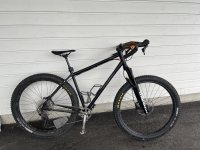
I have massive arthritis in my feet, ankles, knees, hips, back, neck, fingers. Arthritis is a degenerative disease, meaning the more I use my joints the faster they permanently wear out. There is no cure. I have to take it easy! Which is why I posted the E-bike.I’ve liked my ATB. Updated from mech brakes to hydraulic ones after riding enduro track scared about not having enough braking power. I’m using 11-50 cassette with Deore RD connected to GRX brifters via 3D printed pull ratio changer.
View attachment 95937
I think that E-bike looks badass, for what it's worth. It's just begging to have some flame spitting exhaust pipes thrown on the backI have massive arthritis in my feet, ankles, knees, hips, back, neck, fingers. Arthritis is a degenerative disease, meaning the more I use my joints the faster they permanently wear out. There is no cure. I have to take it easy! Which is why I posted the E-bike.
You just posted a really hazardous e-bike. I wouldn’t have reacted if there was for example Specialized (Turbo) Fattie6 as it’s designed properly and build is reliable for the intented use.I have massive arthritis in my feet, ankles, knees, hips, back, neck, fingers. Arthritis is a degenerative disease, meaning the more I use my joints the faster they permanently wear out. There is no cure. I have to take it easy! Which is why I posted the E-bike.
As is I can still play guitar after several drinks and a lot of weed, and 1/4 of a tramadol. And every day I see people younger than me on TV dying. I'm just glad I can still hold a spoon to feed myself!
Because Doc told me he has patients that CAN'T. Ugh....

Don't start me on hub and wheel standards ... I get at least those are real standards, but just too much of them. Personally I prefer a through axle than those tiny 9mm skewers. But it's become hard to find a good set of used wheels that will fit axle size and width, on the right wheel size, disc brakes you say, are those 6 bolts or centerlock, boost, non boost spacing ...Hub "standards" are slightly less annoying than so-called BB "standards".
I did read the reviews on Amazon, no mention of stability problems. Cheap Chineezium cranks that strip, batteries that don't last so long. There's even a forum where they discuss how to kill the 30mph limiter. (I am not that crazy tho)You just posted a really hazardous e-bike. I wouldn’t have reacted if there was for example Specialized (Turbo) Fattie6 as it’s designed properly and build is reliable for the intented use.
It’s a fact that fatbikes get wobbly as speed increases and when you combine that with bad shocks front and rear things get serious and life threatening. Zoom makes usable suspension depending on the price range, but the bike posted didn’t have those. That fork and rear shock are just pogo sticks. It’s a safety matter suspension has real rebound damping.
So yeah, not trying to bash e-(motor)bikes here, just friendly notice about safety first!
So obviously this one is a 54, which might be on the smaller side (brand dependent, apparently), but I'm intrigued by it. Gotta wait till the shop opens up again on Tuesday to test it out, but from everything I'm reading it seems like it's in that sweet spot of what I'm looking for: designed like a road bike with a smidge of all-road versatility.Sounds to me like if you're already wanting to push it more in a neighborhood ride then you'll be left even more wanting in a situation where you can really open it up.
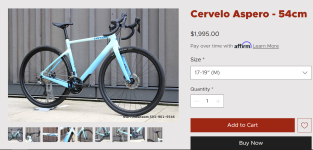
Now, that's a bike !So obviously this one is a 54, which might be on the smaller side (brand dependent, apparently), but I'm intrigued by it. Gotta wait till the shop opens up again on Tuesday to test it out, but from everything I'm reading it seems like it's in that sweet spot of what I'm looking for: designed like a road bike with a smidge of all-road versatility.
View attachment 95947
Yep yep. Be curious to see how that feels ride wise versus some of the steel frames I’ve tried outNow, that's a bike !
Looks like carbon ?