jessenator
Well-known member
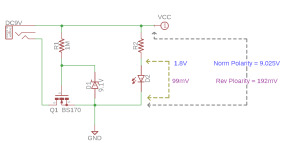
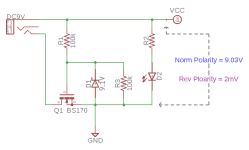
Curious if there are disadvantages in our types of circuits to having MOSFET reverse-polarity protection be on the "low side" of the circuit; i.e. on the ground side. This is assuming we're working 100% with negative-ground circuits.
Most of the resources I've seen are for old fx retrofitting (thanks to Keen's musique site and other old forum posts) are high-side designs using a P-channel MOSFET. It seems that using N-channel MOSFETs on the high-side pose a potential problem and more complexity with its signal routing, making it not the best choice in this instance.
 www.aivon.com
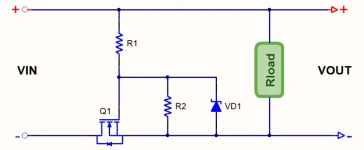
This article linked above, on the other hand, shows examples of low-side protection using an N-channel MOSFET.
I suppose one disadvantage would be all GND would have to pass through it, and it alone in one's power filtering scheme, which would either a) eliminate the option of a singular GND plane and require star wiring, or b) require an ancillary supply breakout board with star wiring, allowing the main effect board to have a GND plane.
Any other considerations?
Most of the resources I've seen are for old fx retrofitting (thanks to Keen's musique site and other old forum posts) are high-side designs using a P-channel MOSFET. It seems that using N-channel MOSFETs on the high-side pose a potential problem and more complexity with its signal routing, making it not the best choice in this instance.
Designing Reverse-Polarity Protection with MOSFETs
Overview of MOSFET reverse-polarity protection: NMOS vs PMOS topologies, operation, device selection, efficiency vs diode drop, and key PCB design considerations.
This article linked above, on the other hand, shows examples of low-side protection using an N-channel MOSFET.
I suppose one disadvantage would be all GND would have to pass through it, and it alone in one's power filtering scheme, which would either a) eliminate the option of a singular GND plane and require star wiring, or b) require an ancillary supply breakout board with star wiring, allowing the main effect board to have a GND plane.
Any other considerations?