Components and specs

Lobo da Mata

New member
Hi,
I'm having problems buying components, when I take the bill of materials of the building docs to the salesmen they refuse to sell me, they say it doesn't specify:

- the impedance, wattage and percentage of the resistors;
- the voltage of the capacitors (all of it);

How can I know all these specs of each component for each project (resistors, capacitors, diodes, etc)?

After studying about this, I understood that "1M" already means the impendance, right? So, why the hell those guys refuse to sell it for me?!

I am about to start my first pedal (Distortion 250), but I aim to do the Dirty Sanchez and Simulcast in the future.

Thanks for the patience.
 
Last edited:
Well since most pedals are using DC current, there is no impedance...just resistance. Impedance is the AC equivalent. I think you’ve got the gist of that one :)

Unless otherwise specified all builds are 1/4 watt. I opt for 1% tolerance.

Voltage of the capacitors is important because the bigger you go the bigger the cap will be. For film box caps stick to 100v, specify 5mm lead spacing. The 1uf will be wider but still 5mm spaced. For your electrolytic caps they should be 2mm spacing, 25v should be fine there. 5mm LEDs too.

There...that took me roughly 3 minutes. If your sales person can’t give you that time of day you shouldn’t give them your hard earned money. :)
 
The preferred resistors (preferred by me anyway) are 1% metal film. Tayda's 1/4W will fit, but they are a bit tight. Their 1/8W resistors fit better. I have yet to build a guitar pedal that needed anything bigger than 1/8W.
Expanding a bit on what Nostradoomus said, the thing that matters most with film caps is the physical size. Most of the time, you need boxes that are 0.1" thick, or less, to fit them on PedalPCBs boards.
My preferred suppliers for pedal parts (in no particular order) are:
Small Bear
Tayda
Mammoth
Love My Switches
Guitar Pedal Parts
DigiKey
Mouser
and PedalPCB, of course!
Take your time and browse.
 
Remember, the voltage specification of the capacitors is the maximum voltage they can take. Most pedals use 9 (sometimes 12 or 18) volts. So 25V and 100V capacitors are totally ok from that regard.
 
I have found the Beginners Guide to Pedal Components from GuitarPCB.com to be extremely helpful in teaching me how to select components and specs from big electronics suppliers (I.e Mouser, Tayda, Arrow). I know each experienced pedal builder has their own opinion about parts selection and the ever elusive “mojo”, but this guide has been very helpful to me. I still keep it as a reference material on my workbench some 7 or so builds in....

Generally, I have found that the parts and pieces offered from pedal-specific component suppliers are within the fairway for specs and tolerances us pedal builders look for. These shops, For example, are Mammoth Electronics, Pedal Parts Plus, and Small Bear.
 
Who here uses carbon comp resistors and if so, can you hear the Mojo? I have a ton of vintage CC resistors, but I am loathe to use them because they are noisy. I think I got kinda snobby working in aerospace where it was all tantalum & film caps, metal film and wire wound resistors.
 
Well since most pedals are using DC current, there is no impedance...just resistance. Impedance is the AC equivalent. I think you’ve got the gist of that one :)

Unless otherwise specified all builds are 1/4 watt. I opt for 1% tolerance.

Voltage of the capacitors is important because the bigger you go the bigger the cap will be. For film box caps stick to 100v, specify 5mm lead spacing. The 1uf will be wider but still 5mm spaced. For your electrolytic caps they should be 2mm spacing, 25v should be fine there. 5mm LEDs too.

There...that took me roughly 3 minutes. If your sales person can’t give you that time of day you shouldn’t give them your hard earned money. :)
Thank you, you gave a big help. How do you do with the transistors and diodes? I see some diodes have wattage and voltage specs, and today I couldn't determine all the specs of the fuzz face transistors, it says PNP GE, but the seller once again... :(
 
I have found the Beginners Guide to Pedal Components from GuitarPCB.com to be extremely helpful in teaching me how to select components and specs from big electronics suppliers (I.e Mouser, Tayda, Arrow). I know each experienced pedal builder has their own opinion about parts selection and the ever elusive “mojo”, but this guide has been very helpful to me. I still keep it as a reference material on my workbench some 7 or so builds in....

Generally, I have found that the parts and pieces offered from pedal-specific component suppliers are within the fairway for specs and tolerances us pedal builders look for. These shops, For example, are Mammoth Electronics, Pedal Parts Plus, and Small Bear.
Thank you, I'm reading that, it helps and I've got a long list at Tayda, I just didn't buy yet.
 
1n34A and a bunch of other germanium diodes are usually in a DO-7 package. 1n4148/1n914 etc will be in a DO-35 package and 1n5817/1n400x will be in a DO-41. That should be good enough for the sales people. Lots of small signal diodes are 100v so you’ll be fine there.

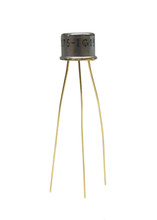
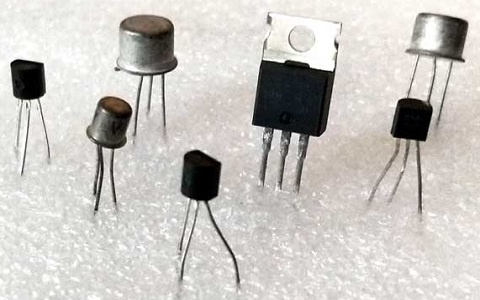
Transistors will vary but most fall under TO-92 or TO-18 (PnP GE will most like be TO-18 or close enough. SO-2 package for vintage stuff if they have em)

As a side note, and as someone who leaves stores if salespeople ask if I need help more than once, order your stuff online haha
 
1n34A and a bunch of other germanium diodes are usually in a DO-7 package. 1n4148/1n914 etc will be in a DO-35 package and 1n5817/1n400x will be in a DO-41. That should be good enough for the sales people. Lots of small signal diodes are 100v so you’ll be fine there.

Transistors will vary but most fall under TO-92 or TO-18 (PnP GE will most like be TO-18 or close enough. SO-2 package for vintage stuff if they have em)

As a side note, and as someone who leaves stores if salespeople ask if I need help more than once, order your stuff online haha
I'm gonna order from Tayda, that won't be cheap, I'll try to eliminate some items.
 
Thank you, you gave a big help. How do you do with the transistors and diodes? I see some diodes have wattage and voltage specs, and today I couldn't determine all the specs of the fuzz face transistors, it says PNP GE, but the seller once again... :(

In very general terms, you will have regular (small) transistors that can handle the voltage and current for a guitar pedal. E.g.:

In other non-guitar applications, you will have large power transistors that are used for handling high current (e.g., drive a motor, large load, etc.). E.g.:

A proper schematic will specify the transistor type, so you don't need to guess in most cases.

It is definitely critical for you to get the type right i.e., PNP or NPN. Always double-check that for best results. The schematic symbols are different.

* For a fuzz face type of schematic, make your best educated guess if no transistor is specified (for your partial schematic). Small bear has a convenient list actually:


More reading:

Transistors are actually kind of a big deal, invented in 1947:

I hope this helps. :)
 
  • Like
Reactions: fig
In very general terms, you will have regular (small) transistors that can handle the voltage and current for a guitar pedal. E.g.:

In other non-guitar applications, you will have large power transistors that are used for handling high current (e.g., drive a motor, large load, etc.). E.g.:

A proper schematic will specify the transistor type, so you don't need to guess in most cases.

It is definitely critical for you to get the type right i.e., PNP or NPN. Always double-check that for best results. The schematic symbols are different.

* For a fuzz face type of schematic, make your best educated guess if no transistor is specified (for your partial schematic). Small bear has a convenient list actually:


More reading:

Transistors are actually kind of a big deal, invented in 1947:

I hope this helps. :)
Thank you! I started my second online guitar pedal building course yesterday, and they didn't give me your info, thanks for the extra help.
 
Who here uses carbon comp resistors and if so, can you hear the Mojo? I have a ton of vintage CC resistors, but I am loathe to use them because they are noisy. I think I got kinda snobby working in aerospace where it was all tantalum & film caps, metal film and wire wound resistors.
I use them for oddball resistances and perma-biasing......and the occasional resistor-man action figure....kinda like a balloon animal.
 
I'm a little familiar with Brasil's import duties and issues (very strict) from being a big air-cooled VW fan (and Willys, Renault and a few other brands that opted to open factories in Brazil to crack that market).

So I can understand your need to shop locally is even more dire than for most of us.

The downside is having to jump through your local supplier's hoops is going to prolong your learning curve (n);
the upside is you'll have a better understanding in the long-run of components and their specs and what's required for pedals. 👍

I ordered some caps 'cause they were cheap — I got physically HUGE 600v when I should've ordered 50v. Luckily, after having them for a few years, I'm finding ways to use those monster-sized caps finally — building amps! 😸
 
Back
Top