

Depattern
Active member
- Build Rating
- 5.00 star(s)
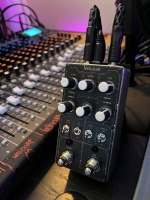
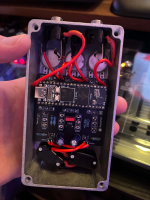
Finished a port of the Qu-Bit Nebulae v2 granular looper to a Terrarium with a Daisy Seed3. Phase vocoder and granular processor running in parallel off a shared 120-second live buffer, blended between them. The same architecture as the module

Ported from Qu-Bit's actual Csound source (MIT licensed, on their GitHub) rather than reimplemented from the manual, so the density curves, grain windows, blend laws and mincer FFT settings are all transcribed values. There is also a branch that picks up alex-thibodeau's blend rework from a llllllll thread a while back, a 2-way engine crossfade with dry on its own control, which lets the vocoder and grains sound together. Stock live mode never lets them overlap. That branch is less developed than the main one

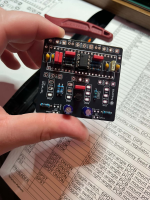
Seed3 works fine on the Terrarium. Drops straight in, no changes
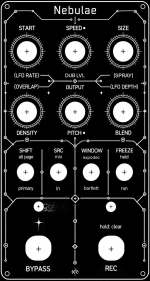
Six knobs with a shift page gets all the module's controls plus an LFO on read position, an output level and a dub level. Center-detent pots on Speed and Pitch, remapped so the detent lands on unity. Window sits on a toggle, expodec or bartlett
I got the leds backward and the decal on my pedal is an old version of the controls, so once the Terrarium pcb is back in stock, im going to build a second one with black powder coated enclosure, black toggle switches, multi-color rgb leds so rec lights red, playback lights green, and bypass is blue (the og Qubit Nebulae v2 eurorack module has blue and white leds). But everything feels very nice here. recording is perfect, the granular and phase vocode mode sounds incredible and identical to the module, the soft touch SPST footswitches feel much nicer than 3PDT when using your hand rather than your foot, the secondary shift function toggle feels very natural and ive already built muscle memory for it after like 2 days. The freeze mode on a toggle switch is actually preferable in my view to the push button functionality of the module
Source, firmware binaries and build notes: Github

Ported from Qu-Bit's actual Csound source (MIT licensed, on their GitHub) rather than reimplemented from the manual, so the density curves, grain windows, blend laws and mincer FFT settings are all transcribed values. There is also a branch that picks up alex-thibodeau's blend rework from a llllllll thread a while back, a 2-way engine crossfade with dry on its own control, which lets the vocoder and grains sound together. Stock live mode never lets them overlap. That branch is less developed than the main one
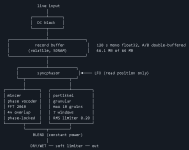
Seed3 works fine on the Terrarium. Drops straight in, no changes
Six knobs with a shift page gets all the module's controls plus an LFO on read position, an output level and a dub level. Center-detent pots on Speed and Pitch, remapped so the detent lands on unity. Window sits on a toggle, expodec or bartlett
I got the leds backward and the decal on my pedal is an old version of the controls, so once the Terrarium pcb is back in stock, im going to build a second one with black powder coated enclosure, black toggle switches, multi-color rgb leds so rec lights red, playback lights green, and bypass is blue (the og Qubit Nebulae v2 eurorack module has blue and white leds). But everything feels very nice here. recording is perfect, the granular and phase vocode mode sounds incredible and identical to the module, the soft touch SPST footswitches feel much nicer than 3PDT when using your hand rather than your foot, the secondary shift function toggle feels very natural and ive already built muscle memory for it after like 2 days. The freeze mode on a toggle switch is actually preferable in my view to the push button functionality of the module
Source, firmware binaries and build notes: Github
Last edited:

