Pedals that don't exist but you wish they did

I wish Ibanez (well, Maxon really) would update the old PDM1. I still have one I bought new in Hong Kong in 1988. It has been there for me over countless gigs and still works perfectly.

But... It has a plastic casing, which bothers me even though it 's been fine since 1988! The pedal is not TBP and the buffer does tone-suck - similar to the average Boss pedal I guess. When you use only three pedals on your board you really notice it. And the modulation doesn't work as it does on modern modulated delays.

So if they gently updated it with a metal casing, better modulation and less tone-suck I would buy it again. As it is I make do with a Source Audio Collider...
 
I wish Ibanez (well, Maxon really) would update the old PDM1. I still have one I bought new in Hong Kong in 1988. It has been there for me over countless gigs and still works perfectly.

But... It has a plastic casing, which bothers me even though it 's been fine since 1988! The pedal is not TBP and the buffer does tone-suck - similar to the average Boss pedal I guess. When you use only three pedals on your board you really notice it. And the modulation doesn't work as it does on modern modulated delays.

So if they gently updated it with a metal casing, better modulation and less tone-suck I would buy it again. As it is I make do with a Source Audio Collider...

That's a really cool pedal to be the original owner of!
( other than the cons you stated, of course )
 
A PT2399 delay perfectly silent on long repeats, no "shhhhh" even with 1 second delay. And no need to select the one 2399 chip out of ten....Any would do.

And an analog chorus sounding even better than the CE-2, with a completely different circuit.

A modded MD-2 circuit, with mid control, clipping options, etc. bringing the MD-2 to a whole new level.

An OD + Fuzz circuit, like the Punkifier/Pacifier or the Carcass/Carcosa Fuzz from DOD, but with both OD and Fuzz sounding great on their own, and even better mixed together.

A double A/DA flanger with a sync control, allowing to criss-cross both A/DA flangers. Like the Dimension Chorus.

A fuzz factory circuit with all the same sounds than the original (and more), but allowing to easily add or remove the whistling noises, at any setting.

A perfect sub-octaver, with perfect tracking (even on full chords) and able to emulate the sound of the input signal to generate the sub octave (I mean the octave sound generated by the circuit is just as beautiful as a guitar sound). With a taylored custom made fuzz to push further the sub octave when necessary, with a blend control. EHX Deluxe Octave Multiplexer with the buzzy, synthetic flavor only as an option, and all the issues with the first octave solved.

A Memory Man able to go much further than 600 ms, fully analogue.

A darkglass microtubes B3K OD taylored for guitar.
 
Last edited:
A PT2399 delay perfectly silent on long repeats, no "shhhhh" even with 1 second delay. And no need to select the one 2399 chip out of ten....Any would do.

And an analog chorus sounding even better than the CE-2, with a completely different circuit.

A modded MD-2 circuit, with mid control, clipping options, etc. bringing the MD-2 to a whole new level.

An OD + Fuzz circuit, like the Punkifier/Pacifier or the Carcass/Carcosa Fuzz from DOD, but with both OD or Fuzz sounding great on their own, and even better mixed together.

A double A/DA flanger with a sync control, allowing to criss-cross both A/DA flangers. Like the Dimension Chorus.

A fuzz factory circuit with all the same sounds than the original (and more), but allowing to easily add or remove the whistling noises, at any setting.

A perfect sub-octaver, with perfect tracking (even on full chords) and able to emulate the sound of the input signal to generate the sub octave (I mean the octave sound generated by the circuit is just as beautiful as a guitar sound). With a taylored custom made fuzz to push further the sub octave when necessary, with a blend control. EHX Deluxe Octave Multiplexer with no buzzy, synthetic flavor, and all the issues with the first octave solved.

A Memory Man able to go much further than 600 ms, fully analogue.

A darkglass microtubes B3K OD taylored for guitar.

I nominate @justin for president/king of the Earth.
 
I find the question quite inspiring.

I guess what I would mostly appreciate would be :

An entirely new modulation, doing something different with the signal, opening the doors of several new styles of music (nothing less), depending on how you use it. Warm, poetic, and able to be combined with the good old modulations we already know, for even more possibilities...

A revolutionary tone circuit, like the Big Muff tone control has been in its days, able to be implemented in any gain effect. Something that will quickly become a new reference, a safe bet for an artist. Doing things to the signal, we never thought could be possible, like discovering a new range of frequencies. Adding ultra/infrasounds in a useful way to the signal, or something... Careful with this tone control, it gives a strong temporary synesthesia to the player quite often.

A new reverb circuit, not Plate, not Spring, not Shimmer etc. but something completely different, very realistic in its own way, with a different texture and color. For exemple something that gives to the public the feeling that the sound is coming from the walls (even if there aren't any walls), or from the ground and the skies (with a DPDT switch), and bouncing all over. A psycho-active reverb, able on lower settings to make you feel nice and cozy, like inside a hobbit house. Very simple to build, cheap of course, and above all, allowing a large number of original and creative uses and purposes, like kicking a spring tank.

I think we really need these... and soon.
 
Last edited:
A PT2399 delay perfectly silent on long repeats, no "shhhhh" even with 1 second delay. And no need to select the one 2399 chip out of ten....Any would do.

And an analog chorus sounding even better than the CE-2, with a completely different circuit.

A modded MD-2 circuit, with mid control, clipping options, etc. bringing the MD-2 to a whole new level.

An OD + Fuzz circuit, like the Punkifier/Pacifier or the Carcass/Carcosa Fuzz from DOD, but with both OD and Fuzz sounding great on their own, and even better mixed together.

A double A/DA flanger with a sync control, allowing to criss-cross both A/DA flangers. Like the Dimension Chorus.

A fuzz factory circuit with all the same sounds than the original (and more), but allowing to easily add or remove the whistling noises, at any setting.

A perfect sub-octaver, with perfect tracking (even on full chords) and able to emulate the sound of the input signal to generate the sub octave (I mean the octave sound generated by the circuit is just as beautiful as a guitar sound). With a taylored custom made fuzz to push further the sub octave when necessary, with a blend control. EHX Deluxe Octave Multiplexer with the buzzy, synthetic flavor only as an option, and all the issues with the first octave solved.

A Memory Man able to go much further than 600 ms, fully analogue.

A darkglass microtubes B3K OD taylored for guitar.


I find the question quite inspiring.

I guess what I would mostly appreciate would be :

An entirely new modulation, doing something different with the signal, opening the doors of several new styles of music (nothing less), depending on how you use it. Warm, poetic, and able to be combined with the good old modulations we already know, for even more possibilities...

A revolutionary tone circuit, like the Big Muff tone control has been in its days, able to be implemented in any gain effect. Something that will quickly become a new reference, a safe bet for an artist. Doing things to the signal, we never thought could be possible, like discovering a new range of frequencies. Adding ultra/infrasounds in a useful way to the signal, or something... Careful with this tone control, it gives a strong temporary synesthesia to the player quite often.

A new reverb circuit, not Plate, not Spring, not Shimmer etc. but something completely different, very realistic in its own way, with a different texture and color. For exemple something that gives to the public the feeling that the sound is coming from the walls (even if there aren't any walls), or from the ground and the skies (with a DPDT switch), and bouncing all over. A psycho-active reverb, able on lower settings to make you feel nice and cozy, like inside a hobbit house. Very simple to build, cheap of course, and above all, allowing a large number of original and creative uses and purposes, like kicking a spring tank.

I think we really need these... and soon.

 
Don’t get me wrong, the Volante does a lot of stuff that the El-Cap doesn’t do, but when it comes down to it, the three algorithms on the El-Cap are more useful in my opinion AND the El-Cap gives you control over Tape Crinkle AND Wow and Flutter where the Volante rolls all the mechanical irregularities in the Mechanics control.
Those are good points I totally see what you’re talking about. I think it really comes down to can you justify the size of the volante if the El Cap satisfies all your tape delay needs and you’re not really into the multi tap.

On a related note I just got rid of a Keeley Eccos because my Synesthesia can do the same sounds but the flanged tape delay was a really cool sound.
 
A truly intelligent noise gate? Using predictive processing (mind-reading) to head off noise? 🤔

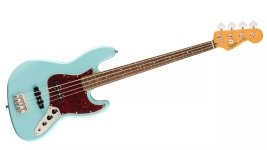
I recently acquired a Squier Jazz Bass (in Daphne Blue, somewhat like a vintage Lambretta for all you Mods out there) and noise from the single coils is suddenly noticeable in my system.

30BEF756-C820-4EEA-A050-A6856AEB87CE.jpeg

Such noise is much reduced when playing guitar with HBs as customary.

But it’s beaut to play a passive bass again after a long sojourn with actives. The pedals come alive and the bass feels great and has a growl all of its own.

I want to test the noise level live before going overboard with Faraday cages and (perhaps aptly) paranoid excesses of shielding. My amp has a ground lift and maybe staying away from lights, computers, etc in the studio will at least subdue the hum.

But a noise gate that knows the next lick I play in advance and zaps all the noise in between would be the cat’s squirrel, err whiskers.
 
A certain upright bass-player I used to gig with could have used tap-tempo... We would start a song and when he came in the drummer and I would hit reset. He could never come in on the beat.

So yeah - tap-tempo for bass please.

I'm envisioning a footswitch on your pedalboard that toggles miniature green/yellow/red LED traffic-light on the bass-player's pedalboard:

Red "DON'T play the bass"
Yellow "OK, pay attention now, it's almost your time"
Green "GO! Start your little bass riff NOW so as not to make fools of us all.."

Or maybe for drummers:

Red "GET OFF YOUR MUSTANG, SALLY!"
Yellow "Chill here, buddy- you're golden."
Green "KEEP UP, SNOOZE-HEAD!"
 
Yup- or at least that’s what I get out of it.

I’ll throw together a demo track sometime this weekend showcasing that functionality. That’s like 90% of what I use it for personally— especially like setting it for 100% wet and then setting the base delay time to a 1/4 note in what I’m playing, and then I just play everything a beat early so it comes on the beat I want it to. Really weird experience to deliberately play with a big latency, but it yields really cool results that I otherwise wouldn’t have thought of. If I have a through-composed part I want that same 100% wet effect on, sometimes I’ll set it for a maximum delay time, and just reamp thru the pedal and then realign it to the grid to get metronomic accuracy with a really dramatic effect
@Harry Klippton here's a demo track I threw together. I didn't have the knobs set exactly right so there's more pitch modulation than I would have liked– makes it sound a bit like Henry Kaiser having a psychotic meltdown. anyway, its with the blend knob set fully wet, with a base-delay time of around 300ms. I recorded into with the guitar split between the pedal, which went into the guitar input 2 of my interface and into the daw with monitoring muted, and then the dry signal into the mic input with monitoring on but nothing recording. That way I could hear my actual playing in real-time as I played along with the track, instead of the modulated delayed signal. Then what I did is time shifted the recorded track (of the 100% wet modulated and delayed signal) forward to align perfectly with the beat. pretty friggin wonky tone. I'll take another crack at a solo with a less aggressive setting at another point, but I already stayed up too late recording this as it is, so I didn't want to fiddle around with the pedal and record a new take.
 
@Harry Klippton here's a demo track I threw together. I didn't have the knobs set exactly right so there's more pitch modulation than I would have liked– makes it sound a bit like Henry Kaiser having a psychotic meltdown. anyway, its with the blend knob set fully wet, with a base-delay time of around 300ms. I recorded into with the guitar split between the pedal, which went into the guitar input 2 of my interface and into the daw with monitoring muted, and then the dry signal into the mic input with monitoring on but nothing recording. That way I could hear my actual playing in real-time as I played along with the track, instead of the modulated delayed signal. Then what I did is time shifted the recorded track (of the 100% wet modulated and delayed signal) forward to align perfectly with the beat. pretty friggin wonky tone. I'll take another crack at a solo with a less aggressive setting at another point, but I already stayed up too late recording this as it is, so I didn't want to fiddle around with the pedal and record a new take.
This is nuts. Thank you
 
Also a pedal that's like a looper (but doesn't loop) that you press at the start of a riff, and then again at the end, and has a visual counter that shows how many times you've played it
 
Back
Top