Advantage of a buffer in the power supply

Was talking to a peer about this the other day.

The buffer ofc reduces the output impedance of the midpoint much closer to 0, which trends towards an ideal voltage source.

You have to be careful though bc the opamps contributes its own self- noise.
 
Was talking to a peer about this the other day.

The buffer ofc reduces the output impedance of the midpoint much closer to 0, which trends towards an ideal voltage source.

You have to be careful though bc the opamps contributes its own self- noise.
When i first was looking at this for some reason I completely missed ic the 2nd half of ic 1. And was just thinking it would make sense to just use a single dual. Which im assuming they wouldve done. But using it for something made it make more sense since it was there. Anyways, no clue why i just kept looking right over it.

 
When i first was looking at this for some reason I completely missed ic the 2nd half of ic 1. And was just thinking it would make sense to just use a single dual. Which im assuming they wouldve done. But using it for something made it make more sense since it was there. Anyways, no clue why i just kept looking right over it.
I mean if the 2nd stage is free....

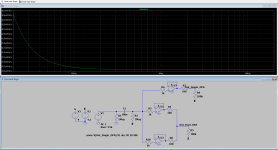
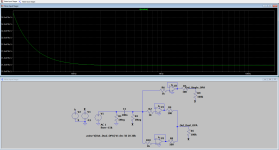
Another use I realized was IF there is no gain in the input buffer, you can parallel the opamps stages to lower noise at the input. You just have to add a very small series R (1 - 100r) passive summer called ballast resistors.

You can see the difference of 40nV (~ EIN of TL072) vs 31nV (|| TL072s) below.

1789585369429.png 1789585400620.png
 
Back
Top