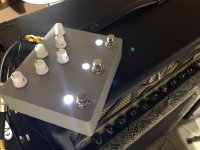
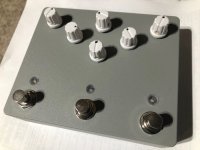
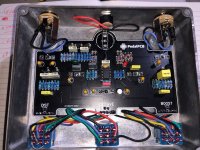
Big props to Chuck D Bones for helping educate me on the importance of verifying transistor pinouts. At any rate, I used a pre-finished Hammond enclosure and am running an OP07 in here. The thing sounds huge and is doom in a box. Definitely the most unique of all of my fuzz and dirt pedals.

You are using an out of date browser. It may not display this or other websites correctly.
You should upgrade or use an alternative browser.
You should upgrade or use an alternative browser.
Parentheses 2020
- Thread starter ThinAir
- Start date


Chuck D. Bones
Circuit Wizard
Great job! Very clean build.
Tantalum electrolytic caps are simply better. More reliable, longer life, tighter tolerance, more transparent compared to aluminum electrolytics.
Tantalum electrolytic caps are simply better. More reliable, longer life, tighter tolerance, more transparent compared to aluminum electrolytics.

jspake
Member
oh yeah? like across the board better?Great job! Very clean build.
Tantalum electrolytic caps are simply better. More reliable, longer life, tighter tolerance, more transparent compared to aluminum electrolytics.
Chuck D. Bones
Circuit Wizard
Kinda depends on your definition of better. There are places where electrical performance doesn't matter as much, like power supply filtering. In some circuits you won't hear any difference between tantalum and aluminum. In other places there will be an audible difference. The biggest sonic flaw in aluminum electrolytics is a phenomenon known as dielectric absorption. This is where the capacitor has a kind of memory and smears the transients. The net effect is loss of sonic definition. In a clean boost or a compressor, it can be apparent. In a thick doomy fuzz pedal, not so much. You'll really hear the difference in 10 or 15 years when the aluminum electrolytics start failing.
jspake
Member
Kinda depends on your definition of better. There are places where electrical performance doesn't matter as much, like power supply filtering. In some circuits you won't hear any difference between tantalum and aluminum. In other places there will be an audible difference. The biggest sonic flaw in aluminum electrolytics is a phenomenon known as dielectric absorption. This is where the capacitor has a kind of memory and smears the transients. The net effect is loss of sonic definition. In a clean boost or a compressor, it can be apparent. In a thick doomy fuzz pedal, not so much. You'll really hear the difference in 10 or 15 years when the aluminum electrolytics start failing.
wow, that’s super informative. thanks for going over it in that much detail. maybe i’ll swap out s few of the caps i’ve got in some of these boards i’m preparing.

Betty Wont
Well-known member
At ambient operating temperature in an infrequently used low voltage dc circuit such as a pedal it is unlikely that you will see/hear any differences in an electrolytic's performance in your lifetime. Tantalum is a conflict resource.
I prefer to use tantalum for the polarized values below 47 uf, but in the specific case of this build, I used a lot of tantalum because that's what EQD was using in the Life Pedal photos I was able to find.i'm gearing up for one of these myself. can you share your reasons for using tantalum caps instead of electrolytics in most places?
Many thanks!!Great job! Very clean build.
Tantalum electrolytic caps are simply better. More reliable, longer life, tighter tolerance, more transparent compared to aluminum electrolytics.