
You are using an out of date browser. It may not display this or other websites correctly.
You should upgrade or use an alternative browser.
You should upgrade or use an alternative browser.
Socketing diodes
- Thread starter Itsmedant
- Start date
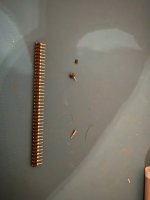
YesDo you all think it’s fine using the socket without the plastic?
Thanks! Just wanted to make sure! Time to solder! (I got a bunch of germanium diodes that I want to play around with tonight)

falco_femoralis
Well-known member
Yes it's fine using it without the plastic. It's cleaner and looks nicer too 

Nostradoomus
Well-known member
Have you checked to make sure the diode legs fit in the sockets first? Some do, a lot don’t!

zeropluszero
Well-known member
Depending on the sockets, you can also say, break off 4 pins, and then you can push the middle pins out with some pliars.
Or you realise you'll never really get around to testing different diodes, and just solder them in place
Or you realise you'll never really get around to testing different diodes, and just solder them in place

Ginsly
Well-known member
If you’re using pliers to break em off I’d use little snips instead - makes a huge difference.
Also- keep in mind, most/all sockets are way less grabby once you’ve auditioned just a few components in them. That’s solved by soldering the top once you’ve chosen a part, but something to be aware of.
if you’re not breadboarding first I recommend at least running jumpers from the diode pads to a little breadboard where you can run through as many parts as you like without stressing out the sockets!
Also- keep in mind, most/all sockets are way less grabby once you’ve auditioned just a few components in them. That’s solved by soldering the top once you’ve chosen a part, but something to be aware of.
if you’re not breadboarding first I recommend at least running jumpers from the diode pads to a little breadboard where you can run through as many parts as you like without stressing out the sockets!
Yea I def checked that first! One set (my BAT41s didn’t!) so I did what @Ginsly suggested and just ran some jumpers to a breadboard to test each one out.Have you checked to make sure the diode legs fit in the sockets first? Some do, a lot don’t!
Ended up going with some AN307s, going to try and get it into the enclosure today!

tegendemuur
Well-known member
Google fails me (of course), but at some stores you can actually buy just the metal inserts without the plastic stuff. Some here prefer this uniform look without the snapped plastic bits.
Last edited:


Feral Feline
Well-known member
I've tried breaking SIP sockets off by hand, by clippers etc...
The best way for me is to put 'm on a cutting board and use a box-cutter or similar blade and "SAW" in one direction only — I get clean and consistent cuts with little damage/wastage.
Also, why not build yourself a diode-selector and then you can decide what's best and solder them in (or select the best options and put those options on a switch)...
The best way for me is to put 'm on a cutting board and use a box-cutter or similar blade and "SAW" in one direction only — I get clean and consistent cuts with little damage/wastage.
Also, why not build yourself a diode-selector and then you can decide what's best and solder them in (or select the best options and put those options on a switch)...

I've got nothing for amassing quantifiable data, but...
I'd build a clipper-switcher. Socketed, so I can swap out sets of diodes.
Could be done with a 12PDT rotary or a bunch of dip-switches.


And the above FlexiClip is scalable...
I'd build a clipper-switcher. Socketed, so I can swap out sets of diodes.
Could be done with a 12PDT rotary or a bunch of dip-switches.
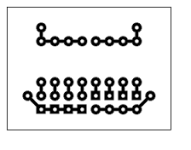
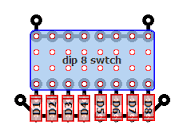
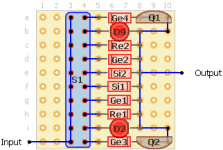
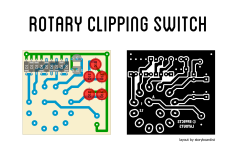
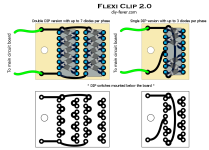
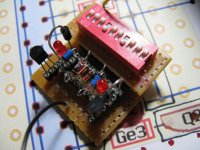
And the above FlexiClip is scalable...
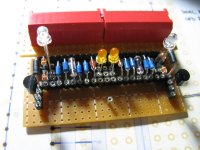

I actually wanted to do this soon! Thanks for the pictures and diagrams, that helps a lot! I bought a rotary switch recently to make one of these!I've tried breaking SIP sockets off by hand, by clippers etc...
The best way for me is to put 'm on a cutting board and use a box-cutter or similar blade and "SAW" in one direction only — I get clean and consistent cuts with little damage/wastage.
Also, why not build yourself a diode-selector and then you can decide what's best and solder them in (or select the best options and put those options on a switch)...
I've got nothing for amassing quantifiable data, but...
I'd build a clipper-switcher. Socketed, so I can swap out sets of diodes.
Could be done with a 12PDT rotary or a bunch of dip-switches.
And the above FlexiClip is scalable...