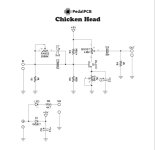
I'm experimenting with the Chickenhead (modified NPN rangmeaster) circuit on a breadboard by adding the passive LPF from this thread:
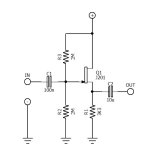
It works great but there is a small drop in level even when the filter is at it's minimum setting. Chuck suggested adding a buffer before and after the tone stack, so I started by adding PPCB's "simple jfet buffer" circuit to the output of the chickenhead (without the tone control) and I was expecting unity gain, but the output is less than unity gain and to my ears thre is a slight LF loss.
I would like to understand why the buffer doesn't maintain unity gain and how I could manage the impedance issues between the chickenhead and the tonestack without losing the original circuit's mojo. Any suggestions?


Tone stacks show up in the vast majority of pedals and amps. This article will discuss at a top level what they do, how they do it, how to design them and how to mod them. You'll want to have Duncan's Tone Stack Calculator (TSC) handy so you can follow along. Hardcore enthusiasts will want to run some LTSpice simulations. Good news everyone! There won't be any math!
Low-Pass Filter
The simplest tone stack is a low-pass filter. One way to implement it is how it's done in the Rat. The FILTER control varies the corner freq and R7 sets an upper bound to the corner freq.
 ...
...
Low-Pass Filter
The simplest tone stack is a low-pass filter. One way to implement it is how it's done in the Rat. The FILTER control varies the corner freq and R7 sets an upper bound to the corner freq.
 ...
...- Chuck D. Bones
- Replies: 15
- Forum: Chucks Boneyard

It works great but there is a small drop in level even when the filter is at it's minimum setting. Chuck suggested adding a buffer before and after the tone stack, so I started by adding PPCB's "simple jfet buffer" circuit to the output of the chickenhead (without the tone control) and I was expecting unity gain, but the output is less than unity gain and to my ears thre is a slight LF loss.
I would like to understand why the buffer doesn't maintain unity gain and how I could manage the impedance issues between the chickenhead and the tonestack without losing the original circuit's mojo. Any suggestions?