BuddytheReow
Moderator
Ladies and Circuit Nerds!
@fig 's signoff after a contest is "Now Go Build Something!" Here's your chance! We all enjoy our time under the iron putting together our PCB's, but here's an opportunity to make something new, uniquely yours, and to share it with this community. It's time for a circuit design contest!
"Circuit design? I don't know how to do that!" Not to worry. There are plenty of resources scattered throughout this site and the interwebs to aid you in your quest to build something. All skill levels are encouraged to participate. A noob can be a winner too!
The contest is simple: design your own circuit. The rules are as follows:
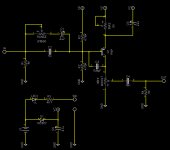
-An official submission must include a schematic, a description of your circuit, and a picture of your build. The schematic should be done using some sort of CAD software, but a nicely hand drawn one is allowed (we have to read it too, you know?) The circuit must be built on perfboard, veroboard, breadboard, or PCB. A modded commercially available PCB is also acceptable. Your description can be very high level and non technical (what it sounds like, what the controls do, etc.).
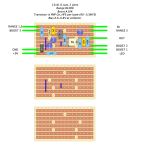
-The circuit must be able to fit into a 125b enclosure (offboard wiring included). Top mount or side mounted jacks are your choice. If your circuit is breadboarded, a 400point board will definitely work and a 830point board more than likely will work once the circuit is committed to solder on a different medium. If using strip/perf a general guideline is 21 columns wide. Your submission doesn't need to be in an enclosure to count. It just needs to be able to fit into one.
-The type of circuit is completely up to you. Boosters, Fuzz, OD, delay, modulation, etc are all acceptable. It can be guitar oriented or bass oriented. Your circuit can be a commercially available one, but must have your own tweaks/mods to it. No, changing the LED color doesn't count, lol.
-Components used should be available from reputable dealers. Think Mouser, Tayda, Stompbox Parts, Small Bear, etc. No out of production components. No large vacuum tubes that require high voltages (we want to keep people alive here).
-It must be powered from a 9v power supply and have a max current draw of 100mA. Charge pumps and voltage regulators are fair game.
-Mashing multiple circuit blocks together is allowed as long as it fits the other criteria above. Think BMP with a Marshall tone stack, a Rat with a TS tone control, or a Fuzz Face into a PT2399 delay.
-Multiple submissions are allowed, nay, encouraged. Throw everything against the wall and see what sticks! The more you experiment, the better you'll get.
-Of course the circuit must work. Bonus points if you submit a demo of your circuit (we won't judge your playing )
)
Judging Criteria:
-Originality. Creativity is encouraged. Your creativity can extend to modding an existing circuit, mashing a few circuit legos together and calling it done, or revamping the whole electronics system.
-Parts count. Less is more here, but not 100% necessary. If your circuit needs 3 gain stages and an active 3-EQ tone stack, that's fine but they must serve a purpose. You won't get bonus points for building a 300+ count component circuit.
-Tone. If you say your circuit sounds like a splatty fuzz, it's gotta sound like it. Versatility is not a requirement; your circuit can be a one trick pony (1-knob fuzz).
When is the contest?
The contest starts NOW and will end at midnight EST on March 15. That's about 2 months from now and plenty of time for anyone to put something together. "Beware the ides of March!"
What's the prize?
Prize? No. Prizes (plural)? YES. There will be multiple prizes based on the types of circuits and skill levels that enter. Prizes will be announced at a later time, but that should not discourage you from thinking like a mad scientist
Helpful Hints:
-Look at schematics of some of your favorite pedals. You really like that tone stack? Throw it on your circuit.
-See what others have done. There are many topologies out there that are useful guidelines.
-You can check out Chuck's Boneyard, The Test Kitchen, or the Resources section here for some circuit knowledge, inspiration, and general tips and tricks.
-No circuit is too dumb or too boring. Everyone here has a different level of circuit knowledge and we would love to have everyone submit something.
-Build something. Anything. Find out what you like and don't like about it and take what you learned to your next circuit. You'll get something you're proud of and really like with enough passes.
Any questions? Now go build something!
BuddytheReow
Oh, and here's a little something help get you started
 forum.pedalpcb.com
@fig 's signoff after a contest is "Now Go Build Something!" Here's your chance! We all enjoy our time under the iron putting together our PCB's, but here's an opportunity to make something new, uniquely yours, and to share it with this community. It's time for a circuit design contest!
"Circuit design? I don't know how to do that!" Not to worry. There are plenty of resources scattered throughout this site and the interwebs to aid you in your quest to build something. All skill levels are encouraged to participate. A noob can be a winner too!
The contest is simple: design your own circuit. The rules are as follows:
-An official submission must include a schematic, a description of your circuit, and a picture of your build. The schematic should be done using some sort of CAD software, but a nicely hand drawn one is allowed (we have to read it too, you know?) The circuit must be built on perfboard, veroboard, breadboard, or PCB. A modded commercially available PCB is also acceptable. Your description can be very high level and non technical (what it sounds like, what the controls do, etc.).
-The circuit must be able to fit into a 125b enclosure (offboard wiring included). Top mount or side mounted jacks are your choice. If your circuit is breadboarded, a 400point board will definitely work and a 830point board more than likely will work once the circuit is committed to solder on a different medium. If using strip/perf a general guideline is 21 columns wide. Your submission doesn't need to be in an enclosure to count. It just needs to be able to fit into one.
-The type of circuit is completely up to you. Boosters, Fuzz, OD, delay, modulation, etc are all acceptable. It can be guitar oriented or bass oriented. Your circuit can be a commercially available one, but must have your own tweaks/mods to it. No, changing the LED color doesn't count, lol.
-Components used should be available from reputable dealers. Think Mouser, Tayda, Stompbox Parts, Small Bear, etc. No out of production components. No large vacuum tubes that require high voltages (we want to keep people alive here).
-It must be powered from a 9v power supply and have a max current draw of 100mA. Charge pumps and voltage regulators are fair game.
-Mashing multiple circuit blocks together is allowed as long as it fits the other criteria above. Think BMP with a Marshall tone stack, a Rat with a TS tone control, or a Fuzz Face into a PT2399 delay.
-Multiple submissions are allowed, nay, encouraged. Throw everything against the wall and see what sticks! The more you experiment, the better you'll get.
-Of course the circuit must work. Bonus points if you submit a demo of your circuit (we won't judge your playing
)Judging Criteria:
-Originality. Creativity is encouraged. Your creativity can extend to modding an existing circuit, mashing a few circuit legos together and calling it done, or revamping the whole electronics system.
-Parts count. Less is more here, but not 100% necessary. If your circuit needs 3 gain stages and an active 3-EQ tone stack, that's fine but they must serve a purpose. You won't get bonus points for building a 300+ count component circuit.
-Tone. If you say your circuit sounds like a splatty fuzz, it's gotta sound like it. Versatility is not a requirement; your circuit can be a one trick pony (1-knob fuzz).
When is the contest?
The contest starts NOW and will end at midnight EST on March 15. That's about 2 months from now and plenty of time for anyone to put something together. "Beware the ides of March!"
What's the prize?
Prize? No. Prizes (plural)? YES. There will be multiple prizes based on the types of circuits and skill levels that enter. Prizes will be announced at a later time, but that should not discourage you from thinking like a mad scientist
Helpful Hints:
-Look at schematics of some of your favorite pedals. You really like that tone stack? Throw it on your circuit.
-See what others have done. There are many topologies out there that are useful guidelines.
-You can check out Chuck's Boneyard, The Test Kitchen, or the Resources section here for some circuit knowledge, inspiration, and general tips and tricks.
-No circuit is too dumb or too boring. Everyone here has a different level of circuit knowledge and we would love to have everyone submit something.
-Build something. Anything. Find out what you like and don't like about it and take what you learned to your next circuit. You'll get something you're proud of and really like with enough passes.
Any questions? Now go build something!
BuddytheReow
Oh, and here's a little something help get you started
TUTORIAL - So, You're Interested in Circuit Design, huh?
Hey Folks, If you've stumbled upon the new resource thread you're either a bit too nosy on this site or you're genuinely interested in designing your own circuit. If you're the former then go back and look at one of @fig 's contests and make...
forum.pedalpcb.com