CONTEST Happy New Years Limited Parts Contest

CONTEST
Revised and making noise! I had to replace the low-gain GT403 Russian transistor - I'm not sure how I got these to work before. They're very unpredictable even if they test well. Instead I'm using the lone OC75 I have in my stash and yeah, it sounds great. Apologies for the cellphone sound and aimless playing.


And the updated shematic:

View attachment 66717
Oooo.... Infrared LED.... Stealth mode!
 
Alright, here's my entry. I've been on a germanium fuzz kick for the last year or so, and that's led to me developing some opinions on the subject. Although germanium fuzzes sound awesome, they can be a bit of a headache. Sourcing transistors can easily send you down a rabbit hole, and it can be hard to find components with the specs that certain classic circuits purportedly require. It's not too hard to find transistors that work in a rangemaster or a fuzz face—just grab a bag of P416B or GT308V or GT309E or GT309V or GT310B off of a reputable eBay seller and you'll have more than enough transistors to build multiple copies of both circuits. But finding suitable transistors for a leakage-biased circuit like a Tone Bender Mk. II or III can be much more of a challenge. I've found that leakage-biased circuits are very touchy about temperature and start sounding off if they're outside of a relatively narrow temperature sweet spot. I designed my entry to try and minimize those hindrances so that it's easier for someone without a large transistor collection to build a versatile Tone Bender-style fuzz that's less finicky about temperature than the classic circuits and is less picky about transistors. Here's the schematic:

View attachment 67245

As you can tell, the genesis of this circuit is the Tone Bender Mk. II, with changes inspired by the Tone Bender Mk. III family of circuits. The first stage is unchanged, and uses a 100k base-ground resistor for Q1. For Q1 (and Q3), you can use any germanium NPN with a gains between 40 and 70 (and probably higher, too, but I didn't check) and 80-350 µA of leakage. There are lots of relatively cheap, easily available devices that meet those criteria, e.g. MP11A, MP38A, 104NU71, or 2SD77. One of my favorite things about this circuit is that it isn't picky about transistors; all you need is at least some leakage and it works like a charm.

After Q1, things start changing. Rather than using a small pot on the emitter of Q3 to set the fuzz intensity, I added a C100k pot wired as a variable resistor after Q1 to attenuate the input to Q2. This gives a nice, even range of tones, from heavy overdrive to all out fuzz. I tried a few values here before settling on C100k. More than ~120kΩ of resistance resulted in dull, muddy, tones (unsurprisingly, as the input stage is fairly dark and relies on distortion in the later stages to generate higher harmonics), and the most drastic change was between 0 and ~30kΩ, making a C100k the logical choice, although a B100k works just fine, too.

For Q2, I replaced the germanium transistor with a mid-gain silicon device. To make this work, I added a 2.2M resistor from +9v to the base and a 220pF capacitor from base to collector. In my view, using a silicon device here offers several advantages. In an all-germanium Mk. II, Q2 is the hardest device to select, as its gain and leakage have a huge impact on the biasing of Q3. This also means that changes to Q2's leakage due to changes in ambient temperature can throw off Q3's biasing. Changing Q2 to silicon eliminates this issue; with a silicon Q2 in place, I raised the temperature of Q3 from 70ºF to 95ºF and its collector voltage did not change at all. There is a slight tonal change here between silicon and germanium, with silicon being a little more bright and aggressive, but I'm not sure how much of that is just the change in the device's hFE. For Q2, anything with an hFE of 250-350 works well, so a BC109 if you want mojo, or a 2N3904 or Tayda 2N5088 if you want cheap.

For Q3, I changed the voltage divider above the collector and replaced the 1k pot with a pair of resistors. The emitter resistor (R8) helps set the bias and has a noticeable effect of the harmonic content of the clipping. I tried a bunch of values between 470Ω and 2kΩ. Anything below 1.2kΩ led to abrasive and unpleasant high frequency content; values below 820Ω were even worse and created oscillation. Using a 1.5kΩ resistor tamed the harsh overtones and oscillation without killing the gain. I also played around with a bunch of values for R9, with similar results to R8. Lower values had harsh overtones and oscillation, and higher values had less gain than I wanted, so 220Ω was the sweet spot.

For tone shaping, I used a Tone Bender Mk. III-style tone control. I chose the values of C6, C7, and R10 carefully so that the tone control is useful from 0-10. One of my pet peeves is when pedals have a tone control that sound good from 3-7, but have unusably extreme settings at either end of the rotation. (Even worse are the pedals that sound best with the tone control at 10 and shouldn't have an external tone control in the first place). I think I managed to get this circuit to sound good at every setting on the tone control, but I'd be interested to hear what others think.

Enough of the circuit design talk—how does this thing sound? I think it sounds great. It definitely cops the classic Mk. II tones; as soon as I hit the first note I felt compelled to play the intro riff for Whole Lotta Love. It also does some of the more filtered Mk. III and Buzzaround sounds (unsurprisingly, given the origin of tone section). It cleans up more nicely than most Mk. II-style pedals that I have played, especially if the gain is at 9 or lower and the pedal's tone control is below 7.

Right now I've just got it put together on the breadboard; I'll update this post once I've laid out a PCB.

View attachment 67180
What I want to know is how did you change the temperature from 70 to 95 degrees?
 
What I want to know is how did you change the temperature from 70 to 95 degrees?
Great question! I stuck the transistor in a slightly warmed up neck wrap (one of these, they're great!) along with a thermometer, and pulled it out after a minute, at which point the thermometer had long since stabilized at 95 degrees. I kept my fingers on the transistor after putting it in back the breadboard to minimize the impact of the change in ambient temperature from the neck wrap to the room.
 
Great question! I stuck the transistor in a slightly warmed up neck wrap (one of these, they're great!) along with a thermometer, and pulled it out after a minute, at which point the thermometer had long since stabilized at 95 degrees. I kept my fingers on the transistor after putting it in back the breadboard to minimize the impact of the change in ambient temperature from the neck wrap to the room.
I want to party with YOU!!! :)
 
Wow. Competition is getting stiff.

@BuddytheReow Your latest schematic looks busier than mine, and yet... you have a lower parts count! ARGGGH!

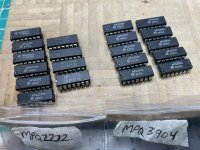
Here's what I've got to work with, a bunch of dodgy-as-can-be transistor arrays from China:

A3A55E60-EE90-4AEE-A191-A39E8D92C483.jpeg

I could see from the way some of the pins were bent that they were pulls from something or other. Then again, they came in the plastic bags at the bottom of the pic, no protection at all just jumbled together. Maybe the pins got bent that way, not from tell-tale signs of being yanked out of an existing mystery PCB by some underpaid worker in a boiler-room...


I don't know if I'll have time (let alone ability) to fab a PCB for my entry. I still have time, right?

the-incredibles-ive-got-time.png
 
Alright, here's my entry. I've been on a germanium fuzz kick for the last year or so, and that's led to me developing some opinions on the subject. Although germanium fuzzes sound awesome, they can be a bit of a headache. Sourcing transistors can easily send you down a rabbit hole, and it can be hard to find components with the specs that certain classic circuits purportedly require. It's not too hard to find transistors that work in a rangemaster or a fuzz face—just grab a bag of P416B or GT308V or GT309E or GT309V or GT310B off of a reputable eBay seller and you'll have more than enough transistors to build multiple copies of both circuits. But finding suitable transistors for a leakage-biased circuit like a Tone Bender Mk. II or III can be much more of a challenge. I've found that leakage-biased circuits are very touchy about temperature and start sounding off if they're outside of a relatively narrow temperature sweet spot. I designed my entry to try and minimize those hindrances so that it's easier for someone without a large transistor collection to build a versatile Tone Bender-style fuzz that's less finicky about temperature than the classic circuits and is less picky about transistors. Here's the schematic:

View attachment 67245

As you can tell, the genesis of this circuit is the Tone Bender Mk. II, with changes inspired by the Tone Bender Mk. III family of circuits. The first stage is unchanged, and uses a 100k base-ground resistor for Q1. For Q1 (and Q3), you can use any germanium NPN with a gains between 40 and 70 (and probably higher, too, but I didn't check) and 80-350 µA of leakage. There are lots of relatively cheap, easily available devices that meet those criteria, e.g. MP11A, MP38A, 104NU71, or 2SD77. One of my favorite things about this circuit is that it isn't picky about transistors; all you need is at least some leakage and it works like a charm.

After Q1, things start changing. Rather than using a small pot on the emitter of Q3 to set the fuzz intensity, I added a C100k pot wired as a variable resistor after Q1 to attenuate the input to Q2. This gives a nice, even range of tones, from heavy overdrive to all out fuzz. I tried a few values here before settling on C100k. More than ~120kΩ of resistance resulted in dull, muddy, tones (unsurprisingly, as the input stage is fairly dark and relies on distortion in the later stages to generate higher harmonics), and the most drastic change was between 0 and ~30kΩ, making a C100k the logical choice, although a B100k works just fine, too.

For Q2, I replaced the germanium transistor with a mid-gain silicon device. To make this work, I added a 2.2M resistor from +9v to the base and a 220pF capacitor from base to collector. In my view, using a silicon device here offers several advantages. In an all-germanium Mk. II, Q2 is the hardest device to select, as its gain and leakage have a huge impact on the biasing of Q3. This also means that changes to Q2's leakage due to changes in ambient temperature can throw off Q3's biasing. Changing Q2 to silicon eliminates this issue; with a silicon Q2 in place, I raised the temperature of Q3 from 70ºF to 95ºF and its collector voltage did not change at all. There is a slight tonal change here between silicon and germanium, with silicon being a little more bright and aggressive, but I'm not sure how much of that is just the change in the device's hFE. For Q2, anything with an hFE of 250-350 works well, so a BC109 if you want mojo, or a 2N3904 or Tayda 2N5088 if you want cheap.

For Q3, I changed the voltage divider above the collector and replaced the 1k pot with a pair of resistors. The emitter resistor (R8) helps set the bias and has a noticeable effect of the harmonic content of the clipping. I tried a bunch of values between 470Ω and 2kΩ. Anything below 1.2kΩ led to abrasive and unpleasant high frequency content; values below 820Ω were even worse and created oscillation. Using a 1.5kΩ resistor tamed the harsh overtones and oscillation without killing the gain. I also played around with a bunch of values for R9, with similar results to R8. Lower values had harsh overtones and oscillation, and higher values had less gain than I wanted, so 220Ω was the sweet spot.

For tone shaping, I used a Tone Bender Mk. III-style tone control. I chose the values of C6, C7, and R10 carefully so that the tone control is useful from 0-10. One of my pet peeves is when pedals have a tone control that sound good from 3-7, but have unusably extreme settings at either end of the rotation. (Even worse are the pedals that sound best with the tone control at 10 and shouldn't have an external tone control in the first place). I think I managed to get this circuit to sound good at every setting on the tone control, but I'd be interested to hear what others think.

Enough of the circuit design talk—how does this thing sound? I think it sounds great. It definitely cops the classic Mk. II tones; as soon as I hit the first note I felt compelled to play the intro riff for Whole Lotta Love. It also does some of the more filtered Mk. III and Buzzaround sounds (unsurprisingly, given the origin of tone section). It cleans up more nicely than most Mk. II-style pedals that I have played, especially if the gain is at 9 or lower and the pedal's tone control is below 7.

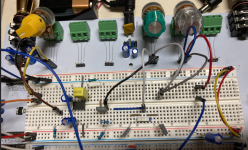
Right now I've just got it put together on the breadboard; I'll update this post once I've laid out a PCB.

View attachment 67180

Update:

Here's the PCB. The pots are spaced to match Tayda's PedalPCB 3-Knob (Type 1) enclosures.

View attachment 67260

Really great write up!

I bookmarked this for breadboarding later.
 
I have the formula and could do the math, but online calc is so much easier:


Checking to see what resistors might work before looking in my stash:


Ideally, if out of 15k but have 30k resistors and want that 15k, I can do the math in my head...

30k || 30k = 15k


Otherwise, depending on what's in the resistor stash...

33k || 27k = 14k85

36k || 27k = 15k429

39k || 24k = 14k857

43k || 24k = 15k403

...


There's some great work in the contest, I'm not in it to win it, just want to push my boundaries and learn something new about the hobby.
 
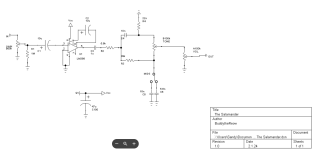
I couldn't sleep last night. Work has been pretty crappy and I guess that stress is starting to catchup with me. Anyways, I'm lying there and though about a LM386. I completely forgot about that 1 trick pony. So, I whipped this up this morning while having some extra coffee.

It's a maxed out LM386 into a modified BMP tone stack. The mod is a selectable mid notch/scoop when the tone control is around noon. I personally don't care for the more "standard" BMP tone control, but in the spirit of this contest I'm including it.

YouTube has been problematic for me the past few days. Can you see the demo clips?

This one's called THE SALAMANDER

1706810388775.png
1706810226853.png
 
Last edited:
The Stakes have been raised in this winner takes all battle!

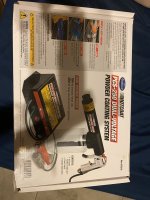
I am going to be adding my very first powder coating system the Eastwood Dual Voltage System! Not only that but im also throwing in a $70 modification that makes it perform like an Intermediate gun!

Now you can bake your own enclosures and get cool finishes!

To be clear this prize will be added with the Way Huge Fat Sandwich, so winner takes all!

IMG_2516.jpeg
 
Last edited:
Back
Top