
You are using an out of date browser. It may not display this or other websites correctly.
You should upgrade or use an alternative browser.
You should upgrade or use an alternative browser.
My next Strat...a pictorial 6-17-23 Update
- Thread starter MichaelW
- Start date

SillyOctpuss
Well-known member
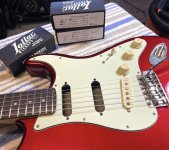
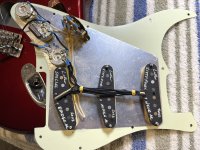
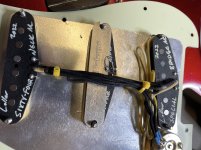
A - love the tidyness of your wiring, including the little labels. 
B - love that Lollar actually write on the bottom of the pickups what they actually are - I get really frustrated when I've bought a guitar second hand and have to spend ages trying to work out which pickups are actually in the guitar I've just bought... Looking at you Bare Knuckle.
C - Frickin love that they laser cut Lollar into the fibre board. Classy stuff Lollar top marks.
I've never had a set of Lollars. I've always wanted to try some but there are so many great pickup winders in the UK that lollars end up being eye wateringly expensive compared to what I'd pay from UK based companies.
B - love that Lollar actually write on the bottom of the pickups what they actually are - I get really frustrated when I've bought a guitar second hand and have to spend ages trying to work out which pickups are actually in the guitar I've just bought... Looking at you Bare Knuckle.
C - Frickin love that they laser cut Lollar into the fibre board. Classy stuff Lollar top marks.
I've never had a set of Lollars. I've always wanted to try some but there are so many great pickup winders in the UK that lollars end up being eye wateringly expensive compared to what I'd pay from UK based companies.
almondcity
Well-known member
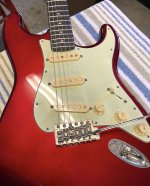
Nice lookin guitar fella
I've always wondered how larger pickup winders could get a product so consistent. Like I'm pretty sure Jason Lollar isn't winding every pickup right? Isn't a lot of the mojo in the actual process of winding, as opposed to just the materials and wind count?
I've always wondered how larger pickup winders could get a product so consistent. Like I'm pretty sure Jason Lollar isn't winding every pickup right? Isn't a lot of the mojo in the actual process of winding, as opposed to just the materials and wind count?

MichaelW
Well-known member
Depends on who you believe when it comes to mojo heh. No Lollar is a small team and I am 100% certain are not "hand wound" but machine wound. I've talked a bit with Zhangbucker and he actually thinks there's a difference between a machine wound pickup vs hand wound (even by the same person). Not saying I agree or even understand, but he offers a "Premium Mojo" line of "hand wound" (I guess he turns a crank?) pickups that cost more.....(of courseNice lookin guitar fella
I've always wondered how larger pickup winders could get a product so consistent. Like I'm pretty sure Jason Lollar isn't winding every pickup right? Isn't a lot of the mojo in the actual process of winding, as opposed to just the materials and wind count?

SillyOctpuss
Well-known member
Depends on who you believe when it comes to mojo heh. No Lollar is a small team and I am 100% certain are not "hand wound" but machine wound. I've talked a bit with Zhangbucker and he actually thinks there's a difference between a machine wound pickup vs hand wound (even by the same person). Not saying I agree or even understand, but he offers a "Premium Mojo" line of "hand wound" (I guess he turns a crank?) pickups that cost more.....(of course
Hand wound means hand guided. It's still a pickup on a winder being driven by a motor but the wire is 'guided' by hand rather than a machine. Marc at Mojo says it allows a hand winder to get the right tension and scatter wound pattern.
SillyOctpuss
Well-known member
I love these guys and this video is excellent. I've not really found anyone else that loves Doug and Pat so let's see if there's any fans on here. This video they're joined by Jason Lollar and gives some excellent insights into how they do what they do and his thoughts on pickup designs.
MichaelW
Well-known member
Jason Lollar is quite the character and can often be pretty opinionated. I've found over the years that a lot of his opinions are pretty valid. Like for instance standardizing on .015 tone caps on EVERYTHING regardless of guitar. Tele, Strat, LP, HB's, P90's. I got that from a blog Jason wrote and found that it really works very well for me.I love these guys and this video is excellent. I've not really found anyone else that loves Doug and Pat so let's see if there's any fans on here. This video they're joined by Jason Lollar and gives some excellent insights into how they do what they do and his thoughts on pickup designs.
SillyOctpuss
Well-known member
Jason Lollar is quite the character and can often be pretty opinionated. I've found over the years that a lot of his opinions are pretty valid. Like for instance standardizing on .015 tone caps on EVERYTHING regardless of guitar. Tele, Strat, LP, HB's, P90's. I got that from a blog Jason wrote and found that it really works very well for me.
Yup. He literally wrote the book that got most of the guys I buy pickups from started. Matt @ Montys and Marc @ Mojo both read Jason's book before starting to wind pickups.
Joben Magooch
Well-known member
Maybe a bit of a tangent, don't mean to derail but I'm curious - how do you think the foil-type shielding that comes stock on a lot of pickguards does?
I've always lined the underside of my pickguards with copper tape (even if they come with aluminum already on or whatever it is) because I was always told that's what you're "supposed" to do. But lately I've been wondering if there's actually much noticeable benefit to "upgrading" to copper tape instead of stock aluminum tape. I've never bothered comparing but figure if the stock shield does fine then no need to bother with the expense/effort of going over it with copper tape.
I know you're a fan of the shielding spray for cavities (I would like to try still) but here specifically curious about the pickguard shielding.
I've always lined the underside of my pickguards with copper tape (even if they come with aluminum already on or whatever it is) because I was always told that's what you're "supposed" to do. But lately I've been wondering if there's actually much noticeable benefit to "upgrading" to copper tape instead of stock aluminum tape. I've never bothered comparing but figure if the stock shield does fine then no need to bother with the expense/effort of going over it with copper tape.
I know you're a fan of the shielding spray for cavities (I would like to try still) but here specifically curious about the pickguard shielding.
SillyOctpuss
Well-known member
Maybe a bit of a tangent, don't mean to derail but I'm curious - how do you think the foil-type shielding that comes stock on a lot of pickguards does?
I've always lined the underside of my pickguards with copper tape (even if they come with aluminum already on or whatever it is) because I was always told that's what you're "supposed" to do. But lately I've been wondering if there's actually much noticeable benefit to "upgrading" to copper tape instead of stock aluminum tape. I've never bothered comparing but figure if the stock shield does fine then no need to bother with the expense/effort of going over it with copper tape.
I know you're a fan of the shielding spray for cavities (I would like to try still) but here specifically curious about the pickguard shielding.
I took the copper shielding out of the bottom of my strat Pickup cavities about a year ago and honestly it made practically no difference to the noise.
I would be surprised if removing the aluminium shield and replacing it with copper would provide any noticeable difference tbh
MichaelW
Well-known member
Hey sorry for the delay in replying. Been a busy couple of days.Maybe a bit of a tangent, don't mean to derail but I'm curious - how do you think the foil-type shielding that comes stock on a lot of pickguards does?
I've always lined the underside of my pickguards with copper tape (even if they come with aluminum already on or whatever it is) because I was always told that's what you're "supposed" to do. But lately I've been wondering if there's actually much noticeable benefit to "upgrading" to copper tape instead of stock aluminum tape. I've never bothered comparing but figure if the stock shield does fine then no need to bother with the expense/effort of going over it with copper tape.
I know you're a fan of the shielding spray for cavities (I would like to try still) but here specifically curious about the pickguard shielding.
I agree with @SillyOctpuss, I don’t think adding copper foil tape makes a lot of difference. to “properly” shield your pickup cavity you would need to create a true faraday cage meaning there needs to be continuity between the foil lining the cavities to the foil lined pickuo cavities fully grounded to the pick guard shield and then to the output jack.
I have done this in the past and found that it actually impacts the tone of the pickups. Seems like there‘s a bit of high end attenuation, at least with single coils on a strat type guitar. Loses some of the sparkle and snap. So i don’t bother anymore. I paint the cavities and ground the bridge but aside from that it’s not ”true“ shielding that I’m doing but it seems to help with RF interference. The noise from single coils doesn’t really bother me, it’s the nature of the beast and once you start playing you don’t really hear it anyway. Having said that, i don’t play live in an electrically noisy ennviroment with cranked amps either, so it may be more important to someone else
SillyOctpuss
Well-known member
I agree with @SillyOctpuss, I don’t think adding copper foil tape makes a lot of difference. to “properly” shield your pickup cavity you would need to create a true faraday cage meaning there needs to be continuity between the foil lining the cavities to the foil lined pickuo cavities fully grounded to the pick guard shield and then to the output jack.
I have done this in the past and found that it actually impacts the tone of the pickups. Seems like there‘s a bit of high end attenuation, at least with single coils on a strat type guitar. Loses some of the sparkle and snap.
The high end attenuation is why I removed the copper foil from mine in the first place. The guy's at Feline Guitars in London gave me a demo of this when I picked up my tele last year. They use shielding paint like you do @MichaelW
The noise from single coils doesn’t really bother me, it’s the nature of the beast and once you start playing you don’t really hear it anyway. Having said that, i don’t play live in an electrically noisy ennviroment with cranked amps either, so it may be more important to someone else
See that's my take on it as well. In my experience if you keep your volume down when not playing the noise is totally manageable and disappears entirely once you're playing, especially in a band situation... Unless there's a specific problem with the venue e.g. Lights, bad power etc
A rehearsal room we booked when we started preping for the gig we just played had a weird problem where my wah, Bo's bass amp, my Jan Ray clone and the drummers in ears were all picking up the same local radio station on and off. They must have a transmitter nearby
 . It made the room totally unusable and we started going somewhere else after that session. My pedals were noticeably worse with my strat than a humbucker guitar that day.
MichaelW
Well-known member
Another Update:
Well, I keep thinking "Now I'm done with this guitar" but it's still not quite there.
First up, I mentioned that ordered a brass trem block to replace the stock steel one that came on the Wilkinson trem I used.
Actually surprised that Musically made a brass block to fit this oddball "staggered" pattern block. It's not standard and only comes on this Korean made Wilkinson Trem.

It's actually extremely well machined and the hardware is better than the original Wilkinson stuff. I like to use a wee bit of Blue Threadlock when installing a trem block....(it was a wee bit more than a wee bit in one hole there.....heh)


Fits and looks perfect. Is it a dramatic change in sound? No, but I can hear a difference in how the guitar sustains and how the trebles respond under gain. Brass block adds a bit of sweetness to the top end that I prefer over steel. Some people love Titanium but I've never tried one.
BUT....inspired by @Joben Magooch 's Strat thread, I decided to order a set of the Xotic Raw Vintage Steel trem springs. There's a lot of "blah blah blah" vintage mojo ad copy on their website. Jury is out on that, but I do find the stock Wilkinson springs to be bit more stiff that I prefer, so I figured I'd give the Raw Vintage springs a shot....will update when they arrive.
I decided to address the one high fret that was giving me some fret out with deep bends. It solved that one issue but as is the case sometimes, solving one fret issue "exposes" other issues. So one big issue is that this Mighty Mite neck is developing a bit of the dreaded "neck pocket hump" that is not uncommon with bolt on guitars. This is where the upper frets from about 15 on up where the neck joins body develops a slight "hump" that causes fret buzz and/or in my case fret outs with deep bends. This is also happens with set neck guitars and vintage acoustics.
In extreme cases the only way to solve it is to pull the frets and shave the fingerboard slightly. Thankfully mine is only very slight and there's an easy fix.
This usually happens on older guitars that have been under tension for years and years but it can also happen with new builds. I'm not trying to throw shade at Mighty Mite, I've seen this happen on any neck. Having said that, my Warmoth, Allparts and Fender branded necks have not done this. It's usually on the cheaper necks. (Stock Squier necks have a tendency to do this).
Also a good reason to wait for a few weeks after a new build to let the guitar sit under tension before final dialing in.
Anyway, addressing this is a bit more "advanced" fret work and I'll document that when I have a chance to deal with it this weekend.
In the meantime, the initial high fret spot I had seemed to be limited to the 12th fret, I use a "fret rocker" to locate the problem.
Then I used my StewMac uber pricy fancy "fret kisser" file to knock down the high spot on that one fret. This little file is ungawdly expensive but a true lifesaver if you do a lot of setups or you're super anal and picky about how your guitar plays (guess which category I fall under hahahah)

Sometimes, though, even the Fret Kisser doesn't completely level the fret with the adjacent frets, and I have to go "old school" with my trusty home made 3 corner file to finish the job. I made this file over 35 years ago and it has served me well.
This is how the fret should look after crowning with my StewMac "Z" file....there was one boo boo where the file slipped. A bit of a pain in the butt to deal with it but thankfully is was a shallow scratch and I was able to rub it out as I did the polish with the fret erasers.
There was a discussion on another thread about how to string up "vintage style" tuning keys on Fenders.
This is my tried and true method. And as I recall how Fender has been doing it since the 50's.
First I install the string, pull it straight and pinch it with my fingers where it meets it's respective tuning post. (In this case in the pic it's the low E string)
Then I measure "2 tuning posts" extra length and trim the string.
Next poke the string down the hole as far as it will go, bend it into the slot 90 degrees and tighten.
You wind up with the perfect number of wraps on the tuning key to put a slight but of downward angle from the nut and it's surprising stable once the strings have been properly stretched. Another advantage is that it makes it easy to remove and re-string with the same set of strings.
Stay tuned for more info and documentation on how I deal with the "neck hump" issue and the other bits and bobs going into this guitar (steel base plate and uber mojo trem springs.....
Well, I keep thinking "Now I'm done with this guitar" but it's still not quite there.
First up, I mentioned that ordered a brass trem block to replace the stock steel one that came on the Wilkinson trem I used.
Actually surprised that Musically made a brass block to fit this oddball "staggered" pattern block. It's not standard and only comes on this Korean made Wilkinson Trem.
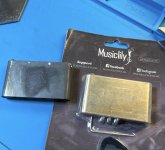
It's actually extremely well machined and the hardware is better than the original Wilkinson stuff. I like to use a wee bit of Blue Threadlock when installing a trem block....(it was a wee bit more than a wee bit in one hole there.....heh)
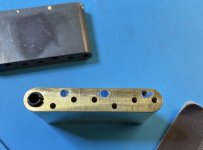
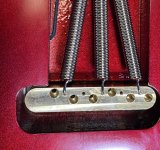
Fits and looks perfect. Is it a dramatic change in sound? No, but I can hear a difference in how the guitar sustains and how the trebles respond under gain. Brass block adds a bit of sweetness to the top end that I prefer over steel. Some people love Titanium but I've never tried one.
BUT....inspired by @Joben Magooch 's Strat thread, I decided to order a set of the Xotic Raw Vintage Steel trem springs. There's a lot of "blah blah blah" vintage mojo ad copy on their website. Jury is out on that, but I do find the stock Wilkinson springs to be bit more stiff that I prefer, so I figured I'd give the Raw Vintage springs a shot....will update when they arrive.
I decided to address the one high fret that was giving me some fret out with deep bends. It solved that one issue but as is the case sometimes, solving one fret issue "exposes" other issues. So one big issue is that this Mighty Mite neck is developing a bit of the dreaded "neck pocket hump" that is not uncommon with bolt on guitars. This is where the upper frets from about 15 on up where the neck joins body develops a slight "hump" that causes fret buzz and/or in my case fret outs with deep bends. This is also happens with set neck guitars and vintage acoustics.
In extreme cases the only way to solve it is to pull the frets and shave the fingerboard slightly. Thankfully mine is only very slight and there's an easy fix.
This usually happens on older guitars that have been under tension for years and years but it can also happen with new builds. I'm not trying to throw shade at Mighty Mite, I've seen this happen on any neck. Having said that, my Warmoth, Allparts and Fender branded necks have not done this. It's usually on the cheaper necks. (Stock Squier necks have a tendency to do this).
Also a good reason to wait for a few weeks after a new build to let the guitar sit under tension before final dialing in.
Anyway, addressing this is a bit more "advanced" fret work and I'll document that when I have a chance to deal with it this weekend.
In the meantime, the initial high fret spot I had seemed to be limited to the 12th fret, I use a "fret rocker" to locate the problem.
Then I used my StewMac uber pricy fancy "fret kisser" file to knock down the high spot on that one fret. This little file is ungawdly expensive but a true lifesaver if you do a lot of setups or you're super anal and picky about how your guitar plays (guess which category I fall under hahahah)
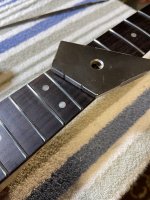
Sometimes, though, even the Fret Kisser doesn't completely level the fret with the adjacent frets, and I have to go "old school" with my trusty home made 3 corner file to finish the job. I made this file over 35 years ago and it has served me well.
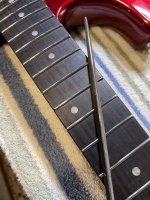
This is how the fret should look after crowning with my StewMac "Z" file....there was one boo boo where the file slipped. A bit of a pain in the butt to deal with it but thankfully is was a shallow scratch and I was able to rub it out as I did the polish with the fret erasers.
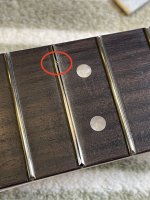
There was a discussion on another thread about how to string up "vintage style" tuning keys on Fenders.
This is my tried and true method. And as I recall how Fender has been doing it since the 50's.
First I install the string, pull it straight and pinch it with my fingers where it meets it's respective tuning post. (In this case in the pic it's the low E string)
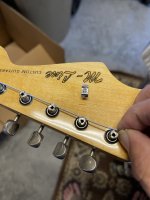
Then I measure "2 tuning posts" extra length and trim the string.
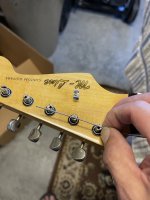
Next poke the string down the hole as far as it will go, bend it into the slot 90 degrees and tighten.
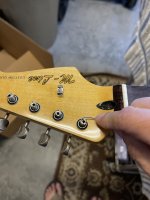
You wind up with the perfect number of wraps on the tuning key to put a slight but of downward angle from the nut and it's surprising stable once the strings have been properly stretched. Another advantage is that it makes it easy to remove and re-string with the same set of strings.
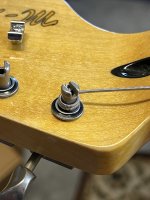
Stay tuned for more info and documentation on how I deal with the "neck hump" issue and the other bits and bobs going into this guitar (steel base plate and uber mojo trem springs.....
Last edited:

Harry Klippton
Not Interested
MichaelW
Well-known member
Well, when I get it dialed I've already got a demo planned. Then you can decide.
That said I'm super keen to try some of the Wolftone strat pickups as well as the Porter "Gatekeeper". The Gatekeepers is Porters budget line and made offshore to their specs. $99 a set. Very affordable but they sound pretty awesome in all the demo's I've seen.
That said I'm super keen to try some of the Wolftone strat pickups as well as the Porter "Gatekeeper". The Gatekeepers is Porters budget line and made offshore to their specs. $99 a set. Very affordable but they sound pretty awesome in all the demo's I've seen.
MichaelW
Well-known member
Yet another update:
Well, I think I'm finally done! (almost). I still have to install the Raw Vintage trem springs when they get here but I don't expect any impact to tone or playability.
So I got the message from @steviejr92 "Finish up that red Strat already and get back to pedal building.....!"
As I mentioned above, there's a bit of a neck attachment "hump" that has developed with this guitar. All necks regardless whether it's a bolt on or a set neck will have SOME bit of hump. It's the nature of the beast with the way truss rods work and geometry of most stringed instruments.
A typically neck attachment geometry will look like this.

Because a truss rod will only affect the part of the neck that's not attached. The picture obviously is exaggerated to make the point but a properly set up bolt on neck will have this type of a figure and if you've leveled the frets correctly, have your neck relief set up correctly there will be a natural bit of "fall away" of the frets from about 13th or 14th frets up to the end of the neck.
In a situation where a more pronounced "hump" occurs (at the dotted line in the above image) you'll have a high spot to deal with.
Sometimes, the hump is severe enough that you have to make some more drastic adjustments up to and including pulling the frets and planing the fingerboard to remove the hump. But that's a pretty extreme case and usually only needed with vintage acoustics.
So what am doing here is creating a slight bit more "fall away" by doing a partial fret level from the 13th fret to the end of the fingerboard.
First thing I did was under string tension, checked for high spots again on the frets using a "fret rocker". This is a cheap one I got off Amazon a long time ago but it works as well as the pricey Stew Mac version.
I'm checking every fret position from 12 and up to find high spots.

I was really surprised to find I had quite a bit of uneven frets.....that wasn't there last week after I did the initial fret level. Once again, and I keep stressing this, a newly assembled guitar under string tension needs a couple of weeks to settle. Wood is an organic substance and will move around a bit before it finds it's equilibrium and settles down. During that time all kinds of odd things and surprises can happen, like frets moving, high spots developing. Not all the time, it depends on the cut of the wood for the neck, whether its flat sawn or quarter sawn, the fit of the neck to body, etc. There's a lot of different variables. Even something like uneven paint in the neck pocket can result in a hump, or using a partial shim to get the correct neck angle. That's one reason I don't like using a piece of business card or a pick or whatever and don't mind paying for the StewMac wood shims. They are pricey for sure but they can help avoid creating a hump because they are tapered.
In the case of this strat, I did not need to shim the neck and I (thought) I cleaned up the neck pocket pretty good. But sometimes it's just the luck of the draw that a bit of a hump develops that requires a more systemic approach to fix rather that knocking down a high fret here and there.
Somehow I totally spaced out and did not take any pics of the masking or the leveling process.
But what I do I use a sheet of paper (build docs in this case hahaha) and masked off the 12th fret and below with two layers of painters tape.
I did the partial fret level from the 13th up to the end of the fingerboard to create the "fall away" to the upper registers with the guitar while under string tension. This is where "under string" leveling beams can be a HUGE time saver.

The lower one is my expensive StewMac 10" beam and the one above it is a cheap Amazon one that's 4" that actually works very well.
For doing a "fall away" having a shorter beam is convenient.
I'm using a pic from the web to show the masking and prep.

If you can imagine this PRS but with strings on it.
I mask off a portion of the sanding beam with masking tape as well. Then when I start leveling I allow the beam to "ride up" on the double thickness masking tape on the 12th fret, being very careful that it's only masking tape on the beam touching the masking tape on the frets.
That little bit of thickness of now 3 layers of masking tape creates just about the right angle I'm looking for for the fall away from frets 13 thru 22.
The StewMac beam comes with these little delrin spacers that you slide under the strings to give you a bit more clearance to get the beam under the strings.

Here's the beauty of doing it under string tension, first you're leveling the frets as the guitar will actually play, with neck relief and the curvature already there. StewMac makes a neck relief jig to simulate the neck curvature without strings on but it's ridiculously expensive.
Also, secondly, you can check your work as you go by popping the shim out and playing and seeing if you've created enough fall away.
The whole notion of using the "fall away" method is not without controversy. There are some luthiers that are against it, or say its not necessary.
While to a certain point I agree that it's not a panacea for a clean playing neck, I have not yet found a better way to deal with a hump like I have here and still be able to get to my personal setup specs. I don't have SUPER low action, but it would be considered "medium low". My preference is around 0.065" under the 17th fret with a capo on the first fret. BUT it absolutely HAS to play clean with no fret buzz or fret outs when I bend notes, especially in the upper register.
I do agree with some luthiers that some DIY'rs may over-rely on a fall away or over do it, and flatten out the frets too much or alter the radius with too much leveling. Then they bring their messed up guitars to a tech and the only option at that point is a partial refret.
I go very slowly, take a tiny bit off at a time, then check by playing, take a bit more, check, etc. You can always take more off but you can't put back on...
Having an under string leveling beam is really an incredibly convenient way to cut down time and effort and "guessing" if you've addressed the issue or not. The whole leveling process took me about 15 minutes to dial in. And by playing as I went I knew I had created enough fall away without any guess work.
Once I was satisfied that it would play cleanly, I went through and re-checked every fret position with the rocker again to make sure I wasn't leaving any high spots.
Then I remove the strings and remove the masking. The strings got pretty scuffed up using the under string beams, hard not to do, so I had to replace them anyway.
As a final measure I took the long leveling beam and made a few light passes across the sanded frets just to make extra sure it was an even ramp that I created.

From that point on it's just my standard routine of marking, crowning and dressing with the fret erasers then a final buff with some rouge on the Dremel.

Finished and all polished.....ready for some strings here.....

Continued in next post.....
Well, I think I'm finally done! (almost). I still have to install the Raw Vintage trem springs when they get here but I don't expect any impact to tone or playability.
So I got the message from @steviejr92 "Finish up that red Strat already and get back to pedal building.....!"
As I mentioned above, there's a bit of a neck attachment "hump" that has developed with this guitar. All necks regardless whether it's a bolt on or a set neck will have SOME bit of hump. It's the nature of the beast with the way truss rods work and geometry of most stringed instruments.
A typically neck attachment geometry will look like this.

Because a truss rod will only affect the part of the neck that's not attached. The picture obviously is exaggerated to make the point but a properly set up bolt on neck will have this type of a figure and if you've leveled the frets correctly, have your neck relief set up correctly there will be a natural bit of "fall away" of the frets from about 13th or 14th frets up to the end of the neck.
In a situation where a more pronounced "hump" occurs (at the dotted line in the above image) you'll have a high spot to deal with.
Sometimes, the hump is severe enough that you have to make some more drastic adjustments up to and including pulling the frets and planing the fingerboard to remove the hump. But that's a pretty extreme case and usually only needed with vintage acoustics.
So what am doing here is creating a slight bit more "fall away" by doing a partial fret level from the 13th fret to the end of the fingerboard.
First thing I did was under string tension, checked for high spots again on the frets using a "fret rocker". This is a cheap one I got off Amazon a long time ago but it works as well as the pricey Stew Mac version.
I'm checking every fret position from 12 and up to find high spots.
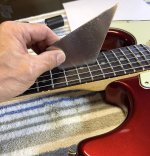
I was really surprised to find I had quite a bit of uneven frets.....that wasn't there last week after I did the initial fret level. Once again, and I keep stressing this, a newly assembled guitar under string tension needs a couple of weeks to settle. Wood is an organic substance and will move around a bit before it finds it's equilibrium and settles down. During that time all kinds of odd things and surprises can happen, like frets moving, high spots developing. Not all the time, it depends on the cut of the wood for the neck, whether its flat sawn or quarter sawn, the fit of the neck to body, etc. There's a lot of different variables. Even something like uneven paint in the neck pocket can result in a hump, or using a partial shim to get the correct neck angle. That's one reason I don't like using a piece of business card or a pick or whatever and don't mind paying for the StewMac wood shims. They are pricey for sure but they can help avoid creating a hump because they are tapered.
In the case of this strat, I did not need to shim the neck and I (thought) I cleaned up the neck pocket pretty good. But sometimes it's just the luck of the draw that a bit of a hump develops that requires a more systemic approach to fix rather that knocking down a high fret here and there.
Somehow I totally spaced out and did not take any pics of the masking or the leveling process.
But what I do I use a sheet of paper (build docs in this case hahaha) and masked off the 12th fret and below with two layers of painters tape.
I did the partial fret level from the 13th up to the end of the fingerboard to create the "fall away" to the upper registers with the guitar while under string tension. This is where "under string" leveling beams can be a HUGE time saver.
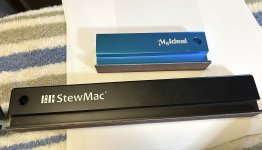
The lower one is my expensive StewMac 10" beam and the one above it is a cheap Amazon one that's 4" that actually works very well.
For doing a "fall away" having a shorter beam is convenient.
I'm using a pic from the web to show the masking and prep.
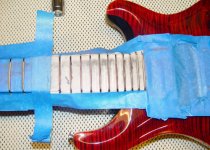
If you can imagine this PRS but with strings on it.
I mask off a portion of the sanding beam with masking tape as well. Then when I start leveling I allow the beam to "ride up" on the double thickness masking tape on the 12th fret, being very careful that it's only masking tape on the beam touching the masking tape on the frets.
That little bit of thickness of now 3 layers of masking tape creates just about the right angle I'm looking for for the fall away from frets 13 thru 22.
The StewMac beam comes with these little delrin spacers that you slide under the strings to give you a bit more clearance to get the beam under the strings.
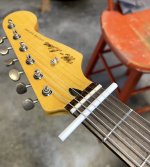
Here's the beauty of doing it under string tension, first you're leveling the frets as the guitar will actually play, with neck relief and the curvature already there. StewMac makes a neck relief jig to simulate the neck curvature without strings on but it's ridiculously expensive.
Also, secondly, you can check your work as you go by popping the shim out and playing and seeing if you've created enough fall away.
The whole notion of using the "fall away" method is not without controversy. There are some luthiers that are against it, or say its not necessary.
While to a certain point I agree that it's not a panacea for a clean playing neck, I have not yet found a better way to deal with a hump like I have here and still be able to get to my personal setup specs. I don't have SUPER low action, but it would be considered "medium low". My preference is around 0.065" under the 17th fret with a capo on the first fret. BUT it absolutely HAS to play clean with no fret buzz or fret outs when I bend notes, especially in the upper register.
I do agree with some luthiers that some DIY'rs may over-rely on a fall away or over do it, and flatten out the frets too much or alter the radius with too much leveling. Then they bring their messed up guitars to a tech and the only option at that point is a partial refret.
I go very slowly, take a tiny bit off at a time, then check by playing, take a bit more, check, etc. You can always take more off but you can't put back on...
Having an under string leveling beam is really an incredibly convenient way to cut down time and effort and "guessing" if you've addressed the issue or not. The whole leveling process took me about 15 minutes to dial in. And by playing as I went I knew I had created enough fall away without any guess work.
Once I was satisfied that it would play cleanly, I went through and re-checked every fret position with the rocker again to make sure I wasn't leaving any high spots.
Then I remove the strings and remove the masking. The strings got pretty scuffed up using the under string beams, hard not to do, so I had to replace them anyway.
As a final measure I took the long leveling beam and made a few light passes across the sanded frets just to make extra sure it was an even ramp that I created.
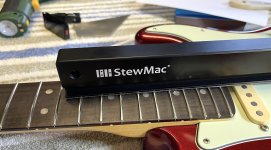
From that point on it's just my standard routine of marking, crowning and dressing with the fret erasers then a final buff with some rouge on the Dremel.
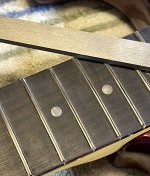
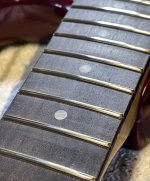
Finished and all polished.....ready for some strings here.....
Continued in next post.....
Last edited:
MichaelW
Well-known member
Oh but wait, there's mooooreee....before putting new strings on, my pickup base plate that I ordered got here in like 2 days.....pretty fancy packaging for a hunk of steel......

Nice that they already included a soldered ground wire.
The instructions from Porter said to use a small piece of masking tape on the pole pieces then a light film of super glue to hold the plate on.
But since I wasn't sure it was going to stay and the magnets held the plate in place pretty well, I skipped that and just used the magnet to hold it in place. Then soldered the ground wire to the pickup ground.

Now time for some fresh strings. These are a new type of string I'm trying. I mentioned in another post that Ernie Ball "Classic Rock and Roll" Regular Slinky's are my goto strings. They are pure nickel wrap (as opposed to the Standard Slinky's which are nickel plated).
I prefer the sound and feel of pure nickel but there are a few brands that are all about the same to me. I use Ernie Ball the most because they're usually the cheapest. But GHS Nickel Rockers is another favorite and very similar to the EB Classics. Strings and Beyond has a sale on GHS strings so I grabbed a dozen sets of Nickel Rockers but I decided to try these "burnished Nickel" strings. Essentially just Nickel Rockers that are lightly polished for a smoother feel. First time using them for me.

Boy they are really shiny....so far I like them, but they don't really feel any different to me than the standard Nickel Rockers. Not sure I'd buy them again after I use these sets up. (

Another favorite of mine are the "DR Strings Pure Blues", which is a pure nickel wrap but over a round core as opposed to a hex core).
Anyway, the guitar plays beautifully now, I really hope it's settled down and will stay put since it's been a couple weeks under tension.
It plays cleanly up and down the neck and I can do all my "David Gilmour Wannabe" stuff with no fret outs anywhere.
Very happy with the partial re-level.
Also, very happy with how it sounds with the brass tremolo block that I replaced the steel with. Just takes that little bit of harsh edge off that I was hearing.
The Pickup baseplate is interesting. The effect is subtle, it did not turn my middle pickup into a Tele bridge heh. But it DID increase the output of the pickup noticeably. I'm not really hearing any noticeable "fattening or thickening" of the tone, but it does sound a little louder.
So I lowered the middle pickup about 1/16" on both the bass and treble sides to balance them out, which now gives me a bit more room to pick.
So I consider it a WIN!
Thanks for the tip guys!
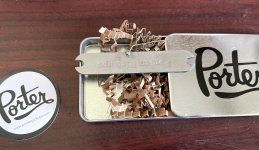
Nice that they already included a soldered ground wire.
The instructions from Porter said to use a small piece of masking tape on the pole pieces then a light film of super glue to hold the plate on.
But since I wasn't sure it was going to stay and the magnets held the plate in place pretty well, I skipped that and just used the magnet to hold it in place. Then soldered the ground wire to the pickup ground.
Now time for some fresh strings. These are a new type of string I'm trying. I mentioned in another post that Ernie Ball "Classic Rock and Roll" Regular Slinky's are my goto strings. They are pure nickel wrap (as opposed to the Standard Slinky's which are nickel plated).
I prefer the sound and feel of pure nickel but there are a few brands that are all about the same to me. I use Ernie Ball the most because they're usually the cheapest. But GHS Nickel Rockers is another favorite and very similar to the EB Classics. Strings and Beyond has a sale on GHS strings so I grabbed a dozen sets of Nickel Rockers but I decided to try these "burnished Nickel" strings. Essentially just Nickel Rockers that are lightly polished for a smoother feel. First time using them for me.
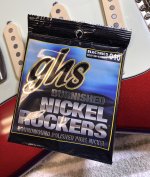
Boy they are really shiny....so far I like them, but they don't really feel any different to me than the standard Nickel Rockers. Not sure I'd buy them again after I use these sets up. (
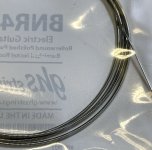
Another favorite of mine are the "DR Strings Pure Blues", which is a pure nickel wrap but over a round core as opposed to a hex core).
Anyway, the guitar plays beautifully now, I really hope it's settled down and will stay put since it's been a couple weeks under tension.
It plays cleanly up and down the neck and I can do all my "David Gilmour Wannabe" stuff with no fret outs anywhere.
Very happy with the partial re-level.
Also, very happy with how it sounds with the brass tremolo block that I replaced the steel with. Just takes that little bit of harsh edge off that I was hearing.
The Pickup baseplate is interesting. The effect is subtle, it did not turn my middle pickup into a Tele bridge heh. But it DID increase the output of the pickup noticeably. I'm not really hearing any noticeable "fattening or thickening" of the tone, but it does sound a little louder.
So I lowered the middle pickup about 1/16" on both the bass and treble sides to balance them out, which now gives me a bit more room to pick.
So I consider it a WIN!
Thanks for the tip guys!
Last edited:

steviejr92
Authorized Vendor
I keep seeing those strings i think im gonna have to get me a set to try them out mine keep rusting 
MichaelW
Well-known member
MichaelW
Well-known member
Final Update: (I think......)
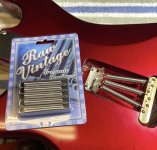
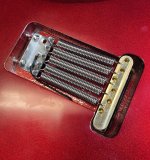
So after @Joben Magooch mentioned he installed the "Raw Vintage" trem springs in his CV Strat upgrades, I was easily influenced and impulsively ordered a set. I've seen them before and read about them but honestly, thought it was pretty much a gimmick.
But I'll be gobsmacked......they really DO impact the tone. In fact they have a bigger impact to the tone than installing the brass trem block.
I'm not sure how much of this can be attributed to having installed the recommended 5 springs from Raw Vintage (as opposed to my typical 3 spring trem setup) or how much of it can be attributed to the metallurgy of the springs. They claim to give your vintage strat a "fat 50's and 60's sound that modern reissues don't have because of modern materials".
Well, as much as I hate to admit it, I think I'm buying into this snake oil. It's definitely a warmer sound with these springs. It may not necessarily be the sound you're looking for but it DOES seem to fatten things up. I am quite pleased with how they sound on this guitar.
I'm thinking about ordering a set for my Warmoth Short scale Strat as that guitar really needs some warming up. I've already got a trem modification planned for when I'm on my Christmas break for that guitar. Brass saddles, brass trem block and re-wiring it with hum buckers.
Honestly I have never in my years (more like decades) of tinkering with guitars, ever considered tremolo springs as a "tone factor".
Whodathunk?
They are lower tension so I had to make some adjustments to deck the trem plate, which is my preference on vintage style 6 sure tremolos.
Thanks for the tip @Joben Magooch!!


So after @Joben Magooch mentioned he installed the "Raw Vintage" trem springs in his CV Strat upgrades, I was easily influenced and impulsively ordered a set. I've seen them before and read about them but honestly, thought it was pretty much a gimmick.
But I'll be gobsmacked......they really DO impact the tone. In fact they have a bigger impact to the tone than installing the brass trem block.
I'm not sure how much of this can be attributed to having installed the recommended 5 springs from Raw Vintage (as opposed to my typical 3 spring trem setup) or how much of it can be attributed to the metallurgy of the springs. They claim to give your vintage strat a "fat 50's and 60's sound that modern reissues don't have because of modern materials".
Well, as much as I hate to admit it, I think I'm buying into this snake oil. It's definitely a warmer sound with these springs. It may not necessarily be the sound you're looking for but it DOES seem to fatten things up. I am quite pleased with how they sound on this guitar.
I'm thinking about ordering a set for my Warmoth Short scale Strat as that guitar really needs some warming up. I've already got a trem modification planned for when I'm on my Christmas break for that guitar. Brass saddles, brass trem block and re-wiring it with hum buckers.
Honestly I have never in my years (more like decades) of tinkering with guitars, ever considered tremolo springs as a "tone factor".
Whodathunk?
They are lower tension so I had to make some adjustments to deck the trem plate, which is my preference on vintage style 6 sure tremolos.
Thanks for the tip @Joben Magooch!!
Last edited: