Good afternoon everyone. I am new to the pedal building game and am wanting to make the Mach 1 my first build. Question on the capacitors though: how do I determine the correct voltages for them? I’ve noticed while sourcing components that there are different voltage ratings per capacitance rating. I know this is a noob question but any input will help. Thank you!

You are using an out of date browser. It may not display this or other websites correctly.
You should upgrade or use an alternative browser.
You should upgrade or use an alternative browser.
Capacitor Voltages
- Thread starter tspitz
- Start date

BuddytheReow
Moderator
The rule of thumb is double the (potential) input voltage. The Mach 1 works with 9V and in theory you could run it at 18V. Don't go crazy thinking that buying a 100V electro cap will be a cure all. Those will be waaay too big to fit on your board.

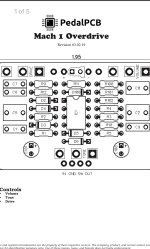
So based off the schematic C1 and C5 both appear to be film capacitors but the spot for C5 is bigger which makes sense because C5 is a 470n cap so I’m guessing this is naturally going to come in a bigger voltage?The rule of thumb is double the (potential) input voltage. The Mach 1 works with 9V and in theory you could run it at 18V. Don't go crazy thinking that buying a 100V electro cap will be a cure all. Those will be waaay too big to fit on your board.
Attachments
BuddytheReow
Moderator
Box film caps IMO run in about 3 sizes with similar voltage ratings.. The line get a little blurred in going from the 2nd the 3rd categories.
1nf to about 100nf
100nf to 220nf/330nf
470nf to 1uf
63V or 100V box caps will be fine. Anything bigger and they might not fit nicely on your board but you can squeeze em in somehow. Check the details from your supplier. Tayda is pretty good on their spec sheets (albeit not always in English)
1nf to about 100nf
100nf to 220nf/330nf
470nf to 1uf
63V or 100V box caps will be fine. Anything bigger and they might not fit nicely on your board but you can squeeze em in somehow. Check the details from your supplier. Tayda is pretty good on their spec sheets (albeit not always in English)
Ok great, this is super helpful! Now one other question, does a higher/lower voltage have an effect on the tonality of the circuit? Obviously voltage in general does but I didn’t know when it came to box caps specifically with the 63v vs 100vBox film caps IMO run in about 3 sizes with similar voltage ratings.. The line get a little blurred in going from the 2nd the 3rd categories.
1nf to about 100nf
100nf to 220nf/330nf
470nf to 1uf
63V or 100V box caps will be fine. Anything bigger and they might not fit nicely on your board but you can squeeze em in somehow. Check the details from your supplier. Tayda is pretty good on their spec sheets (albeit not always in English)
BuddytheReow
Moderator
Cork sniffers here might say something, but in general, no.Ok great, this is super helpful! Now one other question, does a higher/lower voltage have an effect on the tonality of the circuit? Obviously voltage in general does but I didn’t know when it came to box caps specifically with the 63v vs 100v
One thing to keep in mind, however, is parts tolerance. A 100nf cap might actually read 80nf - 120nf and still be ok from a production standpoint. That's where it might affect the tone. My advice is order extra (plus to get ready for your next build or breadboard project).

Aentons
Well-known member
Are you saying you can hear the difference between a 16V and 100V box cap?voltage ratings can affect sound - tupically the ratinga are DC but AC aren’t quoted.
HV more of an issue than LV.


falco_femoralis
Well-known member
Box caps have standardized sizes. Go to this page and scroll down under "Specifications." We are mostly interested in Lead Spacing and Body Thickness. We almost always want 5mm lead spacing, and 2.5mm body thickness for the normal rectangles that film caps have. Some are a little bigger, and they can have a 3.5mm lead spacing. The big, more square shaped ones are 5mm thick. Don't trust the pics, go by the specs listed on the page.
Wima has a line of 50v film caps that are especially useful for the 1uf value due to their size.
Voltage rating and the cap's rating in farads are what determines the size. I always use the smallest available for film caps, usually 63v or 100v (except the Wimas) because that's what fits on the board the easiest. Voltage rating isn't important for these as far as sound goes. For electrolytic caps, they have a lower voltage rating, and you want to make sure you get caps that will handle the voltage in your pedal. For example, a 9v pedal needs caps that can handle 16v, and an 18v pedal needs 35v caps, the next bracket up. Or you can use 50v. Again, it's just about what will physically fit in the space provided. Some PCBs have a lot of space in between components while others don't.
Wima has a line of 50v film caps that are especially useful for the 1uf value due to their size.
Voltage rating and the cap's rating in farads are what determines the size. I always use the smallest available for film caps, usually 63v or 100v (except the Wimas) because that's what fits on the board the easiest. Voltage rating isn't important for these as far as sound goes. For electrolytic caps, they have a lower voltage rating, and you want to make sure you get caps that will handle the voltage in your pedal. For example, a 9v pedal needs caps that can handle 16v, and an 18v pedal needs 35v caps, the next bracket up. Or you can use 50v. Again, it's just about what will physically fit in the space provided. Some PCBs have a lot of space in between components while others don't.

drew.spriggs
Well-known member
No, they absolutely cannot lmaovoltage ratings can affect sound - tupically the ratinga are DC but AC aren’t quoted.
HV more of an issue than LV.
No, they absolutely cannot lmao
If you have a 200Vpp swing on +200Vdc, then you're going to find attempting to use the wrong rating on the cap impacts the sound. It electrically (charge/current/leakage) cannot support either the maximum voltage swing or current rates due to the build. That results in distortion.
If you do the maths for frequency/tan loss on some caps you'll find some have more capability to support low frequency than others, not to mention the in-audio response. Once again - if that can't support the intended purpose you'll get distortion.
Sure you can link capacitance, current and frequency for ripple but you'll need to take into account ESR/tan angle. For decoupling that also changes the phase which in turn changes negative feedback tuning.
If the caps specification works for the design - sure you'll not see any change between two caps* but carte blanche that's not entirely correct. Audio is full of distortion - the brain is great for 'patching the holes'.
* assumes the caps are manufactured and specified the same.
Happy to disagree and rather than get into a 'capacitors war', for the sake of the mods, let's agree to park that.
This is what matters in this case.Audio is full of distortion - the brain is great for 'patching the holes'.
I don’t see any real argument here because you guys aren’t talking about the same thing. one question is, is it possible to hear the difference in voltage. Another is, is it possible for the voltage to affect the signal.
And then I think the most relevant one for this thread- are you going to hear the difference between a 16/25/63/100v capacitor, given that it meets the minimum requirement for the circuit?
drew.spriggs
Well-known member
None of those are inherent to a higher voltage rating; they are due to other characteristics totally separate to that.If you have a 200Vpp swing on +200Vdc, then you're going to find attempting to use the wrong rating on the cap impacts the sound. It electrically (charge/current/leakage) cannot support either the maximum voltage swing or current rates due to the build. That results in distortion.
If you do the maths for frequency/tan loss on some caps you'll find some have more capability to support low frequency than others, not to mention the in-audio response. Once again - if that can't support the intended purpose you'll get distortion.
Sure you can link capacitance, current and frequency for ripple but you'll need to take into account ESR/tan angle. For decoupling that also changes the phase which in turn changes negative feedback tuning.
If the caps specification works for the design - sure you'll not see any change between two caps* but carte blanche that's not entirely correct. Audio is full of distortion - the brain is great for 'patching the holes'.
* assumes the caps are manufactured and specified the same.
Happy to disagree and rather than get into a 'capacitors war', for the sake of the mods, let's agree to park that.
The question was is there any sound difference with higher voltage rated caps, and the answer is unequivocally no.
Aentons
Well-known member
To answer your question... The voltage rating on the cap is the absolute max voltage it can handle before it self destructs. Running a pedal at higher than 9V can affect the overall sound but the cap rating does not. You just have to make sure you don't run your pedal at 18V if you caps are only rated for max 16V.Ok great, this is super helpful! Now one other question, does a higher/lower voltage have an effect on the tonality of the circuit? Obviously voltage in general does but I didn’t know when it came to box caps specifically with the 63v vs 100v

pricklyrobot
Well-known member
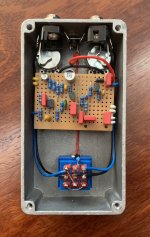
I generally get my caps from Mouser. Their search filter lets you put in a range for V ratings. I usually put 35 - 63V. That feels like the ‘plenty big enough, but not too big’ sweet-spot for me 
falco_femoralis
Well-known member
woah that's really coolMore and more I'm using 50V SMD electrolytics because they seem to be the smallest available. As I learnt here, you can just remove the little plastic base and use the two little legs for through-hole PCBs or even Vero.
