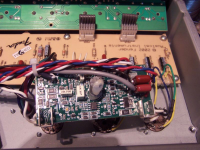
Chase Bliss discontinuing five pedals containing vactrols due to EU / UK market prohibition

tegendemuur

Well-known member
I suppose most will know about vactrols (I learned about them because Low-Pass Gates in the past used them). Any thoughts on how this will affect other effect manufacturers? I mean, are these THAT common in pedals that we'll be seeing more pedals become unavailable? Or is it just Chase Bliss who made good use of these things in their discontinued range? - Should I be hunting down certain amazing pedals that got poison in their bellies? Any recommendations? The game is on now, right? 😅

They now offer a lifetime warranty on the Preamp MKII, Thermae, Warped Vinyl HiFi, Dark World, and Condor HiFi, which is lovely! I don't own any of these pedals by the way. Would have loved a HIFI condor in the old enclosure, perhaps. Or maybe not.

Relevant info taken from the newsletter they send out:

The reason we are discontinuing these products is that we have learned that they are not compliant with market access requirements in the UK and the European Union. Specifically, the applicable Restriction of Hazardous Substances in Electrical and Electronic Equipment laws (RoHS) in the E.U. and UK now restrict the use of a component that is needed in these products. There was an exemption under RoHS in the context of audio technology, but that exemption has expired.

A BIT ABOUT THE COMPONENT​

The five pedals noted above contain an internal component called a “light-dependent resistor” or LDR for short. It’s a type of opto-isolator. These parts are also commonly called “vactrols.” As far as I can tell, these parts have been part of guitar pedal technology since as early as the 60s in the form of the Univibe. The way that they work is you have something that produces light, such as an LED or light bulb that shines on a photoresistor in a dark environment. The photoresistor is a type of resistor that changes its resistance depending on how much light it sees. The more light, the smaller the resistance. The less light, bigger resistance. These photoresistors require cadmium sulfide (CdS) to work, and the RoHS laws restrict products that use components containing CdS

There are many popular applications of this technology in audio now and in the past, including optical compressors, low-pass gates, channel switching in vintage amplifiers, optical tremolos, and optical phasers. There are certain aspects of LDRs that are really special and useful in an audio context, especially in the digital control of analog technology. Some other methods exist for digitally controlling analog circuits like voltage-controlled amplifiers (VCAs) and digital potentiometers. Unfortunately, for certain functions there is no known replacement for LDRs."
 
Last edited:
Dang. Too bad LDRs are getting phased out 🥁
Yup. But when there's no suitable replacement for this part for all its uses, which type of pedals will go / not reach former quality unless going full digital? Is it only tremolo? My Delta-Trem uses it, so glad to jumped on that lovely thing. But there's probably some more out there which will be set back in terms of function; there's no substitute for all applications of this component, as the CB letter said.
 
Last edited:
I could just call BS because the main regions of the world they're likely being made has governments in a pissing match with western hemisphere 'authorities'... but that's speculation from a sideways issue of 3d printers being hard to order in the states(amazon says undeliverable when they have none) and direct from makers say it's coming from the UK or Germany. Or they got repriced and they don't want to buy'em🤷‍♂️

tremelo's, a few compressors... anything based on the Mu-Tron phaser...
 
It seems like the vactrol thing has always been sort of a game. I'm pretty familiar with them from LP gates as the op was talking about, mostly from the synth/eurorack world, and sourcing the "good ones" for specific builds was ALWAYS a chore. Either it was some thing about a particular model vactrol being discontinued, or the newer ones not working properly in the circuit, or buying potentially fake parts from suspect online sources that are waaaay overpriced.

Either way I suspect there is more to the story that what Chass Bliss posted. It seem like a regional disagreement and will probably get worked out eventually, but for now I suspect those pedals will increase in value quite a bit and become harder to find. Here in the states there are companies in the synth and eurorack biz that still utilize various vactrols to some extent and from my understanding they are still accessible, but as I said before sourcing and continuity of parts is surrounded by drama and bs.
 
Cadmium (the thing that makes LDRs/vactrols work) has been banned under RoHS for a long time. There was an “audio exemption” that expired in 2013.

Maybe there was an additional exemption that expired more recently 🤷‍♀️, but google is not revealing anything to that effect.
In any case, it seems like a professional pedal company doing business in Europe should’ve known in advance what the regulations were, and when they were set to change.

Sounds more like they were low-key skirting the regulations and got caught…
 
Cadmium (the thing that makes LDRs/vactrols work) has been banned under RoHS for a long time. There was an “audio exemption” that expired in 2013.

Maybe there was an additional exemption that expired more recently 🤷‍♀️, but google is not revealing anything to that effect.
In any case, it seems like a professional pedal company doing business in Europe should’ve known in advance what the regulations were, and when they were set to change.

Sounds more like they were low-key skirting the regulations and got caught…
Nah, laws got tightened up, so this road closed. They sang this song for as long as possible; this is the death knell for the digital brain, analog heart idea. Chase Bliss will just go (full) digital at this point. All their sample based stuff wasn't truly analog anyway, and it's where they shine; unconventional... And digital is the future anyways. I suspect It won't hurt their company, as the most popular things weren't among these discontinue pedals anyway. They'll simply change plans, while having offered the world some splendid units while it lasted.
 
Yup. But when there's no suitable replacement for this part for all its uses
I don't think this cadmium sulfide issue rules out other forms of opto-isolators - i.e., CdS photo-resistors were just one option, chosen primarily because they were the cheapest. But there's other light-sensitive materials and circuit elements that can be used as a receiver (photo-diodes, etc).

Note added: while there's not much Cd in a photoresistor, cadmium is a really nasty/toxic material
 
Fortunately my two favourite types of tremolo don't rely on vactrols. The Strymon Flint is (I believe) fully digital and does an excellent bias tremolo simulation, and my all-time fave tremolo is in fact the bias tremolo in my Brown Deluxe, 5F11 Vibrolux, etc. Yeah I know they have their limitations but they way I use 'em they sound fantastic, and I much prefer them over roach trem.
 
Fortunately my two favourite types of tremolo don't rely on vactrols. The Strymon Flint is (I believe) fully digital and does an excellent bias tremolo simulation, and my all-time fave tremolo is in fact the bias tremolo in my Brown Deluxe, 5F11 Vibrolux, etc. Yeah I know they have their limitations but they way I use 'em they sound fantastic, and I much prefer them over roach trem.
I have to admit that my favorite tremolo is the tremverb setting on the SA Ventris. It's just perfect for moody "southwest desert sound", with a slide, right after a compressor and an ever so slightly cracked valve sound. A reverb after the Delta-Trem needs that additional tweaking that I don't often feel like doing when wanting to play right away. Just three pedals into the amplified desktop speakers and I'm ready to go.

Have to look up that circuit in your Brown. Never heard of it. :)

Edit: Origin Effects has a pedal modelled after it... "First released in 1961, this modest, little amp is still one of history’s most sought-after guitar tones, thanks largely to its tremolo circuit. Bias tremolo is considered by many to be the most musical of all the tremolo types due to its natural, pulsating character. Because the tremolo acts on the amp’s output valves, overdriven sounds will let you “play through” the tremolo. The effect disappears when you pick hard, slowly fading back in as the note dies away – you can control the tremolo effect with your picking dynamics or your guitar’s volume knob!"

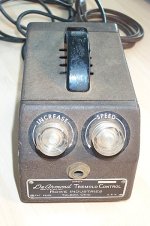
Edit: Oh, my Delta-Trem is actually based on this as well.🙈 "As with all Effectrode pedals, vacuum tubes play an intrinsic role in generating the effect, however another vital component is also involved here, a long forgotten, archaic electronic device known as a ‘Raysistor‘. The Raysistor enables the Delta-Trem to reproduce smooth volume fluctuations, like the ‘bias’ tremolos found in the early Fender® ‘Tweed’ Tremolux guitar amps, and also the deeper throb of the ‘optical’ (neon/photocell) tremolo of their later ‘Blackface’ Deluxe Reverb and Twin Reverb amplifier models. But the Raysistor can do much more than merely replicate bias and optical tremolo… with the right kind of LFO."

"Unfortunately Raytheon are no longer in the business of manufacturing Raysistors (or sub-miniature tubes for that matter) and NOS Raysistors are rarer than hen’s teeth. The closest matching device available today is the ‘opto-coupler’, which consists of an LED (Light Emitting Diode) and an photocell housed together in a single epoxy case. However, an LED is an extremely efficient light emitter, too efficient in fact, making that fine control for super-smooth tremolo impossible. The filament bulb really was the only device suitable for achieving the smooth tremolo effects we were looking for. So we set to work developing our own custom Raysistor based on a 3mm ‘grain of wheat’ bulb and cadmium sulphide photocell. These two electronic components were specially chosen to give the Delta-Trem range and versatility. The tiny filament light bulb has very low thermal mass, meaning the light can be switched on and off rapidly to mimic the neon lamp in optical tremolo; and it can also be turned on and off slowly too, where its brightness transitions more gradually, replicating the smoothness of bias tremolo circuitry." (https://www.effectrode.com/knowledge-base/delta-trem-in-depth/)

 
Last edited:
I don't think this cadmium sulfide issue rules out other forms of opto-isolators - i.e., CdS photo-resistors were just one option, chosen primarily because they were the cheapest. But there's other light-sensitive materials and circuit elements that can be used as a receiver (photo-diodes, etc).

Note added: while there's not much Cd in a photoresistor, cadmium is a really nasty/toxic material
Yeah, and the laws for it aren't for us. it's for the the poor saps whose job it is to provide the raw material. It makes a lot of sense to get rid of it.
 
The gigrig3 uses optical switching. I supose this a problem for them as well.
Am I correct in thinking that builders kept using these so they could claim "analog signal path"? Digital seems to have an answer for everything that's lost...
 
Am I correct in thinking that builders kept using these so they could claim "analog signal path"? Digital seems to have an answer for everything that's lost...
Seems awfully silly if that's the case. Like, sure, true bypass switching is "digital" in the abstract sense that one can say that a switch is either in the "opened" or "closed" position, and that such states can be expressed as "0" and "1".

But if one is so resolute about defining things as such, I've got bad news about diodes.

Nah, it's more likely that folks did this for three reasons: to eliminate any potential "pop" from mechanical contacts changing state, to reduce the number of moving parts in a circuit and therefore increase it's long term reliability, and because LDRs are dirt cheap.

Extra emphasis on that last point.
 
CdS photo-resistors were just one option, chosen primarily because they were the cheapest…
I think the fact that CdS reacts to the visible light spectrum (unlike some other LDR materials that are sensitive to different wavelengths) was also a big part of it.
 
I think the fact that CdS reacts to the visible light spectrum (unlike some other LDR materials that are sensitive to different wavelengths) was also a big part of it.

You can tune the bandgap of the photo-sensitive receiving sensor material to match whatever wavelength the light source emits, which typically is an LED (or vice versa). There are lots of candidate materials that span a wide range of energies (or wavelengths). It's true that wavelengths from upper infrared through visible range are most useful for the photoresistors we would use, in that they are addressable by an inexpensive LED source plus are high enough energy to not be too temperature sensitive. CdS has a bandgap of 2.4eV, which puts it in the green visible range. But an additional key factor is that CdS is comparatively cheap to make the thin films needed for a photoresistor.

There are a wide range of semiconductors that can span the visible range - look at the various materials used to make LEDs of different colors. These materials - e.g., InAlGaAs and such, are very expensive to make thin films from - they require very sophisticated thin film deposition techniques, ultrahigh vaccum systems, etc. Whereas LEDs only use an extremely tiny piece of material, the receiving photosensor typically needs a substantially larger area in order to gether enough light. I think this is where the cost comes in, and why CdS was the previous favorite.
 
Back
Top