
You are using an out of date browser. It may not display this or other websites correctly.
You should upgrade or use an alternative browser.
You should upgrade or use an alternative browser.
CONTEST Inventory Builds - Player Hater’s Ball 2025
- Thread starter BuddytheReow
- Start date
CONTEST


Hetari Gotoh
Well-known member
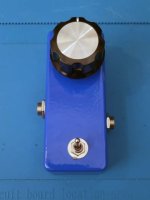
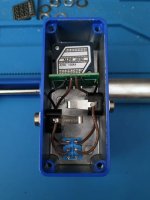
Inspired by Paradox916 and ICTRock and based on an 88$ Alps pot that should never had been in my possession in the first place, here's my submission for the self hate contest. Behold the Sphaleron Attenuator!


The Sphaleron Attenuator does not operate at the 100 GeV scale of the electroweak phase transition. Instead, it leverages the Principle of Topological Equivalence in Condensed Matter Systems, which posits that certain material geometries can induce effective gauge fields on charge carriers, mimicking aspects of high-energy physics.
The core component is a standard, carbon-composition, logarithmic-taper potentiometer. This is not merely a variable resistor; it is a Chiral Symmetry Breaking Engine.
The resistive element of the potentiometer is a helical strip of carbon-impregnated polymer. This helix is not a simple resistor; it represents a compactified configuration space for the electron wavefunction. Each point along the track corresponds to a distinct vacuum state of an effective low-energy theory governing electron transport. The helical geometry introduces a non-trivial winding number, n, analogous to the Chern-Simons number in QFT.
2.2 The Wiper Arm: The Sphaleron Transition Catalyst:
The wiper arm, connected to the central terminal, is a macroscopic realization of a kink soliton. As it traverses the helical track, it does not smoothly interpolate between states. Instead, at a microscopic level, its motion creates a localized, high-energy deformation in the electric potential field across the resistive element.
This deformation is the attenuator sphaleron. It is an unstable, saddle-point solution in the potential landscape of the electron system. Its energy scale is determined by the power rating of the potentiometer (e.g., 0.5W) and the applied voltage.
2.3 The Chiral Anomaly and Signal Attenuation:
In the unperturbed state (wiper at maximum signal), incoming electrons (constituting the audio signal) are Dirac fermions with no net chirality. As the wiper is rotated toward the ground terminal, it passes through the sphaleron point.
This transition induces a topological twist in the effective gauge field experienced by the conducting electrons. Due to the Adler-Bell-Jackiw anomaly, this twist results in a non-conservation of chiral charge. Left-handed and right-handed components of the electron wavefunctions are coupled asymmetrically to the effective gauge field generated by the carbon helix's impurities and crystalline defects.
The result is a non-perturbative attenuation of the signal. The voltage V_out is not simply a fraction of V_in given by R_wiper/R_total. It is given by the integrated chiral current anomaly:
∂_μ J^μ_5 = (e²/2πħ) E · B_eff
Where E is the electric field along the track, and B_eff is the effective "magnetic field" generated by the helical topology of the track and the motion of the wiper soliton. The attenuation in decibels is proportional to the integral of this anomaly over the volume of the resistive element and the duration of the signal pulse.
2.4 The Logarithmic Taper: Mapping to Instanton Density:
The logarithmic response of the potentiometer is not an arbitrary engineering choice. It is a direct consequence of the instanton density in the configuration space. Instantons are the quantum tunneling events between vacua, which are the dominant process at low signal amplitudes. The logarithmic scale precisely maps the angular position of the wiper θ to the exponential suppression factor exp(-S_inst), where S_inst is the instanton action, ensuring a psycho-acoustically correct perception of amplitude reduction.
Further research is needed to investigate the non-Abelian generalizations of this effect using a ganged potentiometer array, requiring the use of even costlier Chiral Symmetry Breaking Engines.
Abstract: The manipulation of audio-frequency signals, while often considered a mature field of classical electrodynamics, presents a unique testbed for observing semi-classical analogues of non-perturbative quantum field theoretic phenomena. This paper delineates the operational principles of the Sphaleron Attenuator, a device that utilizes a common helical potentiometer to impose a chiral asymmetry on a fermionic current (in this case, the electron flow constituting an audio signal) via a macroscopic analogue of the sphaleron transition.1. Theoretical Framework: From Yang-Mills Theory to Audio Engineering
The term "sphaleron" (from the Greek sphaleros, meaning "ready to fall") originates in the Standard Model of particle physics. It denotes a static, unstable solution to the electroweak field equations that mediates transitions between topologically distinct vacua. These transitions violate the conservation of baryon plus lepton number (B+L) through an anomaly in the chiral electroweak current.The Sphaleron Attenuator does not operate at the 100 GeV scale of the electroweak phase transition. Instead, it leverages the Principle of Topological Equivalence in Condensed Matter Systems, which posits that certain material geometries can induce effective gauge fields on charge carriers, mimicking aspects of high-energy physics.
The core component is a standard, carbon-composition, logarithmic-taper potentiometer. This is not merely a variable resistor; it is a Chiral Symmetry Breaking Engine.
2. Device Operation: A Journey Through the Configuration Space
2.1 The Vacuum Landscape and the Helical Track:The resistive element of the potentiometer is a helical strip of carbon-impregnated polymer. This helix is not a simple resistor; it represents a compactified configuration space for the electron wavefunction. Each point along the track corresponds to a distinct vacuum state of an effective low-energy theory governing electron transport. The helical geometry introduces a non-trivial winding number, n, analogous to the Chern-Simons number in QFT.
2.2 The Wiper Arm: The Sphaleron Transition Catalyst:
The wiper arm, connected to the central terminal, is a macroscopic realization of a kink soliton. As it traverses the helical track, it does not smoothly interpolate between states. Instead, at a microscopic level, its motion creates a localized, high-energy deformation in the electric potential field across the resistive element.
This deformation is the attenuator sphaleron. It is an unstable, saddle-point solution in the potential landscape of the electron system. Its energy scale is determined by the power rating of the potentiometer (e.g., 0.5W) and the applied voltage.
2.3 The Chiral Anomaly and Signal Attenuation:
In the unperturbed state (wiper at maximum signal), incoming electrons (constituting the audio signal) are Dirac fermions with no net chirality. As the wiper is rotated toward the ground terminal, it passes through the sphaleron point.
This transition induces a topological twist in the effective gauge field experienced by the conducting electrons. Due to the Adler-Bell-Jackiw anomaly, this twist results in a non-conservation of chiral charge. Left-handed and right-handed components of the electron wavefunctions are coupled asymmetrically to the effective gauge field generated by the carbon helix's impurities and crystalline defects.
The result is a non-perturbative attenuation of the signal. The voltage V_out is not simply a fraction of V_in given by R_wiper/R_total. It is given by the integrated chiral current anomaly:
∂_μ J^μ_5 = (e²/2πħ) E · B_eff
Where E is the electric field along the track, and B_eff is the effective "magnetic field" generated by the helical topology of the track and the motion of the wiper soliton. The attenuation in decibels is proportional to the integral of this anomaly over the volume of the resistive element and the duration of the signal pulse.
2.4 The Logarithmic Taper: Mapping to Instanton Density:
The logarithmic response of the potentiometer is not an arbitrary engineering choice. It is a direct consequence of the instanton density in the configuration space. Instantons are the quantum tunneling events between vacua, which are the dominant process at low signal amplitudes. The logarithmic scale precisely maps the angular position of the wiper θ to the exponential suppression factor exp(-S_inst), where S_inst is the instanton action, ensuring a psycho-acoustically correct perception of amplitude reduction.
3. Experimental Signature and Calibration
The primary experimental signature of sphaleron-induced attenuation is a faint, broadband white noise output even when the input signal is zero and the wiper is not in motion. This is the Unruh-Hawking radiation analog, resulting from the event horizon for phonons in the electron fluid created by the steep potential gradient at the sphaleron point. Calibration must be performed in a Faraday cage to shield from cosmic rays, whose high-energy muons can cause spurious, non-topological breakdown events in the carbon matrix, skewing the chiral anomaly measurement.4. Conclusion
The common volume potentiometer is, in fact, a brilliantly engineered device for harnessing semi-classical sphaleron transitions to achieve precise, topologically-derived attenuation of fermionic currents. Its operation is a testament to the profound and often overlooked fact that the laws of the universe, from the electroweak scale to the audio amplifier, are unified through the elegant language of topology and quantum field theory.Further research is needed to investigate the non-Abelian generalizations of this effect using a ganged potentiometer array, requiring the use of even costlier Chiral Symmetry Breaking Engines.

Better take the capacitances and impedances in to account - do you find you get some frequency changes too due to those interactions? Perhaps calling it a quantum frequency attenuator may be more apt with that AI description.. every time you plug in something different it behaves differently


A @bean interaction?

Stickman393
Well-known member
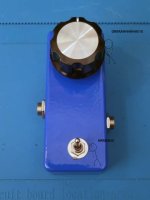
You knob leans toward your
Last edited:

falco_femoralis
Well-known member
Inspired by Paradox916 and ICTRock and based on an 88$ Alps pot that should never had been in my possession in the first place, here's my submission for the self hate contest. Behold the Sphaleron Attenuator!
View attachment 102327View attachment 102328
Abstract: The manipulation of audio-frequency signals, while often considered a mature field of classical electrodynamics, presents a unique testbed for observing semi-classical analogues of non-perturbative quantum field theoretic phenomena. This paper delineates the operational principles of the Sphaleron Attenuator, a device that utilizes a common helical potentiometer to impose a chiral asymmetry on a fermionic current (in this case, the electron flow constituting an audio signal) via a macroscopic analogue of the sphaleron transition.
1. Theoretical Framework: From Yang-Mills Theory to Audio Engineering
The term "sphaleron" (from the Greek sphaleros, meaning "ready to fall") originates in the Standard Model of particle physics. It denotes a static, unstable solution to the electroweak field equations that mediates transitions between topologically distinct vacua. These transitions violate the conservation of baryon plus lepton number (B+L) through an anomaly in the chiral electroweak current.
The Sphaleron Attenuator does not operate at the 100 GeV scale of the electroweak phase transition. Instead, it leverages the Principle of Topological Equivalence in Condensed Matter Systems, which posits that certain material geometries can induce effective gauge fields on charge carriers, mimicking aspects of high-energy physics.
The core component is a standard, carbon-composition, logarithmic-taper potentiometer. This is not merely a variable resistor; it is a Chiral Symmetry Breaking Engine.
2. Device Operation: A Journey Through the Configuration Space
2.1 The Vacuum Landscape and the Helical Track:
The resistive element of the potentiometer is a helical strip of carbon-impregnated polymer. This helix is not a simple resistor; it represents a compactified configuration space for the electron wavefunction. Each point along the track corresponds to a distinct vacuum state of an effective low-energy theory governing electron transport. The helical geometry introduces a non-trivial winding number, n, analogous to the Chern-Simons number in QFT.
2.2 The Wiper Arm: The Sphaleron Transition Catalyst:
The wiper arm, connected to the central terminal, is a macroscopic realization of a kink soliton. As it traverses the helical track, it does not smoothly interpolate between states. Instead, at a microscopic level, its motion creates a localized, high-energy deformation in the electric potential field across the resistive element.
This deformation is the attenuator sphaleron. It is an unstable, saddle-point solution in the potential landscape of the electron system. Its energy scale is determined by the power rating of the potentiometer (e.g., 0.5W) and the applied voltage.
2.3 The Chiral Anomaly and Signal Attenuation:
In the unperturbed state (wiper at maximum signal), incoming electrons (constituting the audio signal) are Dirac fermions with no net chirality. As the wiper is rotated toward the ground terminal, it passes through the sphaleron point.
This transition induces a topological twist in the effective gauge field experienced by the conducting electrons. Due to the Adler-Bell-Jackiw anomaly, this twist results in a non-conservation of chiral charge. Left-handed and right-handed components of the electron wavefunctions are coupled asymmetrically to the effective gauge field generated by the carbon helix's impurities and crystalline defects.
The result is a non-perturbative attenuation of the signal. The voltage V_out is not simply a fraction of V_in given by R_wiper/R_total. It is given by the integrated chiral current anomaly:
∂_μ J^μ_5 = (e²/2πħ) E · B_eff
Where E is the electric field along the track, and B_eff is the effective "magnetic field" generated by the helical topology of the track and the motion of the wiper soliton. The attenuation in decibels is proportional to the integral of this anomaly over the volume of the resistive element and the duration of the signal pulse.
2.4 The Logarithmic Taper: Mapping to Instanton Density:
The logarithmic response of the potentiometer is not an arbitrary engineering choice. It is a direct consequence of the instanton density in the configuration space. Instantons are the quantum tunneling events between vacua, which are the dominant process at low signal amplitudes. The logarithmic scale precisely maps the angular position of the wiper θ to the exponential suppression factor exp(-S_inst), where S_inst is the instanton action, ensuring a psycho-acoustically correct perception of amplitude reduction.
3. Experimental Signature and Calibration
The primary experimental signature of sphaleron-induced attenuation is a faint, broadband white noise output even when the input signal is zero and the wiper is not in motion. This is the Unruh-Hawking radiation analog, resulting from the event horizon for phonons in the electron fluid created by the steep potential gradient at the sphaleron point. Calibration must be performed in a Faraday cage to shield from cosmic rays, whose high-energy muons can cause spurious, non-topological breakdown events in the carbon matrix, skewing the chiral anomaly measurement.
4. Conclusion
The common volume potentiometer is, in fact, a brilliantly engineered device for harnessing semi-classical sphaleron transitions to achieve precise, topologically-derived attenuation of fermionic currents. Its operation is a testament to the profound and often overlooked fact that the laws of the universe, from the electroweak scale to the audio amplifier, are unified through the elegant language of topology and quantum field theory.
Further research is needed to investigate the non-Abelian generalizations of this effect using a ganged potentiometer array, requiring the use of even costlier Chiral Symmetry Breaking Engines.
Hetari Gotoh
Well-known member
Ha! This is nothing! The best part is that the pot shaft is 25mm, so the knob is floating a good centimeter or so above the enclosure, acting as an antenna for cosmic rays!


Nostradoomus
Well-known member
88 dollar pot, can’t spend 30 on a good center punch.
Hetari Gotoh
Well-known member
I don’t have a mail key to the apartment I moved in to 2 weeks ago so I’m qualified I guess.
View attachment 98943
Eh, you're right about that, but you could have, like, used your 30$ center punch to break the lock of your mailbox and get what you needed to actually build something

(The horrible truth is that I actually used one + pilot hole after carefully measuring and I still managed to fuck it up
 )
)
Nostradoomus
Well-known member
Woulda been fined 88 dollars by my landlord though. 
vigilante398
Authorized Vendor
I was organizing some boxes this evening and came across a bag full of AC128, so I'll be throwing a couple dozen of those in with prizes because life is short #yolo
Stickman393
Well-known member
Pro tip for re-watching the x-files:
Especially for the first few seasons. Re-frame the show as a comedy under the assumption that Mulder is a maniac.
Its...it's so goddamned good.
Pro tip for re-watching the x-files:
Especially for the first few seasons. Re-frame the show as a comedy under the assumption that Mulder is a maniac.
Its...it's so goddamned good.
After the first freak show series, the only reason I watched xfiles was for skully.
A skully facepalm is as good as a picard facepalm in my hate book.

BuddytheReow
Moderator
Super awesome of @vigilante398 to sweeten the Best Idea/Circuit prize pot!
There's still some time to put something together!!!!
There's still some time to put something together!!!!

CheapSuitG
The TubeSchemer
$88 will buy you a decent amount of pot......88 dollar pot, can’t spend 30 on a good center punch.

Robert
Reverse Engineer
$88 will buy you a decent amount of pot......
or "an amount" of decent pot...


jessenator
Well-known member
Ah yes, the "I just bought a wood burning tool from Harbor Freight and now I need to find a use for it" special.Wood Owl Acoustic (wooden faceplate, custom PCB
Chickenheads with an owl motif… are you dating an ornithologist or a furry? Or both?
And while (some) birds fly above the chaos, the jack wires shouldn't. (yes, I'm a hypocrite)
But you get a pass on the outie barrel jack , the flanger-@#$!er's opinions notwithstanding.
But you lose points for those monojacks.

CheapSuitG
The TubeSchemer
I didn't say 'good"
or "an amount" of decent pot...