New Pedal Releases

Also, to me this thread feels a lot like the "Talk me out of buying..." threads seen on Reddit.

Which is a good thing.
One of the things I like about this forum is the complete intolerance for bullshit. Pick any post from the last 10 pages. The reactions are almost all some take on the barfing gif. Reddits pedal community is, first of all, way too credulous of JHS, and barely makes an effort to criticize anything, especially over-the-top ad copy.

I don't disagree with you, I just don't really think much of what's been posted here is tempting people to spend money.
 
The CompanDrive 65 is a faithful recreation of the legendary companding circuit found on virtually every studio tape recording since the introduction of the first Dolby noise reduction process in 1965. This all-analog SoloDallas design captures the elusive studio magic heard on countless classic recordings.

At its core, the signal path is carefully recreated and optimized: the guitar first passes through the Vintage Console Gain Circuit which utilizes the famed LM308 op-amp, then into the 65 Compressor, followed by the 65 Expander, and finally through our Vintage OpAmp Boost. Together, these perfectly balanced stages comprise a secret recipe of warmth, harmonics and dynamics, producing that immediately familiar je ne sais quoi from the golden era of recording.

From the moment you click it on, the CompanDrive 65 reveals itself as a missing link—unlocking a wide range of inspiring, mix-ready studio guitar tones with depth, clarity, and musical feel.


View attachment 115375

Signal Path Breakdown​


Vintage Console Gain Circuit (VCGC)
Produces rich, hi-fi overdrive with abundant harmonics while subtly shaping frequencies to add fullness, presence, and clarity in the mix.

65 Compressor
Delivers a smooth, blooming soft-knee attack that enhances note separation and adds musical harmonic clipping without choking dynamics.

65 Expander
Restores overall signal amplitude, removing unwanted “pump and squish” while further emphasizing the harmonics generated by the VCGC and compressor stages.

Vintage OpAmp Boost
A classic op-amp design that preserves delicate frequencies and maintains clarity as output level is increased, making the CompanDrive 65 equally at home on a pedalboard or in the studio.

Honest question (from a bass player)

Why would guitarists want a pedal to recreate a “studio” type sound? Live bands don’t really sound like studio recordings (and that’s not a bad thing.) And in a studio, this pedal might be the best thing ever, but surely it’s easier to do it all in software.

I don’t get the use case - or could they summarise it better as “tone sweetener pedal”


And what exactly is a delicate frequency?
 
Honest question (from a bass player)

Why would guitarists want a pedal to recreate a “studio” type sound? Live bands don’t really sound like studio recordings (and that’s not a bad thing.) And in a studio, this pedal might be the best thing ever, but surely it’s easier to do it all in software.

I don’t get the use case - or could they summarise it better as “tone sweetener pedal”


And what exactly is a delicate frequency?
Because DI, transformers, saturation, conditioning of your guitar's signal and studio are the new buzzwords in the guitar world.

A delicate frequency is the pitch a guitarist emits when he turns on a 29 Pedals unit.
 
This falls kind of short IMO. Like Nostra mentioned, only one side can be used at a time. It’s like if you took a double muffin, made one side octavey, and replaced the toggle with a footswitch. And use relays for the footswitches to toggle them via MIDI.

I get the impression that it's a dual Rufus Reloaded... one in standard mode and the other in octave mode.
 
I get the impression that it's a dual Rufus Reloaded... one in standard mode and the other in octave mode.
From their website:
“When the folks at Suhr released the Rufus and the Rufus Reloaded pedals, those pretty much replaced the other fuzzes in my live rig because of their great sound and reliability.”

“The Suhr Thornicus Fuzz has been in development for several years now and perfectly captures the DNA of all the fuzzes I’ve loved over the years, but is infinitely more flexible and versatile.”
 
One of the things I like about this forum is the complete intolerance for bullshit. Pick any post from the last 10 pages. The reactions are almost all some take on the barfing gif. Reddits pedal community is, first of all, way too credulous of JHS, and barely makes an effort to criticize anything, especially over-the-top ad copy.

I don't disagree with you, I just don't really think much of what's been posted here is tempting people to spend money.

For real, the number of guitar players on r/guitarpedals, Pedalboards of Doom, Pedalboards 101... etc that just credulously believe in all the magic components and just un-critically believe the marketing hype. I remember someone confidentially telling people the J Rockett Airchild was actually based on the Fairchild circuit when it's just a dynacomp.

Honest question (from a bass player)

Why would guitarists want a pedal to recreate a “studio” type sound? Live bands don’t really sound like studio recordings (and that’s not a bad thing.) And in a studio, this pedal might be the best thing ever, but surely it’s easier to do it all in software.

I don’t get the use case - or could they summarise it better as “tone sweetener pedal”


And what exactly is a delicate frequency?

To be fair, plenty of "studio gear" is used in live situations, you've almost certainly heard an 1176, LA2A or DBX160 for example, so for some things, especially with the advent of SMD being able to minituraise things it makes sense.

The DBX A thing, I mean it's a gimmick yeah.
 
...

And what exactly is a delicate frequency?

Well, for example, I found 13,296 Hz to be quite delicate.

Supposedly it's close to where the pick-attack resides, so I struck it with a JazzIII (red, IIRC) and that frick'n freq choked, puked then cried.


I'm going to build-for-market an orangey-squeezed clone closely based on a Mr Squishy Toad that's savagely mated with a DyanaRaws comp for an illegitimate-lovechild limiter-comp,
but the inspiration to do so is straight up from my wanting to clone my OG Big Box OriginFX Cali76... which was/is based on an 1176 (and cloning it is waaayyyy beyond my capabilities)... so that's how I'll market my rawsquish compressor:

"The Feral Feline Fine FX 'SquARShEd Princest Frogue' compressor limiter — inspired by the 1967 UREI 1176".


I wonder if it'd sell...


thinking-overthinking.mp4
 
Because DI, transformers, saturation, conditioning of your guitar's signal and studio are the new buzzwords in the guitar world.

A delicate frequency is the pitch a guitarist emits when he turns on a 29 Pedals unit.
Which to be fair I do with my bass (colourbox v2- decent run clean despite the maker) - it’s just, urgh the hype and stupidity.


Oh the frequency of a buffer with higher than expected input impedance right? That’s it yeah, switch a couple of resistors and boom we can do that!
 
The CompanDrive 65 is a faithful recreation of the legendary companding circuit found on virtually every studio tape recording since the introduction of the first Dolby noise reduction process in 1965. This all-analog SoloDallas design captures the elusive studio magic heard on countless classic recordings.

At its core, the signal path is carefully recreated and optimized: the guitar first passes through the Vintage Console Gain Circuit which utilizes the famed LM308 op-amp, then into the 65 Compressor, followed by the 65 Expander, and finally through our Vintage OpAmp Boost. Together, these perfectly balanced stages comprise a secret recipe of warmth, harmonics and dynamics, producing that immediately familiar je ne sais quoi from the golden era of recording.

From the moment you click it on, the CompanDrive 65 reveals itself as a missing link—unlocking a wide range of inspiring, mix-ready studio guitar tones with depth, clarity, and musical feel.


View attachment 115375

Signal Path Breakdown​


Vintage Console Gain Circuit (VCGC)
Produces rich, hi-fi overdrive with abundant harmonics while subtly shaping frequencies to add fullness, presence, and clarity in the mix.

65 Compressor
Delivers a smooth, blooming soft-knee attack that enhances note separation and adds musical harmonic clipping without choking dynamics.

65 Expander
Restores overall signal amplitude, removing unwanted “pump and squish” while further emphasizing the harmonics generated by the VCGC and compressor stages.

Vintage OpAmp Boost
A classic op-amp design that preserves delicate frequencies and maintains clarity as output level is increased, making the CompanDrive 65 equally at home on a pedalboard or in the studio.
The weirdest thing about this is the ad copy is evoking a bunch of hi-fi 1960s dad-rock shit.

But the visual aesthetic is ‘80s C-64. The only thing musical I associate with the C-64 is SID Chiptunes stuff. Which is cool in its own right, but pretty much the opposite demographic of people who care about ‘vintage console-ism’. 🤷‍♀️
 
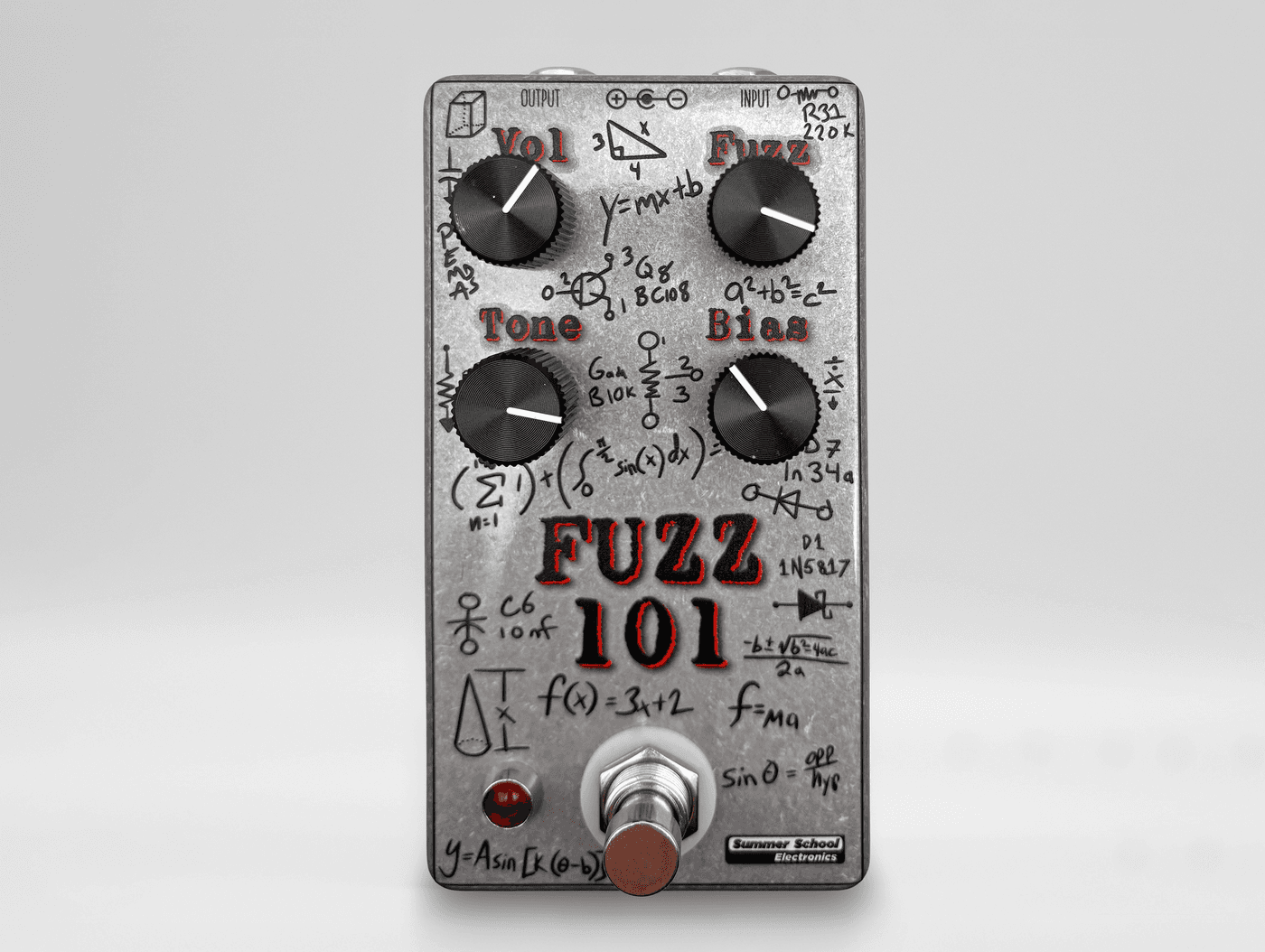
What the world really needs is a Si Fuzz Face with a Rat's tone-control...

... oh, wait... it's here, with BC108 transistors.

image.png
 
The weirdest thing about this is the ad copy is evoking a bunch of hi-fi 1960s dad-rock shit.

But the visual aesthetic is ‘80s C-64. The only thing musical I associate with the C-64 is SID Chiptunes stuff. Which is cool in its own right, but pretty much the opposite demographic of people who care about ‘vintage console-ism’. 🤷‍♀️
That was my next question!!
 
The weirdest thing about this is the ad copy is evoking a bunch of hi-fi 1960s dad-rock shit.

But the visual aesthetic is ‘80s C-64. The only thing musical I associate with the C-64 is SID Chiptunes stuff. Which is cool in its own right, but pretty much the opposite demographic of people who care about ‘vintage console-ism’. 🤷‍♀️
I was under the impression that the 80s visuals + dolby thing is about that noise reduction switch you saw on on hifi cassette decks of that era. Truly the thing everyone wants in a pedal!

Shit, it was everyone's guess whenever enabling or disabling it would result in "better" sound... I mean, did anyone ever think about tape biasing / noise reduction type / tape type when they made mixtapes or radio recordings for each other? You had to make due with what you got. Especially when you got a copy of a copy. Sometimes it just sounded better, sometimes not, when you pressed it.
 
Last edited:
Back
Top