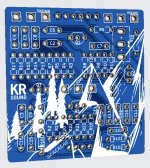
steviejr92
Authorized Vendor
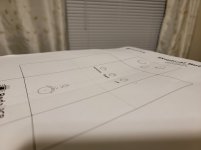
I heard its like riding a bike once you know how you never really forget!Ha. It’s probably been 20 years since I’ve touched a squeegee, let alone emulsion!

I heard its like riding a bike once you know how you never really forget!Ha. It’s probably been 20 years since I’ve touched a squeegee, let alone emulsion!

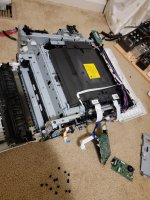
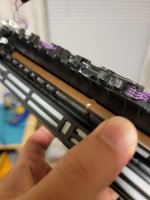
Something wrapped around a drive roller grooving your pages? What was it? Did you get it off? Did you get the printer back together? Does it still work?
Thank you.Something wrapped around a drive roller grooving your pages? What was it? Did you get it off? Did you get the printer back together? Does it still work?
If it ends badly, I can recommend this one:

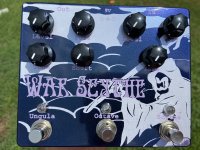
That looks amazing! I like the way you lined it up i think the even amount of spacing looks great!Finished up a War Sythe with the clefted mods, only I left C16 in, an oversight though I really like the way it sounds! Labels came out a little sloppier than I wanted and I should have done a white layer behind the lettering over the dark background, but,”Don’t let the perfect be the enemy of the good!” That is one of the Neutron Star enclosures from SBP. I still may make some knobs for it, when I get around to it.View attachment 54033

It's called Instant Zen Bold - Instant ZenThat font is fucking sick!

Rollers wear out, you may be able to find a part, or if worse comes to worse, another busted printer.

Before you buy your own pressure pot, it’s worth checking around at your school to see if one of the sculpting shops (or possibly if your school has a product or industrial design department, their shop should have a pressure pot). After you’ve had a chance to use one, you’ll be a much better educated shopper.View attachment 53871
Second batch— this time with ivory black and burnt umber pigments fit a speckled mocha look. Much less successful than the first time, as this is chock full of bubbles. Gonna see what people say about the $99 harbor freight pressure pot.

Thanks for the info! My school unfortunately doesn’t have an industrial/product design department, and I don’t think the sculpture department has a pressure pot since there are only two sculpture rooms and a supply closet, and I’ve never seen a pressure pot in any of them, but I’ll ask just in case!Before you buy your own pressure pot, it’s worth checking around at your school to see if one of the sculpting shops (or possibly if your school has a product or industrial design department, their shop should have a pressure pot). After you’ve had a chance to use one, you’ll be a much better educated shopper.
The other nice thing to have is a vacuum pot, to de-gas before you cast. (This is also very effective with silicone before you pour the mold.) You’d need to be working with a slower resin (but for that matter, with a pressure pot you’d want something a bit slower too). With open face molds, a vibration table is also quite effective, and can be built inexpensively.
With small, open face molds, the other thing you can try is to brush in a small amount of resin, to wet the mold surfaces; as a thin layer, you can get it bubble free pretty easily, then pour in the fill. Obviously one time use brushes…Thanks for the info! My school unfortunately doesn’t have an industrial/product design department, and I don’t think the sculpture department has a pressure pot since there are only two sculpture rooms and a supply closet, and I’ve never seen a pressure pot in any of them, but I’ll ask just in case!
I’ll definitely have to build a vibration table. I sorta simulated one when I was casting by keeping the mold on a plywood board and moving it around such to agitate it similar to how I get bubbles out of plaster castings, but a mechanical device would be more effective for sure, and easy to build with just a small motor

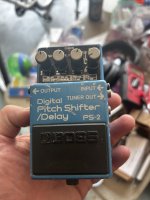
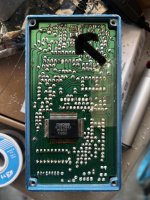
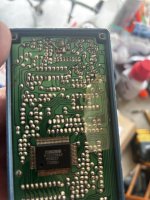
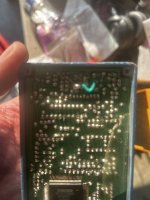
I think some of the old boss pedals ran on 12v wall worts or 9v battery. thats why it works with the battery and not standard 9v wall wort....Friend brought this to me yesterday, worked with battery power not with the dc jack. Ground pad appeared lifted off the board. With a little help
From a user at diystompboxes managed to figure out where to jumper. Serial number is from 87. View attachment 54082
Arrow to lifted pad at dc jack
View attachment 54083
First attempt to fix. This did not fix it.
View attachment 54084
After some advice over at diystompboxes this got it working again.
View attachment 54085
Interesting little box.
What your referring to is older Boss pedals ran on the ACA power supply that was an unregulated 12V and later units on the regulated 9V PSA power supply.I think some of the old boss pedals ran on 12v wall worts or 9v battery. thats why it works with the battery and not standard 9v wall wort....


 And an amazing wife!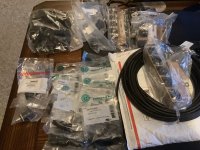
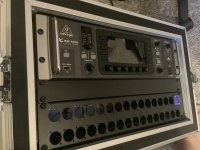
Very nice. I can see pikes peak from my yard.With that BMP thread, I took all my iterations and experimentations and put something together that is similar to the P19 and went ahead and sent it off to get made.
I’ll call it the Pikes Peak.
View attachment 54202