What should I do to my wah pedal?

falco_femoralis

Well-known member
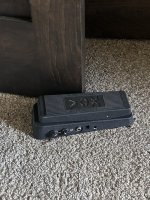
I just picked up a used cry baby with a 2007 red PCB. It's in good shape and original. It has a red fasel inductor and MPSA18's. What should I try with it?

I'm thinking an LED indicator and at least one external knob to adjust... something. Maybe overall range? Or Q?

I'm playing around with the wah and wish it sounded a little thicker, if that makes sense. Maybe I need to pair it with the right overdrive
 
Heyyyyyyyyy.

So:

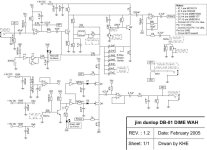
You'll have a buffer in there. It's decent. No real reason to pull it out, no real reason to mod it. It works.

If you've got one with a single pole double throw toe switch: yeah, swap that thing. Do a true bypass.

This used to be a much more important mod before the buffer became standard, but even now it's just not a good design. The pedal is not a buffered bypass: it's a "hardwired" bypass...except they leave the input connected. Which creates a parallel path for your guitar signal, which decreases the impedance of the circuit, which loads down your guitar signal and isn't a good thing overall. I recommend using a hard click for the wah, btw. None of that soft click nonsense.

The first MPSA18, closest to the input: Swap. BC109B is my go-to. Generally between 250-400hfe. The MPSA18 is too gainy in this position imho. BC549b is exactly the same thing in a different package, but you don't get to sniff the cork all condescendingly with a TO-92.

Theres gonna be two small 10nf caps in there. the furthest cap to the left is your input cap. Make that one a bit larger and you'll add a little more bottom end. It's subtle though. The second is where the money is: 10-22nf are the "classic" values for this one. I like a 15-18nf most of the time. The higher the value, the more you shift the range of you wah sweep *down*.
There's a 33K resistor next to the inductor. Swap for 68-100k. That'll increase your Q. Always found variable Q to be a little...eh.

You'll find a 390 ohm resistor off the emitter of the first MPSA18. You can get a bit more bass and gain out of it if you drop that down to 360. Drop too low, though, and you'll start to oscillate at the heel down position.

Oh, and the 68k input resistor, right before the first MPSA18? Drop that guy down to like 47-56K.

These are stickman approved mods. Go forth and wah.
 
Last edited:
Heyyyyyyyyy.

So:

You'll have a buffer in there. It's decent. No real reason to pull it out, no real reason to mod it. It works.

If you've got one with a single pole double throw toe switch: yeah, swap that thing. Do a true bypass.

This used to be a much more important mod before the buffer became standard, but even now it's just not a good design. The pedal is not a buffered bypass: it's a "hardwired" bypass...except they leave the input connected. Which creates a parallel path for your guitar signal, which decreases the impedance of the circuit, which loads down your guitar signal and isn't a good thing overall. I recommend using a hard click for the wah, btw. None of that soft click nonsense.

The first MPSA18, closest to the input: Swap. BC109B is my go-to. Generally between 250-400hfe. The MPSA18 is too gainy in this position imho. BC549b is exactly the same thing in a different package, but you don't get to sniff the cork all condescendingly with a TO-92.

Theres gonna be two small Knife caps in there. the furthest cap to the left is your input cap. Make that one a bit larger and you'll add a little more bottom end. It's subtle though. The second is where the money is: 10-22nf are the "classic" values for this one. I like a 15-18nf most of the time. The higher the value, the more you shift the range of you wah sweep *down*.
There's a 33K resistor next to the inductor. Swap for 68-100k. That'll increase your Q. Always found variable Q to be a little...eh.

You'll find a 390 ohm resistor off the emitter of the first MPSA18. You can get a bit more bass and gain out of it if you drop that down to 360. Drop too low, though, and you'll start to oscillate at the heel down position.

Oh, and the 68k input resistor, right before the first MPSA18? Drop that guy down to like 47-56K.

These are stickman approved mods. Go forth and wah.
My switch is a dpdt, but it's weird because it's wired like a spdt. Each wire is extended to its neighboring pole. Idk why they would do that

Can you explain more about the hardwired bypass, and the parallel path leading to decreased impedance?

I have some BC109b's I can use, and I'll try those cap and resistor changes. I also have a BC549C, would that be better than the low gain version?
 
It is wired like a spdt because at that time Dunlop was selling a true bypass version of this pedal for more money.
You can rewire your pedal for true bypass using the existing switch and you 'll definitely hear a difference.
I would not use BC549c.I would replace both transistors with BC109B.
 
Last edited:
My switch is a dpdt, but it's weird because it's wired like a spdt. Each wire is extended to its neighboring pole. Idk why they would do that

Can you explain more about the hardwired bypass, and the parallel path leading to decreased impedance?

I have some BC109b's I can use, and I'll try those cap and resistor changes. I also have a BC549C, would that be better than the low gain version?
Deffo do the "B".

Too much gain in this position gives the wah a bit of a spiky, unpleasant high-end response. This was a 2N2905 in the old Thomas Organs - generally between like 100-300hfe.

A "C" bucket will get ya closer to 400-800hfe. Too close to the mpsa18, which is just...too damned hot, too damned clean.

The BC109b/549b has a nice flavor to it. Ain't the cleanest thing in the world: its the dirt that really makes this thing shine in this position. If you want clean, I'd hand-select a 2N5088 at the lowest end of the gain range. Like 300-400hfe.

The second mpsa18 is less important. Personally, I like to swap both while I'm in there, but the biggest difference comes from Q1.

Note: the buffer uses an MPSA13, a darlington transistor. Honestly: I pull this sometimes and do a jfet buffer to increase the input impedance (it's SUPER easy and doesn't require any mods to the circuit board, it just requires turning the jfet sideways and bending the leads).

The tone-suck in the off position associated with wah pedals is based in reality: these circuits have quite low input impedance. That's not a huge problem in use, and can actually kinda add to the appeal of the circuit, as that will tend to shave off a bit of your high end.

BUT...the issue of leaving the input connected is one of parallel paths.

Impedance is a form of resistance, and the law of parallel resistances is:

1/R Total = (1/R1) + (1/R2) + ect.

Your total resistance (impedance) on a branching path is always going to be *less* than your lowest impedance.

Which means: on vintage wahs that didn't disconnect the input, the low input impedance of the wah pedal would drag down the impedance of the entire circuit. Which would shave off a considerable amount of high-frequency signal content and would lead to a more attenuated signal hitting the amp.

The input buffer *greatly* improved this, and if it's the only pedal in your rig that does this you're not likely to notice a difference. The problem lies in where you start stacking pedals that do this...then you're just stacking additional 1/Rx's. It can load ya down real quick.

That's why I'm a fan of just making it true bypass.

Something else....almost forgot about this:

That second 10nf cap? Swap it out for something a little "better" than a poly film cap. Polypropylene is a good upgrade, polystyrene is better.

Why? The old Italian wahs used polystyrene caps. Call me superstitious. I've never actually done a full comparison, and I doubt my ears would really be able to tell the difference. But its fancy, and I like fancy.

Other mods:

The pot, but only if you're certain that you want a different taper out of the pedal. Doesn't do a whole lot on it's own, and the stock Dunlop HPIIs are A) bulletproof and B) do the job admirably.

Inductor: the red fasel is a finicky bastard. It's fine. You can certainly build a great sounding wah pedal around one. But there's something about it that I just don't particularly like.

Probably because I've pulled the originals apart and seen that those were made with 1408 pot cores, and the "reissues" are toroid core.

Dunlop had used pot cores for quite some time. In the mid-90s they transitioned to toroids. As far as I can tell this was done for cost-saving reasons.

I say that because there's less assembly with a toroid, and it coincided with a drop in DC resistance without an appreciable increase in wire diameter...which makes me think they were able to get away with using much less copper wire per unit.

I could be totally off base here, too. But it fits with much of what Dunlop did post-acquisition of the crybaby from Thomas Organ.

Which is to say, I associate toroids with a bit of a "games over losers, I've got all the money" impulse on Dunlop's part. They're not all bad, the ones Dunlop makes are just extremely inconsistent. And I suspect that the red fasel is really just the black plastic cylinder with tighter manufacturing tolerances and a facelift.

But...then again...the maestro boomerang is well loved by many, and that one used a toroid inductor as well. So...meh.

I do like a good pot core inductor though. I mean, I make them and randomly throw them at people on this forum.

 
Deffo do the "B".

Too much gain in this position gives the wah a bit of a spiky, unpleasant high-end response. This was a 2N2905 in the old Thomas Organs - generally between like 100-300hfe.

A "C" bucket will get ya closer to 400-800hfe. Too close to the mpsa18, which is just...too damned hot, too damned clean.

The BC109b/549b has a nice flavor to it. Ain't the cleanest thing in the world: its the dirt that really makes this thing shine in this position. If you want clean, I'd hand-select a 2N5088 at the lowest end of the gain range. Like 300-400hfe.

The second mpsa18 is less important. Personally, I like to swap both while I'm in there, but the biggest difference comes from Q1.

Note: the buffer uses an MPSA13, a darlington transistor. Honestly: I pull this sometimes and do a jfet buffer to increase the input impedance (it's SUPER easy and doesn't require any mods to the circuit board, it just requires turning the jfet sideways and bending the leads).

The tone-suck in the off position associated with wah pedals is based in reality: these circuits have quite low input impedance. That's not a huge problem in use, and can actually kinda add to the appeal of the circuit, as that will tend to shave off a bit of your high end.

BUT...the issue of leaving the input connected is one of parallel paths.

Impedance is a form of resistance, and the law of parallel resistances is:

1/R Total = (1/R1) + (1/R2) + ect.

Your total resistance (impedance) on a branching path is always going to be *less* than your lowest impedance.

Which means: on vintage wahs that didn't disconnect the input, the low input impedance of the wah pedal would drag down the impedance of the entire circuit. Which would shave off a considerable amount of high-frequency signal content and would lead to a more attenuated signal hitting the amp.

The input buffer *greatly* improved this, and if it's the only pedal in your rig that does this you're not likely to notice a difference. The problem lies in where you start stacking pedals that do this...then you're just stacking additional 1/Rx's. It can load ya down real quick.

That's why I'm a fan of just making it true bypass.

Something else....almost forgot about this:

That second 10nf cap? Swap it out for something a little "better" than a poly film cap. Polypropylene is a good upgrade, polystyrene is better.

Why? The old Italian wahs used polystyrene caps. Call me superstitious. I've never actually done a full comparison, and I doubt my ears would really be able to tell the difference. But its fancy, and I like fancy.

Other mods:

The pot, but only if you're certain that you want a different taper out of the pedal. Doesn't do a whole lot on it's own, and the stock Dunlop HPIIs are A) bulletproof and B) do the job admirably.

Inductor: the red fasel is a finicky bastard. It's fine. You can certainly build a great sounding wah pedal around one. But there's something about it that I just don't particularly like.

Probably because I've pulled the originals apart and seen that those were made with 1408 pot cores, and the "reissues" are toroid core.

Dunlop had used pot cores for quite some time. In the mid-90s they transitioned to toroids. As far as I can tell this was done for cost-saving reasons.

I say that because there's less assembly with a toroid, and it coincided with a drop in DC resistance without an appreciable increase in wire diameter...which makes me think they were able to get away with using much less copper wire per unit.

I could be totally off base here, too. But it fits with much of what Dunlop did post-acquisition of the crybaby from Thomas Organ.

Which is to say, I associate toroids with a bit of a "games over losers, I've got all the money" impulse on Dunlop's part. They're not all bad, the ones Dunlop makes are just extremely inconsistent. And I suspect that the red fasel is really just the black plastic cylinder with tighter manufacturing tolerances and a facelift.

But...then again...the maestro boomerang is well loved by many, and that one used a toroid inductor as well. So...meh.

I do like a good pot core inductor though. I mean, I make them and randomly throw them at people on this forum.
I see. The switch only disconnects the output when bypassed, leaving the input to load the pickups.

Do you leave the input buffer in when changing to true bypass?
 
Honestly: users choice.

Its not a bad addition to the circuit. I've made wahs with switchable input buffers, and I have a hell of a time figuring out if they're on or not.

The "classics" didn't have em, so it's ok in my book to strip em out. It does the job. I like swapping for a jfet-based buffer sometimes cause I'm fancy. Some companies take this approach...the ernie ball wah does, IIRC.

I picked up an old Thomas organ off reverb a while back: the seller said it had previously been played by Stephen Stills. Well, shit. I had to buy it for my dad. I told the guy "hey, I don't really care as far as how true the story is, but tell me a story I can tell him". The story sounded believable enough: shop in LA, his old guitar tech had brought em in. Tickled my dad when I gave it to him.

It was also converted to true bypass, with a mod on the collector of Q1: dropped that one down from a 470 to a 330 or 390 ohm. Shoot. Can't remember off the top of my head.

But what sold me on it was the notes on the back of the thing:

"Has true bypass"
"Sounds good mediocre"

Huh. Yup. That tracks.
 
Back
Top