kristopher
Well-known member
“Why even have a clean blend?”
Because having another knob to turn the better.
Even if it is pseudo placebo.
Because having another knob to turn the better.
Even if it is pseudo placebo.



I know it's not exactly what you meant, but I do take offense at "well the thing you do accomplishes the same thing quickly, but I think you're just lazy because you don't spend enough time picking the correct compressor, learning how exactly all the controls function and dialing it in just right".Parallel compression can also be a crux for lazy/bad engineers or people that generally don't understand compression or select the correct compressor for the material and use it to hide the pumping and breathing. I know you worked with GM some. I've heard him speak several times at AES meetings here in Nashville. Nice guy. I remember he gave a talk on compression once and touched on that, albeit treading a little easier.

That's the answer to me. I use parallel compression where I want to impart character. Fast attack and release times, low threshold and high ratio will introduce distortion in many compressors. I actually want to bring out this behavior, so I'll use those exaggerated settings to get some grit, character, whatever you want to call it, and blend the clean signal back in until it sounds right. It's just another tool in the bag, not always the right choice but when it works (drum bus!), it works.I was just thinking about that. What I've been saying probably mostly applies to clean compressors close to an ideal "pure gain controller" . If it's a very "colorful" compressor, then you might indeed want to mix it with the unprocessed signal to control the color. But then it's arguably not just a straight gain controller, but an effect, as in, it changes the timbre of the sound. Indeed, George likes transparent things. I swear, you can bypass/unbypass his EQ and you have no idea which is which. It just sounds like the source has always had more bass or less treble or whatever you dialed in.

the one compressor I think actually benefits from clean blend is the orange squeezer just because of the lack of any other control.Can someone explain to me what is the point of having a clean blend on a compressor? It seems to me that the same effect can be achieved by properly adjusting the compressor controls, without any blend. You want more clean and less compressed? Just dial in less compression. Play with the threshold and ratio to taste.
It just seems to me that a clean compressor blend is as useless as a wet/dry blend in an EQ. You want a 3dB treble cut? Cut it by 6dB and mix in some dry, until on average it's just a 3dB treble cut.
Thoughts? What am I missing here?

I feel like the clean blend is the equivalent of automatic transmission for cars, sorta? Yeah you can get the same and even better result with manual transmission (I love it) but a large portion of drivers prefers automatic because it’s less work and fewer things to learn and worry about. If we are looking at guitar pedals, there is definitely an immediacy in using the blend rather than learning to use all the settings in a compressor - which by the way most pedals do not have! I’m sure it makes a lot more sense to a professional sound engineer to finely dial the compressor in instead, just like I prefer driving manual (not that I am a professional driver, but I learned it when I was young so it comes naturally).

 not a real compressor, I can tell. Totally fake
  .
.
 :
: 
Damn, this hits home...


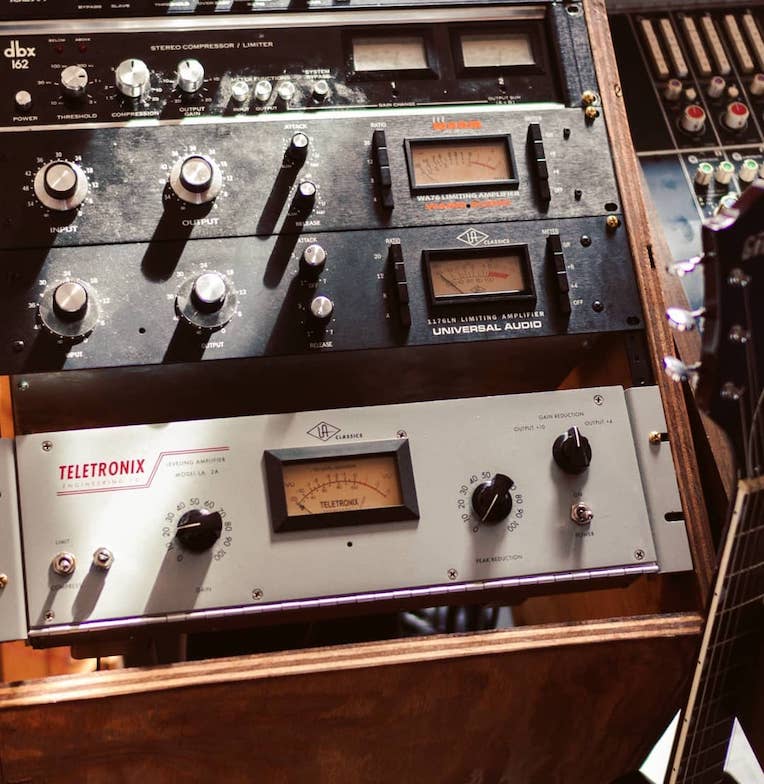
No, but that’s largely because there’s absolutely zero need for one on a studio compressor unit since putting it on an AUX send and controlling the mix from the console would make an onboard blend knob superfluous.I'm still trying to find a single well-regarded studio compressor that has a blend knob. Are there any??
Not needed if you use it as a send in the console. You keep the direct signal and add the compressed signal in a aux channelI'm still trying to find a single well-regarded studio compressor that has a blend knob. Are there any??