New Pedal Releases

they still at it. I predict the next big muff 2 iteration will be a dumble style "clean" big muff 2. cuz everybody is making a clean dumble style pedal these days again. too bad people to don't get hyped for ring mod and flange like they do for dumble and tube screamers....
 
they still at it. I predict the next big muff 2 iteration will be a dumble style "clean" big muff 2. cuz everybody is making a clean dumble style pedal these days again. too bad people to don't get hyped for ring mod and flange like they do for dumble and tube screamers....
Or a NOTABIGMUFF2 "kit"
 
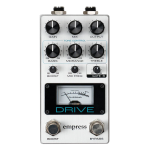
It looks fabulous, but I can't imagine why I would need a meter for the level of clipping. Shouldn't you be using your ears to dial that in?
I just pulled the Carbon Monoxide section out (no toan anyway) of my Smoke Alarm and built a Clipping Threshold circuit in there.
That way, if anything in the house crosses the line from “Crunch” to “Distortion” (a guitar, a piece of toast, whatever), I know right away!
 
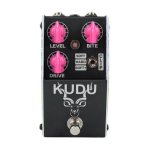
The KUDU is designed to be powered by a 9V DC centre-negative 2.1mm power supply. Do not attempt to use this pedal with other voltages or polarities. They have power protection circuitry in their pedals and use of any other voltages will shut the pedal down and may require return to ThorpyFx HQ for repair. This will not be covered under warranty.

Well that's not really "protection", is it?
 
Well that's not really "protection", is it?
Protection that protects the device from damage by letting it get damaged in a specific and predictable way but that damage still requires technical repair and voids the warranty. Not to be confused with protection that actually, you know, just protects the pedal.

Moog does the same thing for polarity protection. Guess how I know.
 
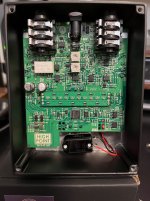
I wonder whether the "protection circuitry" it's just a reverse biased 9.1V zener.

To be fair, I've never seen a Thorpy pedal that didn't use MOSFET polarity protection so this might be a write-up by someone other than Thorpy.
 
It looks fabulous, but I can't imagine why I would need a meter for the level of clipping. Shouldn't you be using your ears to dial that in?
I was talking to a friend about this just today and we agreed - there's no way we can judge sound with our ears. That's crazy talk. I much prefer to judge sound by reading TGP and watching youtube videos where people can tell me if I'm right or not. Sure, It can be confusing and that's where the VU meter comes in. I read that the Beatles liked the meter to be in the red. Wanting to sound like the Beatles I know that if I get the meter into the red I will sound like the Beatles. To be honest I think from now on all my pedals must have a VU meter in them. Why didn't I think of this before? How can any pedal be any good if it doesn't have a VU meter? HOW CAN I KNOW IF IT SOUNDS GOOD??

(Edit) OMG I just looked again and there is no red on that meter. It must sound awful.
 
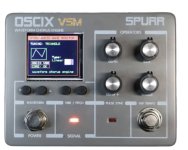
28944.jpg

The OSCIX VSM is a high-fidelity modulation engine inspired by the industrial aesthetic and nostalgic serenity of 80s and 90s analog TV satellite stations. Designed as a "Virtual Sound Modeler," it combines a lush analog-voiced chorus with a real-time waveform monitor.

Key Features:
  • Engine: Dedicated "Analog Chorus Engine" with 8 selectable modulation waveforms.
  • Visuals: Integrated display showing real-time waveform geometry.
  • Depth +: A multi-stage reverb architecture that can be blended for atmospheric textures or used as a standalone effect.
  • Shift Function: Paired with Depth + to create expansive, shimmer-like harmonic clouds.
  • Vibe Mode: Instant dry-signal kill for pure pitch modulation.
  • Warble Control: A dedicated lo-fi parameter designed as a tribute to the pitch-flutter and tracking imperfections of vintage video tapes.
  • Eight waveforms:
    Sine: Smooth, liquid, and traditional chorus. Sine 3rd: Harmonically enriched modulation. Sweep: Dynamic and sweeping envelope transitions. Lumps: Organic, irregular textures. Random: Unpredictable modulation for unique sonic explorations. Ramp Up: Defined rhythmic growth. Triangle: Classic, symmetrical modulation clarity. Square: Abrupt, rhythmic pitch shifts.
  • Origin: Conceptually rooted in the telecommunications history of local TV Earth Station.
 
Back
Top