I know you know this giovanni, but to be explicit it doesn’t even predict sentences. Even better- it’s dumber than that. All it does is, given a text input, it predicts the most likely next token. A token is about 3-5 characters. Not even necessarily words. Tokens can have spaces in them, like “a tow” or something.They just predict the most likely sentences based on the prompt.

You are using an out of date browser. It may not display this or other websites correctly.
You should upgrade or use an alternative browser.
You should upgrade or use an alternative browser.
AI is annoying
- Thread starter spi
- Start date
benny_profane
Well-known member

Stickman393
Well-known member
To be fair,I work in marketing with a bunch of guys who entered the workforce post covid…
The amount of AI generated rubbish they come up with is amazing - one of them has rhen got good at rewriting into normalish English … but at no point questioned “why would we even say this” …. It’s ok though because it’s not like it’s a generation that’s bad at taking any criticism or anything … honestly getting protective about something you’ve had a machine write for you :S
This was already the case in much of the marketing world.
And if you've seen any particularly bad movies recently.
And if you listen to politicians or read opinion columnists.
"You know, quantum physics tells us that uncertainty is also a thing that I do not understand within the framework of quantum physics but I will now make Dunning and Kruger proud by speaking confidently about the matter to insinuate that my worldview is correct". Thanks, Ross Douthat, my nemesis *shakes fist*
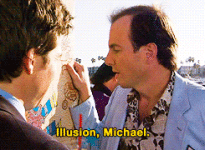
I gotta say, now that someone's posted the arrested development meme:
The hype around AI really reminds me of this one Trad Cath dude that would watch stage magic and was so charmed and utterly convinced that what he was seeing was, in fact, real magic. Therefore it was obviously the work of the devil...but you *really* got the sense that he just *really* enjoyed magic. Tragically, his worldview couldn't allow for him to engage with it unless it had something to do with his battle against the literal Christian Devil. It's adorable.

Band of Dans
Well-known member
I've seen it used successfully for marketing and add copy. Also, I was impressed when it recorded a zoom meeting and produced a meeting synopsis and a list of action items. That saved a lot of time.
I find the synopsis/summary stuff super interesting, mostly because of what it suggests about us and how useful or novel our meetings are. This article ("When ChatGPT summarises, it actually does nothing of the kind") has been really stuck in my craw lately and I really recommend folks check it out. The author assumed one of ChatGPT's "killer apps" would be summarizing research papers. They found it worked pretty well a lot of the time, but wondered if it only worked well on papers that had already been summarized by humans elsewhere in the model's training data. What if you ask it to summarize a paper that hasn't been written about or cited very much? The gist:
But the main proposal — that Council of Stakeholders — which takes up about 25% of the main text of the paper, is not mentioned in ChatGPT’s summary at all. Instead, that concrete suggestion becomes a few empty sentences. And that was true for a few other essential elements of the paper. In other words: the summary makes a good first impression, though not very concrete in terms of proposals, but reading the summary alone, you will not be aware that the paper actually has a a set of very concrete proposals and options, most of which is missing in ChatGPT’s summary.
...
ChatGPT doesn’t summarise. When I asked ChatGPT to summarise this text, it instead shortened the text. And there is a fundamental difference between the two. To summarise, you need to understand what the paper is saying. To shorten text, not so much. To truly summarise, you need to be able to detect that from 40 sentences, 35 are leading up to the 36th, 4 follow it with some additional remarks, but it is that 36th that is essential for the summary and that without that 36th, the content is lost.
But that requires a real understanding that is well beyond large prompts (the entire 50-page paper) and hundreds of billions of parameters.
...
So, when will shortening the text be good enough for a reliable summary? Probably only when summarising consists of nothing else than turning something unnecessarily repetitive and long-winding into something short, i.e. when volume is a good predictor of importance.
So it may or may not do a very good job of summarizing the important points from a text depending on how much your meeting looks like other meetings in its training data. But it will always _shorten_ the text in a way that looks correct and authoritative, which is maybe worse than nothing at all if you really need to be sure.

giovanni
Well-known member
True, but they typically also take into account the beginning of the sentence via what ML practitioners call “attention”. That’s just to say they are more effective than the prompt on your phone suggesting the next word to enter, but not by a lot.I know you know this giovanni, but to be explicit it doesn’t even predict sentences. Even better- it’s dumber than that. All it does is, given a text input, it predicts the most likely next token. A token is about 3-5 characters. Not even necessarily words. Tokens can have spaces in them, like “a tow” or something.

joeyd
Well-known member
What I'm worried about with summaries of research papers relates to publisher fiefdoms. Search algorithms for databases like Science Direct are already completely opaque. Competing publishers often have agreements to index content on other platforms. I think it would be completely on brand for them to develop AI summary tools that over-cite papers that were published on their own platforms even if the authors aren't necessarily the most knowledgeable and authoritative.Stuff about research papers and summaries

spi
Well-known member
Thanks, that's a very interesting article.I find the synopsis/summary stuff super interesting, mostly because of what it suggests about us and how useful or novel our meetings are. This article ("When ChatGPT summarises, it actually does nothing of the kind") has been really stuck in my craw lately and I really recommend folks check it out. The author assumed one of ChatGPT's "killer apps" would be summarizing research papers. They found it worked pretty well a lot of the time, but wondered if it only worked well on papers that had already been summarized by humans elsewhere in the model's training data. What if you ask it to summarize a paper that hasn't been written about or cited very much? The gist:
So it may or may not do a very good job of summarizing the important points from a text depending on how much your meeting looks like other meetings in its training data. But it will always _shorten_ the text in a way that looks correct and authoritative, which is maybe worse than nothing at all if you really need to be sure.
fontoponto
Well-known member
one of the best songs of the year and it perfectly aligns with this (and look up the other videos of that account)Nah dudes. It's gonna put musicians out of work.
For real. Cause it can create bangers like this:


CheapSuitG
The TubeSchemer
As a creative, it is scary. Although flawed. I work in a creative industry and seeing people use it for ideas and quick sketches. I did put in a prompt "ZZ Top eating ramen in a post apocalyptic world" and came back with a good picture.
As a learning tool it is great. My wife is working on her masters online from Mizzou right now, she can take her lecture, upload it, get a transcription to follow along with rather than having to take notes. She saves hours each week with that tool alone.
I use it for RFPs writing the fluff parts. Just wrote 25 pages using chatgpt of BS fluff answering questions that the client won't actually read. They just want to know how much it will cost.
As a learning tool it is great. My wife is working on her masters online from Mizzou right now, she can take her lecture, upload it, get a transcription to follow along with rather than having to take notes. She saves hours each week with that tool alone.
I use it for RFPs writing the fluff parts. Just wrote 25 pages using chatgpt of BS fluff answering questions that the client won't actually read. They just want to know how much it will cost.
Attachments

Last edited:

Aentons
Well-known member
I'm afraid the BS fluff that it creates will become like plastic. The world will be drowning in it.I use id for RFPs writing the fluff parts. Just wrote 25 pages using chatgpt of BS fluff answering questions that the client won't actually read. They just want to know how much it will cost.
CheapSuitG
The TubeSchemer
100% but I would have to do the same BSing for 25 pages and have better things to do, like make pedals. No one reads it, even pre AI. I reused some fluff I wrote and forgot to change the clients name. Was in there 8-9 times, no one caught it, won the bid.I'm afraid the BS fluff that it creates will become like plastic. The world will be drowning in it.

jessenator
Well-known member
I'm all for AI, as long as it's limited to this kind of p u r e g o l d
real talk:
real talk:
I have to filter every search result for pre-2020 anymore. Hell, there are some valuable resources that were buried in the SEO deluge from a decade ago, and with this bonus, the ocean is more LLM trash than water. They exist only in my mind... far beyond Altman's burning oil slicksI'm afraid the BS fluff that it creates will become like plastic. The world will be drowning in it.

fontoponto
Well-known member
like the scam calls. horror stories… they are already a thing and really realistic.

tegendemuur
Well-known member
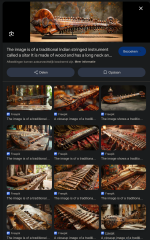
Fuck AI. Turning an already deteriorating internet into a timewasting septic wasteland.
At the moment, it's mostly getting in the way via junk images inside my googe searches.
Being 41, I am happy to have been there when it was at its best. Many years ago already.

At the moment, it's mostly getting in the way via junk images inside my googe searches.
Being 41, I am happy to have been there when it was at its best. Many years ago already.
Last edited:
giovanni
Well-known member
+1 I often feel like the golden days of the internet ended around the early/mid 2000s and now we are sifting through the trash. SEO, walled gardens and now AIFuck AI. Turning an already deteriorating internet into a timewasting septic wasteland.
At the moment, it's mostly getting in the way via junk images inside my googe searches.
Being 41, I am happy to have been there when it was at its best. Many years ago already.
View attachment 84719




Nostradoomus
Well-known member
At least Clippy was just trying to be helpful. 
giovanni
Well-known member
And… failing at it anyways?At least Clippy was just trying to be helpful.