
Selling pedals as a “side hustle” vs simply enjoying the hobby.

KR Sound

Well-known member
5EADB42B-5384-4C31-9D52-C57EA9AF9854.jpeg

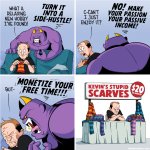
I saw this in r/woodworkingconfessions in Reddit today and it kinda hit home. No matter what hobby I start, and believe me I have way too many, part of me always thinks, “hey, I could probably make some money doing this.”

I’ve taken a different approach to pedal building than I have with woodworking, watch making, cast iron and lantern restoration, and others, and build what I want for now. If my friends want one, I’ll either give them to them or they’ll offer to pay for parts and a bit extra, which is always cool.

But now, word of mouth is starting to spread, “Hey, Kenny makes pedals now, you should get one.” And the messages start coming in. I’m not actively pursuing them. So I sell one or two a month which covers the cost of other builds which is nice. But I’m suppressing the urge to start a micro-brewery so to speak, because for one, I don’t have the time, and two, there are so many out there (IPAs taking over!) that already have and own that space.

Anyway, just thinking out loud. What are your thoughts or approaches to this?
 
Last edited:
I build primarily because I love building things and tinkering, and trying out as many pedals as I can. Basically it keeps me sane.
I sell what I don't/ won't use to help fund further projects, and take on commissions if they excite me enough.

I do take breaks from building when it starts feeling like work, though. It loses its allure when that happens
 
Exactly. I've always tried to make money on other hobbies, and this time I'm just doing it for myself. If the occasional commission comes through and it pays for more pedal builds, then that's cool. Otherwise I'm not actively pursuing it. Just wondering what other people do.
I build primarily because I love building things and tinkering, and trying out as many pedals as I can. Basically it keeps me sane.
I sell what I don't/ won't use to help fund further projects, and take on commissions if they excite me enough.

I do take breaks from building when it starts feeling like work, though. It loses its allure when that happens
I think you two are correct. I have been doing both of your approaches. It is important to keep it fun. It is also flattering to have someone commission an item. It allows you to try the pedal without the cost!
 
I generally actively try NOT to monetize my hobbies. The hobby vs Job is one part, the other is the build what I like, not what "my customers" want.

I started my working life as a commercial photographer because i liked photography and studied it in college.

I quickly learned that doing photography for pay means you are basically a "photo mechanic" There are only a very few photographers who get paid for their artistic style, everyone else is just work for hire.

About a year into it, I tracked down the number of Fred Picker, an amazing black and white landscape photographer and asked his advice. He told me to get a job making enough money to afford to make the images you want to make. I have since created my own corollary to this "don't expect to make a living by finding enough people who share your taste in X, where X is the thing you're passionate about."
 
Exactly. I've always tried to make money on other hobbies, and this time I'm just doing it for myself. If the occasional commission comes through and it pays for more pedal builds, then that's cool. Otherwise I'm not actively pursuing it. Just wondering what other people do.

I tried actively pursuing it for a few years with onboard preamps for one specific luthier, but I've just never had the salesman gene. Based my travel and vacation budget around NAMM for a few years, traded lots of R&D, parts, and build time for "free" booth space and barter credit on instruments and accessories, mostly had a blast, and I have been working with a few other cool luthiers for the last year or two. I always brought a few pedals along to NAMM too, but being locked into one luthier's booth didn't really work in my favor. My goal was always to sell design work rather than hardware though, and IME that just won't happen unless you have some good tangible products for people to try out. I made a big networking breakthrough in 2020 but a month later we had The Plague, and I'm just starting over now with the onboard stuff, but also enjoying exploring the pedal builder culture and doing some different things.

If I were going to sell pedals as a "side hustle" I'd look at what it takes to build at least 100 at a time, preferably 1000. And by build, I mean have someone else do it! ;)
 
Everything changes when a hobby turns into a profession. A hobby is usually pursued out of passion. A profession comes with deadlines and other pressures. Then again, when a passion becomes a profession, at least you're doing what you love. So it's a double-edged sword. It seems that if one carefully measures the amount of time & resources spent on the 'professional' aspect, (marketing, advertising & such), a hobby can happily become a profession.

My personal experience in these last 5 years, with only word-of-mouth marketing, I've found that I barely break even where it comes to the financial aspects and at the very least, all the stock I have accumulated is now paid for and there is no longer any debt from the investment in tools and parts inventory. The passion remains, but the deadlines can present some undesirable pressures.

Take your time and weigh the differences and demands for yourself.
 
Yep. For me, it’s really tough to fit in with the hyperbole of pedal marketing when I actually know what’s going on with a circuit. I can’t play that game.
Pretty much every music store I ever did repair work for begged me to work the sales floor too. My first line in the sand was that it must be OK for me to send people across the street if that served their needs better. Not many takers on that one! :cool:
 
Everything changes when a hobby turns into a profession. A hobby is usually pursued out of passion. A profession comes with deadlines and other pressures. Then again, when a passion becomes a profession, at least you're doing what you love. So it's a double-edged sword. It seems that if one carefully measures the amount of time & resources spent on the 'professional' aspect, (marketing, advertising & such), a hobby can happily become a profession.

My personal experience in these last 5 years, with only word-of-mouth marketing, I've found that I barely break even where it comes to the financial aspects and at the very least, all the stock I have accumulated is now paid for and there is no longer any debt from the investment in tools and parts inventory. The passion remains, but the deadlines can present some undesirable pressures.

Take your time and weigh the differences and demands for yourself.
exactly this ... I didn't make money (didn't lose either) but I also poured that money into tooling up so I can't be mad when the tools have been paid for and now I'm out the parts and the time and nothing more.
 
JTEX is my side hustle, but within it, I only really design/build stuff that I need myself. I just make some extras to sell. This keeps it fun, and it certainly doesn't feel like a job. Then again, my day job is also in electronics, I build and maintain stuff for others, yet it still doesn't feel much like a job most of the time. I suppose it's true that if you find a job you enjoy doing, you'll never work a day in your life?
 
Back
Top