The Powder Coating Thread

Do you have good oil and water filters on your air supply? (again, my reference is spray painting, not powder coating…) Those type of “fish eyes” are almost always from small spots of contamination on the surface—or from small water or oil droplets that are in the air supply. In humid climates, professional booth installations will include a chiller unit on the air supply, to condense much of the moisture that becomes a real problem when air is compressed. One good habit is to always bleed your compressor tank before spraying; the amount of water in there can be quite surprising.
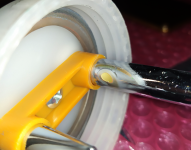
I have one filter next to the compressor (large filter), another one right under the gun. This is only present with hammered finishes. The other side of the sample from my previous message looks much worse - and has much less powder applied. So I think it's related to the amount of powder on the element.
 
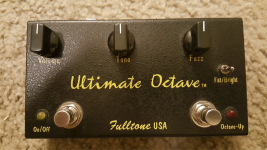
Trying to identify this finish type. Looks like water/paint drops on a base color. At first glance it looks like a river type finish, but probably not. Chances are it's not even powder coated.

1701102481242.png
1701102499801.png
 
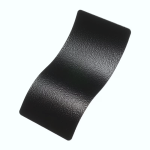
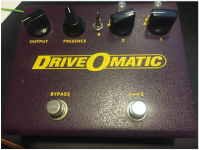
This is typical river (from Prismaticpowders). It has uniform texture. Take a closer look a the Drive-O-Matic box. Looks like satin or matte base and glossy texture.

1701103666079.png
 
Reviving this thread. I've been thinking about dipping my toes into the powder coating world. Some of the YouTube videos of people powder coating pedals are absolutely amazing. One guy was literally doing it in his driveway… barefoot.

From what I’ve gathered so far, the Eastwood PCS-250 seems to be a solid entry level gun.

I already have a compressor I use to blow out my sprinklers, so I should be good there.

Now I’m trying to figure out a booth solution. I really like Stevie’s idea and want to find something similar. That said, I also have a couple of Rubbermaid storage totes that I could tip on their side, cut an opening and fit with a filter a 20" box fan. My only concern there is static buildup. The upside is that I already have 3–4 of them, they could stack easily and space is at a premium since my garage is small.

Eastwood’s tabletop booth looks interesting but I’m not really seeing the value or benefit for the price.

Questions:

Technique. I learned spray painting technique from a painter friend. Controlled, intentional back and forth passes to lay down an even coat. In most powder coating videos, people seem to wave the gun around almost randomly, like a wand. What is best practice?

Pitfalls? I don't know what I don't know, any beginner tips?
 
same... I picked up an eastwood kit new in box this summer and I have yet to even try it out yet... I havent found a free toaster oven on fb marketplace to test it out yet.... guy gave me about 4 lbs of powder to go with it
 
If i may....

With any powder coating setup the number one thing is grounding. The best grounding you can possibly get is to drive a copper rod into the ground close to where you will be powder coating. A hanger system from Eastwood would work wonders for hanging up your parts.

When it comes to powder make sure its not clumpy and is being fluidized in the cup or hopper properly when shooting the coat. As for techniques the simple action of "OFF-ON-OFF". Meaning you start spraying off the part then on the part then off the part without letting go of the trigger. This will give you the most even coats. For first coats start with the highest KV setting your gun allows. I run at 100KV and 50ish UA for first coats. Any 2nd coats drop the KV by about half and always do 1 or 2 passes less than the first coat. If the part is only one coat 2 to 3 passes is optimal for any part ive done. If your doing textured powders, 4 to 5 passes is appropriate. Degrease the part and dry before spraying any powder and you should be good to go!

If youre looking for a booth but do not want to spend a lot of money a simple spray paint tent from Amazon for 50 or 60 dollars will hold all the powder for you and you can easily vacuum afterwards! Wish you ther best, if you have any more questions shoot for it!
 
Now I’m trying to figure out a booth solution
You already have Stevie and Temol in this thread so I'm nowhere near the expert, but I can share my limited experience. The best setup I had was a big plywood box I built from scraps and ran a length of baling wire through. I left some extra hanging out one end of the outside of the box so I can clip the ground clip to it, then I made hangers out of bent baling wire to hang the enclosures on the grounded wire. I cut a hole in the back where I had the fan pulling overspray, and it worked pretty well. I also mounted some lights in the top as I noticed on darker finishes I often didn't notice when I was missing spots.

That being said I do so little powdercoating these days that I actually picked up one of the Eastwood benchtop kits so I could have something I can fold up and put away when I'm not using it. It just showed up last week and I haven't opened it yet, will probably do it sometime this week.

The only other thing I'll add for powdercoating in general is to make sure your gun has an inline moisture filter. Most guns I've seen have them, and they help in keeping the clumps out.
 
There's no point in writing elaborate essays here... you have to set up the equipment yourself and get a little dirty. The feel and technique will come with time.
But... I'll add that I always use a 3m half-mask. I use a large box as a spray booth, without a fan, so I don't have the comfort I'd like. But with or without a fan, you can't avoid polluting the room with powder. When pouring powder into the jar, while painting. And the area is most contaminated with powder when cleaning after painting. The powder spray gun needs to be blown out with a compressor. The spray booth needs to be cleaned with a vacuum cleaner, and sometimes you need to use a compressor. You can't see it at first. But after a while, if you pick up an object that's been sitting in the room where you're painting for a while, you'll see its "shadow."
 
I was REALLY good at getting grounded as a kid, may ask my mom for advice on that!
the number one thing is grounding.
Joking aside, sounds like a similar technique to painting with the off-on-off.

Preheating them? Pros? Cons?

Also, vacuums. What I have read thus far vacuums are frowned upon because they can spark and ignite. While I assume that is true, sounds like it is far and few between.

Thanks
 
Preheating them? Pros? Cons?

Also, vacuums. What I have read thus far vacuums are frowned upon because they can spark and ignite. While I assume that is true, sounds like it is far and few between.

Thanks
Preheating would be considered hot flocking. Its a technique that you would only use if the powder coat is not sticking from what i understand. I do not do it as its easy to over powder the part and get clumpy uneven results. Or simply add too much powder coat.

I had asked the same question years ago when it comes to the vacum issue. I had bitten the bullet and just used a shop vac and never had a problem.
 
I get the idea of HOW it could ignite.

We used to throw powdered drink mix like Tang into the fire at scout camp. But it had to be the right mixture. And now you have insight on why I was grounded a lot!

As for Temol's point, getting my hands dirty is the best way. I want to make sure before invest in too much, that I am going down the right path. I prefer other people making the mistakes, so I can learn from them.
 
As for the hot flocking - sometimes use it, for example, when I notice while baking that there's too little powder somewhere on the part (the coating is too thin and the metal shows through). Instead of removing the coating and repainting, I add a little powder to those areas, right on the hot part. This isn't always possible, as the coatings sometimes don't mix well, but you can always try since the part would need to be repainted anyway.
 
As for the hot flocking - sometimes use it, for example, when I notice while baking that there's too little powder somewhere on the part (the coating is too thin and the metal shows through). Instead of removing the coating and repainting, I add a little powder to those areas, right on the hot part. This isn't always possible, as the coatings sometimes don't mix well, but you can always try since the part would need to be repainted anyway.
If I found I had missed a part I would typically wait for the part to cool and just do a second coat rather than trying to hot flock one spot as I always ended up getting clumps when hot flocking. I typically didn't completely strip an enclosure just for a missed spot.

As mentioned though, hot flocking can be a good option for coating non-conductive items that otherwise wouldn't be coatable, like glass and wood. Translucent ("candy") powdercoats on glass can be a particularly cool effect and hot flocking works very well for that.
 
Did it - bought the Eastwood PCS-250. It was on sale plus a discount for signing up for the mailing list.

Now to building a booth, ordering some colors from Prismatic and find an oven on market place!

As first project, I think should powder coat the brake calipers red on the wife's Subaru. Make it drive better, right?
 
Did it - bought the Eastwood PCS-250. It was on sale plus a discount for signing up for the mailing list.

Now to building a booth, ordering some colors from Prismatic and find an oven on market place!

As first project, I think should powder coat the brake calipers red on the wife's Subaru. Make it drive better, right?
I love that youre jumping right into this! Let us know how the first powder coating job comes out!
 
I love that youre jumping right into this! Let us know how the first powder coating job comes out!
Thanks, I will keep you posted!

One thing I thought of, temperature. Colorado FINALLY got some snow and cold weather this week. I will be in my unheated garage, I know paint needs to be within certain range to work correctly, I think like 60-80f is "best". Powder coating have any best practices temp wise?
 
Thanks, I will keep you posted!

One thing I thought of, temperature. Colorado FINALLY got some snow and cold weather this week. I will be in my unheated garage, I know paint needs to be within certain range to work correctly, I think like 60-80f is "best". Powder coating have any best practices temp wise?
Humidity is going to be a much bigger factor than temperature. Powder likes to stay dry, and overly humid conditions can lead to clumping and inconsistent finishes.
 
Back
Top