How do YOU clean your boards?

dcfvgb

Active member
I've read a lot of different ways to clean a board after assembly, from rubbing alcohol to dishsoap n water to wd40.

I've been using 99% isopropyl w/ qtips toothbrush, a small spary bottle with iso. I feel like it never comes clean enough, and sometimes leaves a sticky residue.


What do YOU use?
 
My dishwasher has little racks that are perfect for PCBs... 🤣

Joking aside, I use 99% IPA (isopropyl alcohol) with an old toothbrush on the PCB once I'm done populating it but before the potentiometers go in. I get the same sticky residue, so I'm curious to hear what others do.
 
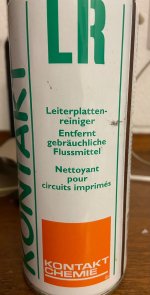
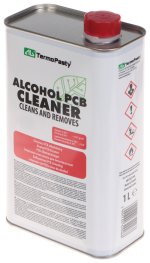
I use this stuff, but it's mostly isopropyl, so I'm skeptical it's worth the extra cost vs just straight IPA.


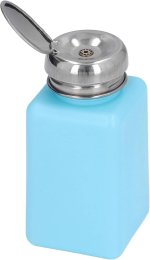
I do prefer a condiment bottle over a spray bottle.


The tricky thing about IPA is it'll dissolve flux, but then you've got your board covered in IPA with flux dissolved in it. As the IPA evaporates, it leaves the flux on the board, just spread out it a thin sticky layer on everything.

Couple strategies I think help:

1 - Remove as much flux as you can mechanically before dissolving it. If your pot legs have pools of hardened flux around them, chip off the bulk of that with a little flat head screwdriver before you go in with the IPA.

2 - Flood the board with as much IPA as it will hold so it doesn't evaporate too quickly and keep it wet as you scrub.

3 - Dab with a paper towel to absorb as much of the IPA flux stew as you can, then literally rinse and repeat.


I usually think I'm doing a pretty good job until I flip the board over and see how much residue has just migrated to the other side.
 
I use iso and q tips. If you spend extra time you can get the sticky residue off completely by using more Q tips. When you apply the iso to the board is loosens the flux, and some soaks into the Q tip while some stays on the board because the Q tip is so small there is a limit to how much liquid it can absorb. If you keep using this same Q tip to clean the board it will just spread around the flux - same as mopping a floor. If you wipe it in sections and switch out the Q tips often enough that you're spreading around a smaller amount of dissolved flux every time, until the amount it so small that the final Q tip is able to absorb all of it. It helps to use really nice cutters so your Q tip doesn't snag on the component leads.

Or you could just not clean it. Normal RMA flux is non conductive and non corrosive so it shouldn't cause a problem. I clean some of mine and others I don't.
 
What I do - and this is very similar to a process @MichaelW described somewhere - is to use this MG Chemicals 4140A Flux Remover for PC Boards. I cut a small bit of old t-shirt (say 4x4 inches or so). I get that wet with the Flux Remover liquid. I then daub the PCB with the wet cloth, let it sit for a minute or so. Then I use a toothbrush to scrub the board - but I keep the t-shirt clipping between the PCB and the toothbrush. This seems to cause most of the sticky dissolved flux to be absorbed by the t-shirt clipping. IIRC, Mike additionally does a second pass with isopropyl alcohol for a truly pristine look. I'm too lazy for that, as I find the MG Chemicals pass to be "good enough".

But I've found the old t-shirt layer between the PCB and the toothbrush to be the "killer app" for PCB cleaning.
 
99% isopropyl alcohol from a dispenser a.jpg and a standard-issue short-and-stiff-bristled brush from the dollar store (natural fibers, as opposed to plastic, if I can find one). I cut the bristles shorter if it helps. I pat the wet board with (allegedly) lint-free Kleenex to wick as much flux-contaminated juice as I can before it dries. Rinse and repeat if needed. I'm fine with a bit of (clear) sticky residue. Dark residue must go, as not only is it ugly, but it may be slightly conductive due to burned carbon particles in it.
 
I learned in the 90's that any PCB with non-water-soluble materials in any of the components, saving DIP switches and other small electromechanical parts, can safely be cleaned with 99% isopropyl alcohol & a toothbrush then washed by hand with with soap & water, then rinsed with distilled water and air dried for 24 hrs. Still works well for me today when it's called for.

And no, I do not put the toothbrush back in its holder in the bathroom. 🫠
 
I use no-clean solder, and keeping with the name, I no clean. Sometimes if I get ambitious or it looks really messy I'll use IPA, but that's like 1 in 10.
 
I use no-clean solder, and keeping with the name, I no clean. Sometimes if I get ambitious or it looks really messy I'll use IPA, but that's like 1 in 10.
I used to use no-clean but stopped. Rosin just works better for me, especially on non-perfect, somewhat oxidized stuff such as older parts or wires or PCBs. And it smells a lot better too, as a bonus. Oh the other hand, if I do want to clean "no-clean" flux (because it still looks greasy and traps dust), it's quite a bit harder to get rid of it than rosin.

"No clean" really means that you don't need to clean it (non-conductive, clear, non-corrosive), not that you don't still want to, for best looks.
 
I recently picked up some of this chip quik no clean.
The synthetic flux is supposed to be removable with hot (60C/140F) water
I've been happy with the wetting and flow but haven't tried to wash a board yet.
 
I tried some CRC contact cleaner (same applications as the wd40 contact cleaner) and it did diddly squat. I'm using quality no-clean flux paste, but maybe the paste is too stronk.
 
if I'm really feeling motivated I will scrub with alcohol and a toothbrush. But 9 times out of 10 I pretty much just don't bother.

I know it's more "professional" and thorough and you should take pride in your work and all that but....maybe it's different for the guys who are building in REALLY high volume. And if I were building pedals for the purpose of selling them I would probably put a little more time/effort into that step

But, as it is, I couldn't even tell you how many pedals I've built at this point, and I've yet to have a single one of them fail or experience any kind of meaningful/perceptible failure that can be attributed to not adequately cleaning the PCB
 
Back
Top