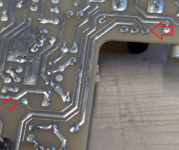
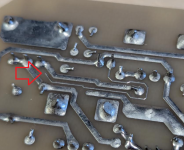
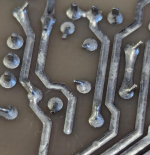
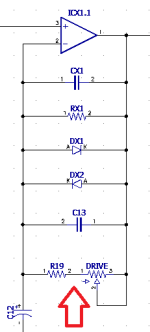
Are they meant to be a ground trace in lieu of a plane to prevent parasitic capacitance between the traces either side of them? They all seem to be much thinner than their neighboring traces
I've heard that cartographers do something similar. Call 'em "trap streets" where it's either subtly misspelled, or something innocuous so the reader doesn't suffer. Gives them evidence of copying.
I've heard that cartographers do something similar. Call 'em "trap streets" where it's either subtly misspelled, or something innocuous so the reader doesn't suffer. Gives them evidence of copying.
Are they meant to be a ground trace in lieu of a plane to prevent parasitic capacitance between the traces either side of them? They all seem to be much thinner than their neighboring traces
Are you sure it was there before you started tracing? Maybe it's some new kind of protection? As soon as you start poking around, random blind traces appear...
Are they meant to be a ground trace in lieu of a plane to prevent parasitic capacitance between the traces either side of them? They all seem to be much thinner than their neighboring traces
That was my first thought, at my day job we call them guard traces and use them to separate sensitive signals to prevent crosstalk/interference. But if they're in places that don't make sense and aren't even ground, then yeah it's just there to make tracing more difficult.