What’s on *YOUR* workbench?

A simple oven like the Jegs powder coat oven and an Eastwood dual voltage gun would be a great place to start. Although not needed the stand from Eastwood for hanging parts will help out tremendously.
At one time, there was a builder on the madbean forum that used a harbor freight powder coat system and a regular toaster oven. As I recall, the results were really good.
 
At one time, there was a builder on the madbean forum that used a harbor freight powder coat system and a regular toaster oven. As I recall, the results were really good.
I don't think that would have been me since I was never super active on madbean forum, but harbor freight powder gun and a thrift store toaster oven is how I started.

I will say a cheap gun is good enough to get started, but you really feel the difference in gun quality as you move up. I stepped up to the Red Line EZ50 from the Eastwood and it's a world of difference. A bigger oven is great because I can do 16 enclosures+lids at a time instead of 1, but oven quality is mostly a convenience thing, I used the toaster oven for quite a while before upgrading.
 
I don't think that would have been me since I was never super active on madbean forum, but harbor freight powder gun and a thrift store toaster oven is how I started.

I will say a cheap gun is good enough to get started, but you really feel the difference in gun quality as you move up. I stepped up to the Red Line EZ50 from the Eastwood and it's a world of difference. A bigger oven is great because I can do 16 enclosures+lids at a time instead of 1, but oven quality is mostly a convenience thing, I used the toaster oven for quite a while before upgrading.
Yeah, cheap enough to know if you want to mess with it or not. I’m sure it could be sold to recoup at least half of your money if you wanted to move up or not do it😆. I get excited about new things and then decide I don’t know what I was thinking.
 
I 100% agree with @vigilante398

The 2 things you'll want to upgrade first will be the gun then oven in that order. Another really good gun that i can attest to is the RC-2 system from RoyalCoats Powder Coating. For the money you get features that are found on higher end systems at a fraction of the cost. IMO having features like adjustable amperage and voltage make a night and day difference. Especially when considering 2 or more coats.
 
Cheaper, but not necessarily easier. A lot of thought needs to be put into your sprue system so you get full fill and no air pockets. Sand casting is the most cost effective process probably. Die casting would be easiest after setup, but it’s a huge hurdle in terms of cost and effort to create a die first. Lost wax (or ppla) gives the most freedom as far as design and detail go, but it produces a lot of waste, and it takes a lot of setup for each cast— great for one-offs, but the hours that would need to go into each casting would make it totally unprofitable to sell
I wonder if there could be some 3D printer material that could be cast into and it would just burn away?

Taking a quick googling at it, looks like there's not really great solutions in the consumer market for it yet - big companies have something called "binder jetting" where they print a thin layer of a binding agent and use sand to literally 3D print the sand molds. There are also some wax-type resins which burn out, and also you can print molds for pouring, but looks like mostly pewter and not for aluminum? So I don't think we're there yet, but maybe in the future.
 
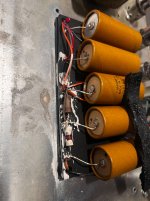
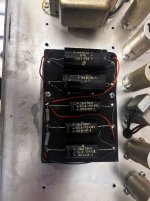
Caps came in today for my band master reverb project. Got the dog house all ready togo. Tomorrow will be replacing the 2 prong, removing the death cap. And bringing it up with the light bulb limiter. See how it functions, see if all these old stop sign rcas are still good etc. before and after. IMG_9857.jpeg IMG_9894.jpeg
 
I wonder if there could be some 3D printer material that could be cast into and it would just burn away?

Taking a quick googling at it, looks like there's not really great solutions in the consumer market for it yet - big companies have something called "binder jetting" where they print a thin layer of a binding agent and use sand to literally 3D print the sand molds. There are also some wax-type resins which burn out, and also you can print molds for pouring, but looks like mostly pewter and not for aluminum? So I don't think we're there yet, but maybe in the future.
3D print the wax would be good and would allow you to design the parts more accurately- then plaster around it to make a mould
 
3D print the wax would be good and would allow you to design the parts more accurately- then plaster around it to make a mould
Looks like there are a bunch of options for that, but the cheapest from a list I found is $75/kg which presumably would still be a significant cost for making enclosures like this. Or I don't know how many times the plaster mould could be used, but probably not too many times?

I assume they might not work in your average consumer 3D printer, but I already spent too much time looking up stuff I probably will never use, so I'll stop looking into it.
 
Looks like there are a bunch of options for that, but the cheapest from a list I found is $75/kg which presumably would still be a significant cost for making enclosures like this. Or I don't know how many times the plaster mould could be used, but probably not too many times?

I assume they might not work in your average consumer 3D printer, but I already spent too much time looking up stuff I probably will never use, so I'll stop looking into it.
better question is what are you trying to achieve and work out the best way to do that. It might not even be casting!
 
3D print the wax would be good and would allow you to design the parts more accurately- then plaster around it to make a mould
Yeah, so 3D printing wax is definitely an option. Also as I mentioned, PLA can be used, but it does unfortunately not burn out as cleanly so you can wind up with some flaws. If you’re painting or powder coating after casting, maybe that’s not such an issue, but careful consideration is necessary to make sure you’re not weakening the integrity of the casting by filling it with voids of ash.

Or I don't know how many times the plaster mould could be used, but probably not too many times?
If you’re talking about making a plaster mold to create the wax parts from, then those last a long time– you thoroughly wet the mold and then pour melted wax in and let it set to the desired wall thickness before pouring the remaining wax out. Since you keep the mold wet, the wax doesn’t seep into the plaster and deteriorate it all that much if you’ve made it properly.

If you’re talking about the plaster mold that you actually cast the metal into, that’s called your investment mold, and it’s a single use thing. Each individual casting is invested, burned out, cast, and then you smash apart the mold to reveal the casting inside. The most cost effective way to make it is equal parts sand and plaster, and you reinforce it with a chicken wire “cage”. You then have to burn out the wax or PLA in a kiln, and that definitely is one of the biggest costs in casting since the electrical cost (or gas if you’re snagging a cheap gas kiln on Craigslist) for a firing like that is probably around $40+ (at least here in NY) so you really want to make your investment molds as compact as possible while still being strong, and to burnout as many as you can pack into the kiln at once so the cost per unit goes down. There’s also a product called Suspend-A-Slurry which I’ve seen some YouTubers use instead of a more traditional investment mix, and it definitely seems to cut down significantly on the labor that goes into investing the wax/pla but I’m not 100% sold on how reliable it is, and it’s also probably a bit more expensive than the plaster/sand costs (but then again, who knows— plaster has gone up a lot in cost recently; my most recent castings I did in school used probably around $60 worth of plaster for just two medium sized molds)

I have pretty good documentation of most of the process of making a sculpture in bronze, so I could maybe make a tutorial thread at some point. I haven’t cast any enclosures since I don’t have a home foundry setup yet, but the process would be pretty much exactly the same for any sort of lost-wax/pla casting.

 
Depending what you're doing it might be easier to hammer and braise sheet metal into whatever shape you're trying to do
“We choose to go to the moon in this decade and do the other things, not because they are easy, but because they are hard“ - JFK

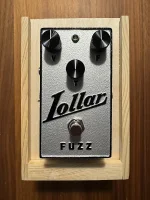
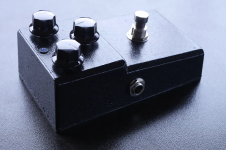
I’m rooting for some sand-casting!! I never thought I’d see someone diy casting enclosures, but I also never thought I’d see someone home anodizing enclosures, so who knows. I did really like the look of the Lollar ones.

C3E4ECAC-51B7-4CA4-933D-474A1A2DB033.webp
 
I’m rooting for some sand-casting!! I never thought I’d see someone diy casting enclosures, but I also never thought I’d see someone home anodizing enclosures, so who knows. I did really like the look of the Lollar ones.

 
I have wax done for a handful of enclosures that I wanted to cast. I don’t have access to the pours at my university anymore tho, so I need to start looking into a home foundry. I already have a kiln I can do the burnout in if I’m careful, so the main concern is buying/making a furnace to melt metal down in. If I only do aluminum I could probably have decent enough results with one of the cheap $80 smelting furnaces on Amazon but if I want the option to cast bronze so I can continue doing bronze sculpture (and maybe some bell casting— find some old cracked cymbals and melt em down into crotales!) then I’d probably need something a bit larger
 
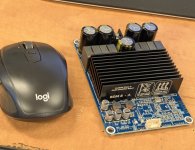
Just got this "2X300W" (my quotes) class D amp board from AliExpress. Based around a TPA3255 chip. I bought it mostly to evaluate it for my day job. If anyone's interested, I'll share my findings once I'm done finding.
 

Attachments

  • PXL_20250108_205314958.jpg
    PXL_20250108_205314958.jpg
    483.4 KB · Views: 16
Back
Top