BuddytheReow
Moderator
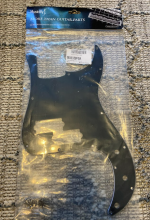
New pickguard for my bass kit build. Sometimes the simpler design is better.



It was me. Enjoy!I forget who suggested this one in the thread in books…
I needed to add something to my cart to hit the free shipping threshold the other day, so I threw it in.
Just flipped through it so far, but it looks great.
View attachment 52213


Dul ci mer dul ci mer dul ci mer dul ci merView attachment 52214
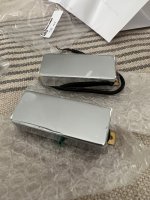
A cheap eBay pair of A5 firebird pickups so I can use the bridge pup for my EB-3. Maybe I’ll use the neck pickup for an electric dulcimer or something… idk

I have an extra MCP602 I could ship to you but I don't know how feasible it is from Poland to where you liveI finally got my Musikding order! A Low Tide kit, some knobs, jacks, footswitches, a rotary selector and some 2N5457's.
...except the Low Tide kit has a MCP602 on backorder. I don't think I have any alternatives either. I might have a NE5532 I found listed somewhere as an alternative, but I think that needs a higher voltage. Dammit.
Well, at least I can finish the Matamp pedal now, and see if the 2N5457 brings down the noise on the Clandestine Preamp compared to what I have in it now.
Edit: From first test it seems it did bring the noise down! Excellent!
Are those real Firebird pickups or overwound ones like Gibson used to use?View attachment 52214
A cheap eBay pair of A5 firebird pickups so I can use the bridge pup for my EB-3. Maybe I’ll use the neck pickup for an electric dulcimer or something… idk

Ehh I live in Finland so inside EU shouldn't be too bad. But it should arrive later on, if I can use it with a NE5532, I can test it with that one for now until the part arrives later on. So no need for now I think.I have an extra MCP602 I could ship to you but I don't know how feasible it is from Poland to where you live
I also used a J201 but my Low Tide doesn't workEhh I live in Finland so inside EU shouldn't be too bad. But it should arrive later on, if I can use it with a NE5532, I can test it with that one for now until the part arrives later on. So no need for now I think.
I also dropped the SMD 2SK208 on a shaggy carpet and did not manage to recover that, but apparently most people just used a J201 instead so I can easily replace that one too.
Edit: I also managed to accidentally hit two empty resistor holes in separate locations with the soldering iron which had a bit of solder on it and they just instantly sucked themselves full, and I also put one resistor in the wrong hole, but I managed to fix all those issues. All in all not off to a great start though, hopefully nothing else goes wrong.


Mate, I have been there. Started with a complex board (Brown Betty) and somehow it worked right off. From there it was hit and miss for a LOOOONG time. I spent a while on simpler circuits, and even then I feel it's only the last 9 months where my soldering is adequate. And only the last 2 months where I feel confident with de-soldering.It's why I'm considering quitting.

I had this problem recently. I couldn’t get the solder out so I pushed the component through with needle nose pliers while melting the solder. Not proud of that but it worked and didn’t destroy the pads!I also used a J201 but my Low Tide doesn't work
Every time I accidentally fill an empty hole I have to trash the board. No matter what I use, a good solder sucker, solder wick, even those hollow needles, nothing works and I end up destroying the pads. The same thing happened to my Low Tide board.
It's why I'm considering quitting.
I've done that too, but it's a pain.I had this problem recently. I couldn’t get the solder out so I pushed the component through with needle nose pliers while melting the solder. Not proud of that but it worked and didn’t destroy the pads!
 You don't actually need to have the component leg go through the hole, putting it on top can also work - I haven't tried that with anything else than resistors though.
I have done that too in the past.I've done that too, but it's a pain.
I also mentioned before that one component has one leg on top of Solder Mountain in my Gatekeeper build


Thank you!Don't panic, get in a hurry, or allow flashbacks of failure to fill your thoughts when you have to desolder. Examine the target component closely and take note of any adjacent bits that might become collateral damage, and choose what you believe to be the best removal method. I usually snip the leads from the component, which makes things a bit easier to get to.
Copper braid is great since solder will go out of it's way to become one with it. I snip small squares off so they can be pressed into the solder joint by the iron tip and sop up that silvery gravy.
Solder suckers (compression) work well if you can get the tip placed just right and keep it there until ready. The solder suckers with a motorized vacuum and hot tip will clean up a pad pronto or remove a pot without any damage to it or the pcb (I've removed one in 30 sec)...as long as you can fit the nozzle without melting adjacent components. And like @giovanni and others have said; adding extra solder and/or flux are also proven to assist.
My hands shake a bit and my eyesight is not so great so I take my time to compensate. I've built (and unbuilt) circuits I never imagined I could. I've also destroyed a few in the process, but I try to grab a learning experience from each disaster.
It's a hobby so act like it's enjoyable dammit!
Now go build something!
Honestly not sure. I just needed something to fit a mini humbucker route without having 6 visible pole pieces and this would do the trick. Would’ve been fine with something with 4/8 pole pieces too, but in that regard the only options seemed to be the wildly expensive Novak EB-bridge pickup, or the staple pickups that are in import Hofner basses, and in my experience have way too weak of an output.Are those real Firebird pickups or overwound ones like Gibson used to use?

This is some top shelf advice. I feel ignorant for not thinking about sniping the components’ legs to make it easier to remove it from the board. I have this hoarders mentality that I will salvage the component and reuse it. However, history will demonstrate that I usually do not recycle the component. With that in mind, it seems wiser to sacrifice the nominal component for the safety of the project.Don't panic, get in a hurry, or allow flashbacks of failure to fill your thoughts when you have to desolder. Examine the target component closely and take note of any adjacent bits that might become collateral damage, and choose what you believe to be the best removal method. I usually snip the leads from the component, which makes things a bit easier to get to.
Copper braid is great since solder will go out of it's way to become one with it. I snip small squares off so they can be pressed into the solder joint by the iron tip and sop up that silvery gravy.
Solder suckers (compression) work well if you can get the tip placed just right and keep it there until ready. The solder suckers with a motorized vacuum and hot tip will clean up a pad pronto or remove a pot without any damage to it or the pcb (I've removed one in 30 sec)...as long as you can fit the nozzle without melting adjacent components. And like @giovanni and others have said; adding extra solder and/or flux are also proven to assist.
My hands shake a bit and my eyesight is not so great so I take my time to compensate. I've built (and unbuilt) circuits I never imagined I could. I've also destroyed a few in the process, but I try to grab a learning experience from each disaster.
It's a hobby so act like it's enjoyable dammit!
Now go build something!

That's a big part of the testing I'll be doing.Would that make them less prone to Switch-Pop?

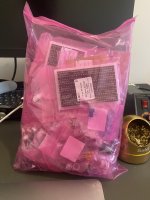
Nice! There will always be a backlog, though.Got a nice pink bag all the way from Thailand today, ahead of schedule thanks to DHL:
View attachment 52285
Now I have all I need to get all my backlog of pedals done. Now where can I buy an extra 4 hours a day to spend on my very many hobbies?